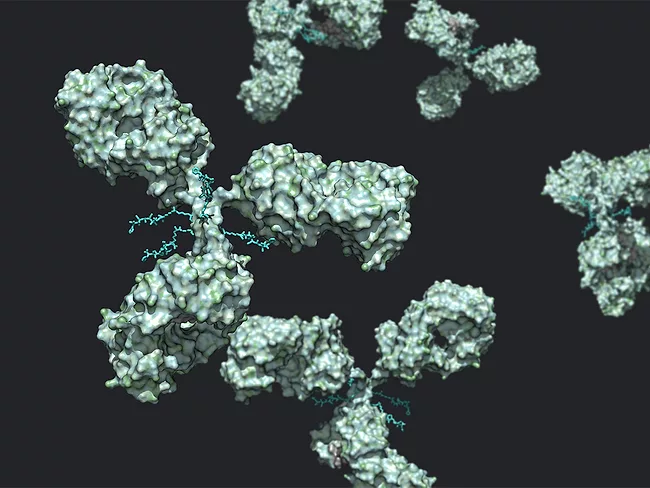
Applying chimeric antigen receptor (CAR) T-cell therapy to T-cell malignancies presents important limitations due to immune suppression caused by T-cell depletion, in addition to CAR T self-killing and CAR T transfection of malignant cells.
Genialis Inc. and Debiopharm SA have entered into an agreement to define and discover biomarkers within the DNA damage repair (DDR) biology space to predict the clinical benefit of one or more drugs in Debiopharm’s pipeline.
Domain Therapeutics SA has been awarded a grant as part of the Hospital-University Research in Health (RHU) SPRINT consortium, which seeks to progress a precision medicine for cutaneous T-cell lymphoma (CTCL).
Researchers from Renmin Hospital of Wuhan University have published results from their work that aimed to assess the role of exonuclease 1 (EXO1) in the progression of prostate cancer (PCa). A series of bioinformatic analyses revealed that EXO1 expression was higher in PCa tissue compared to normal tissue, and that high EXO1 expression predicted poor prognosis in PCa patients.
Increasing evidence exists suggesting plasma exosomal microRNAs (miRNAs) are involved in tumor progression, but their role in breast cancer is still unknown. Plasma exosome miRNA sequencing revealed that elevated levels of miR-361-3p were significantly correlated with malignant breast cancer progression in patients.
Researchers from the Institute for Bioengineering of Catalonia (IBEC) and collaborators have successfully treated bladder tumors in mice using urease-powered nanobots. The testing consisted of the administration of 18F-nanorobots to tumor-bearing mice divided into four groups depending on tumor volumes using a group of non-tumor-bearing mice as control. Importantly, the therapy remained in the bladder with only a very small proportion of radioactivity seen in other organs. The results were published in Nature Nanotechnology on Jan. 15, 2024.
Trioar Inc. has synthesized antibody-drug conjugates comprising antibodies targeting HER2 (Neu, erbB2) covalently linked to cytotoxic drugs (particularly, MMAE and MMAF) through a linker reported to be useful for the treatment of cancer.
Doma Biopharmaceutical (Suzhou) Co. Ltd. has disclosed antibody-drug conjugates comprising bispecific antibodies (E-6C4-M-2F11) targeting EGFR (HER1; erbB1) and hepatocyte growth factor receptors (HGFR; MET) covalently linked to cytotoxic drugs through a linker reported to be useful for the treatment of cancer.
Oncology company Arrivent Biopharma Inc.’s stock (NASDAQ:AVBP) shot up 11% on Jan. 26, its first day of trading, with its upsized IPO pricing 9.72 million shares at $18 each, raising gross proceeds of $175 million.
Shares of Corbus Pharmaceuticals Inc. (NASDAQ:CRBP) doubled on opening Jan. 26 and ended the day up a whopping 249% as investors got a look at data from a first-in-human study testing next-generation Nectin-4-targeted antibody-drug conjugate (ADC) CRB-701. Licensed from CSPC Pharmaceutical Group for $7.5 million up front in February 2023, CRB-701 has IND clearance from the U.S. FDA, and Corbus plans to start its own clinical testing in the first quarter of 2024.

 RSS
RSS