Blue Note Therapeutics Inc. took a new approach to expanding its pipeline of prescription digital therapeutics (PDT) with an exclusive licensing agreement with the University of Sydney for Conquerfear, a metacognitive intervention that helps cancer survivors cope with the fear of disease recurrence. Blue Note has developed its PDTs internally to date but hopes to convert Conquerfear’s elements, which are typically delivered face-to-face, into a PDT for the U.S. and Canada. As a digital therapy, the program could potentially reach many more patients.
Inivata Ltd. published new data from a prospective clinical study assessing its Radar diagnostic test in head and neck squamous cell carcinoma (HNSCC). Results from the Liquid Biopsy for Minimal Disease Detection in HNSCC (LIONESS) study suggest the assay demonstrated 100% specificity in patients with no recurrence and 100% sensitivity in patients with clinical recurrence. The personalized assay can track up to 48 tumor-specific variants in a patient using a blood sample. Last year the test was granted breakthrough device designation by the FDA.
Despite big wins in precision oncology – such as last year’s accelerated FDA nod for Amgen Inc.’s Lumakras (sotorasib) in KRAS G12C-mutated locally advanced or metastatic non-small-cell lung cancer – industry has barely scratched the surface of the field’s potential. Part of the problem is on the scientific front. Only about a third of patients are currently eligible for targeted therapy, since the majority of patients “do not have a known therapeutic vulnerability for which we have a drug match,” Keith Flaherty, director of clinical research at Massachusetts General Hospital, said during a Feb. 14 session at the BIO CEO & Investor Conference. “And that’s a big problem.”
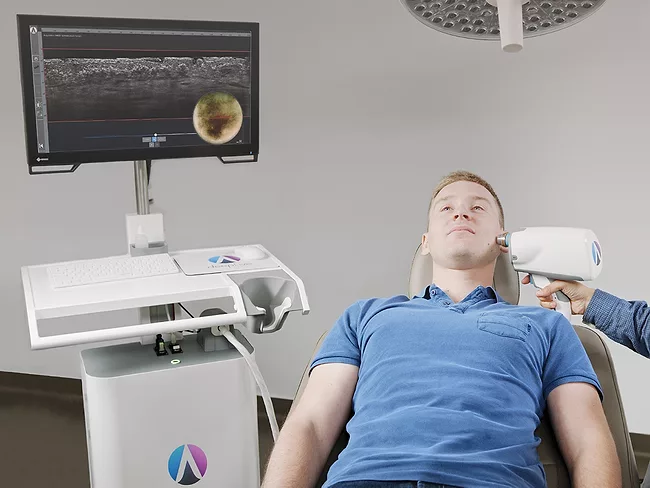
PARIS – Damae Medical SAS has just raised nearly $6 million to develop new technology to detect skin cancer noninvasively without need for a biopsy. This series A round was led by BNP Paribas Développement SA and supported by original investors Kurma Partners SA and professional private equity fund, Paris Saclay Seed Fund.
In the bad old days of cancer treatment, it was the nasty side effects of chemotherapy that often ended up limiting treatment – and while checkpoint inhibitors have raised the bar in terms of efficacy and safety, they can have dangerous and unpleasant off-target consequences, too. Finding ways to focus the immune system on cancer and limiting any off-target effects will not only make checkpoint inhibitor therapy more tolerable but could also improve survival rates – and Sweden’s Ilya Pharma AB aims to do this with a novel approach combining synthetic biology with cell therapy.
The grantmaking process at the U.S. National Institutes of Health has been under scrutiny for several years for several reasons, and a new report by the Office of Inspector General (OIG) indicates that the NIH’s National Cancer Institute (NCI) has generally administered its grants properly. However, the report also indicates that some grantees were tardy in filing their final reports on grant performance, a problem that NCI has vowed to correct with tighter supervision of those grants.
PARIS – Resilience SAS raised $46 million in a series A round to ramp up European distribution of its mobile application intended for remote monitoring of breast cancer patients, in partnership with the Gustave Roussy Center in Villejuif, France. This funding round was led by two Parisian venture capital funds specializing in digital health – Cathay Innovation SAS and Singular Capital Partners SAS – along with Dutch-based Exor Seeds NV, German-based Picus Capital GmbH and Seaya Capital Gestion, SGEIC, SA, from Spain.
 RSS
RSS