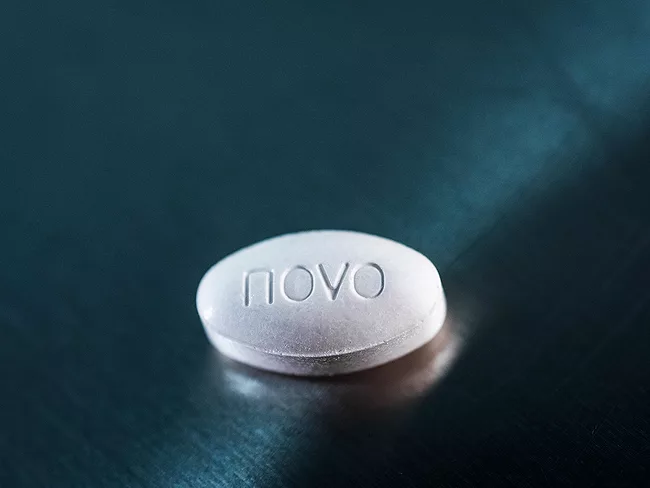
The U.S. FDA has accepted the NDA for an oral formulation of Novo Nordisk A/S’s Wegovy (semaglutide) in treating obesity. If approved, the daily pill will be the first oral GLP-1 for treating chronic weight management. So far, however, it has been injectables leading the way to approval.
Wall Street immediately set to weighing the long-term import of Cytokinetics Inc.’s regulatory delay with aficamten, but the short-term impact was evident, as shares (NASDAQ:CYTK) dipped to close May 2 at $37.35, a loss of $5.57 or 13%.
Stealth Biotherapeutics Inc., and, more importantly, patients with Barth syndrome, faced another disappointing delay April 29 when the U.S. FDA kicked its approval decision down the road for Stealth’s elamipretide.
Jiangsu Hengrui Pharmaceuticals Co. Ltd. is the latest mainland China pharmaceutical company to seek a capital raise on the Hong Kong stock exchange, winning clearance April 28 from the China Securities Regulatory Commission to float new H-shares.
Tightening of U.S. regulation and capital is leading Chinese biotechs to alternative and new models of financing, ranging from cross-border licensing deals, M&As, the so-called newco model and overseas listings.
Europe was a bigger counterpart to China in pharmaceutical dealmaking than the U.S. last year, speakers at Chinabio Partnering Forum said April 23, and the trend is likely to continue in 2025 with the shuttering of U.S. capital and volatility ailing global markets.
Despite missing a phase II study’s primary endpoint in moderate to severe asthma, Sanofi SA sees a way forward to a phase III program in the crowded disease space. Preliminary results showed the annualized exacerbation rate endpoint wasn’t met at the highest dosage of amlitelimab. Those numbers, at week 48, showed nominal significance at the medium dose.
Positive early stage data for Verve Therapeutics Inc.’s base editing therapy points to a range of development options, including bringing partner Eli Lilly and Co. in a little closer. The new data helped ease the company’s pain from the April 2 enrollment pause of a similarly designed therapy from Verve. Verve’s Heart-2 phase Ib of VERVE-102 in treating 14 patients with heterozygous familial hypercholesterolemia and/or premature coronary artery disease showed one infusion led to dose-dependent decreases in blood PCSK9 protein levels and low density lipoprotein cholesterol.
Lexeo Therapeutics Inc. produced more positive interim data from early stage studies of its gene therapy to treat Friedreich’s ataxia cardiomyopathy. The results have prompted the company to continue their ongoing dialogue with U.S. FDA regulators to finalize a registrational study protocol and launch that study by early 2026 with data the following year.
Top-line data from the second and third parts of Edgewise Therapeutics Inc.’s four-part phase II Cirrus-HCM study in hypertrophic cardiomyopathy (HCM) has produced more positive data. There was however less enthusiasm for the results than there had been in September for the first batch of data.
 RSS
RSS