Investors found in an 8-K filing by Intellia Therapeutics Inc. the news of one case of liver-enzyme elevation in the ongoing phase III Magnitude study with nexiguran ziclumeran (nex-z, NTLA-2001), and in reaction pushed shares of the firm (NASDAQ:NTLA) down to close May 29 at $7.45, a loss of $2.21, or 23%, after the stock traded as low as $6.90 during the day.
Developing a therapy for an ultra-rare condition has its challenges, including finding enough patients for clinical enrollment and convincing regulatory authorities that limited data prove the candidate is safe and effective. For that reason, Stealth Biotherapeutics Inc. has faced numerous roadblocks getting its mitochondria-targeting elamipretide across the finish line for Barth syndrome, a condition that affects about 230 to 250 males worldwide, including fewer than 150 in the U.S.
Rocket Pharmaceuticals Inc. CEO Gaurav Shah said his firm is investigating how its gene therapy for Danon disease may have created an “unexpected and paradoxical” effect that led to problems for a phase II patient who ultimately died.
News from Tectonic Therapeutic Inc. in January took away some of Wall Street’s jitters about the relaxin pathway brought about by Eli Lilly and Co.’s recent moves, but another big pharma player – Astrazeneca plc – is still providing suspense in pulmonary hypertension in heart failure with preserved ejection fraction.
The morning’s negative stock reaction to Tourmaline Bio Inc.’s phase II news with heart drug pacibekitug had some onlookers scratching their heads, even as analysts congratulated the company on results from the ongoing study – a good-news dataset to which the market gradually caught on as the day progressed.
Sirius Therapeutics Inc. raised nearly $50 million in a series B2 financing round May 9 to support its pipeline of small interfering RNA (siRNA) molecules for cardiovascular disease indications. SRSD-107, a long-acting Factor XI anticoagulant for thromboembolic disorders, is its lead candidate waiting on EMA clearance to begin a phase II study in Europe.
Following last fall’s $1 billion development deal with Eli Lilly and Co., precision medicine company Haya Therapeutics SA has raised $65 million in a series A. It’s all part of increased validation from big pharmas that long noncoding RNAs, such as those being developed by Haya, have a strong future.
With positive phase IIa cardiovascular disease results in hand, Marea Therapeutics Inc. said it is ready to move on to a phase IIb study sometime in the second quarter of 2025. MAR-001, a monoclonal antibody targeting the protein coding gene ANGPTL4, produced an up to a 52.5% placebo-adjusted mean reduction in remnant cholesterol and up to a 52.7% placebo-adjusted mean reduction in triglycerides at 12 weeks.
Nuevocor Pte. Ltd. has closed a $45 million series B, enabling it to move lead gene therapy NVC-001 into the clinic in the treatment of an inherited form of cardiomyopathy.
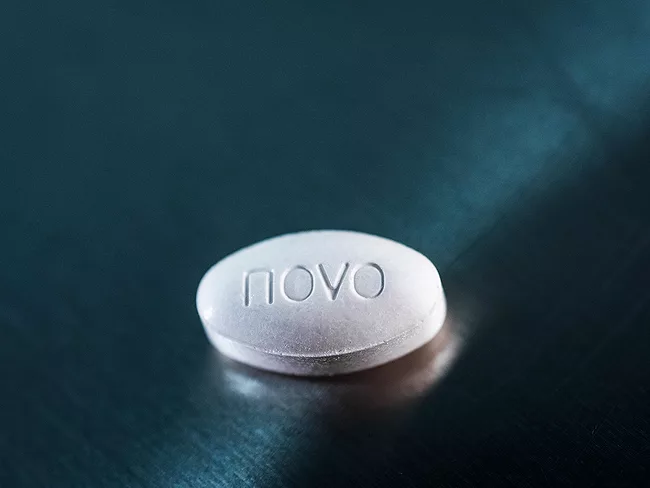
The U.S. FDA has accepted the NDA for an oral formulation of Novo Nordisk A/S’s Wegovy (semaglutide) in treating obesity. If approved, the daily pill will be the first oral GLP-1 for treating chronic weight management. So far, however, it has been injectables leading the way to approval.

 RSS
RSS