The mosaic loss of Y chromosome in myeloid cells is a major risk factor for increased incidence of cardiovascular and fibrotic diseases during aging. The authors of a study published in the July 14, 2022, online edition of Science found that bone marrow-derived myeloid cells exhibited mLOY during aging.
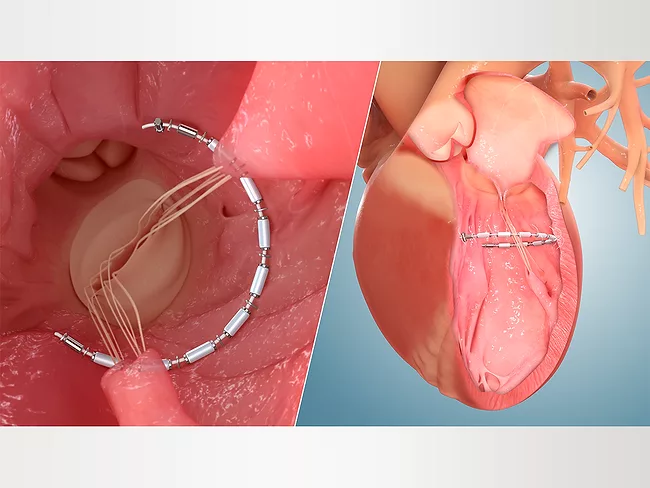
The U.S. FDA has granted a breakthrough device designation to Ancora Heart Inc. for its Accucinch ventricular restoration system. The minimally invasive treatment is intended to treat patients with symptomatic heart failure with reduced ejection fraction (HFrEF).
Venus Medtech (Hangzhou) Inc. received the green light in China for its transcatheter pulmonic valve replacement (TPVR) system Venusp-Valve. It is a self-expanding TPVR product for the treatment of severe pulmonary regurgitation (≥3+) in patients after a congenital heart defects procedure with native right ventricular outflow tract.
Medtronic plc has entered a strategic collaboration with Cathworks Ltd. to expand the reach of Cathworks’ artificial intelligence (AI) guidance system for coronary artery disease management. Medtronic will invest up to $75 million and immediately begin co-promotion of the Ffrangio system on the U.S., European and Japanese market. As part of a separate agreement, Dublin-headquartered Medtronic will have the option to acquire Cathworks once certain undisclosed milestones are met.
Several genetic studies in a range of model organisms have pointed to an important role for the B-cell lymphoma 2 (BCL2)-associated athanogene 3 (BAG3) gene in the maintenance of cardiac function.
Rainmed Medical Ltd. raised HK$146 million (US$19 million) in an initial public offering in Hong Kong. Its shares debuted at HK$5.60 and dropped as much as 15.38% to close at HK$5.28 on July 8, 2022, the first trading day. Jiangsu, China-based Rainmed Medical plans to use 80% of the proceeds to support the development and commercialization of its core products – a coronary angiography-derived fractional flow reserve (caFFR) system and a coronary angiography-derived index of microvascular resistance (caIMR) system.
 RSS
RSS