Those who are burdened with Marfan syndrome face a lifetime of multi-organ system issues including potential aortic aneurysm, but help may be on the way in the U.K. The National Institute of Health and Care Excellence (NICE) has issued a recommendation that these patients be treated with personalized external aortic root support (PEARS) to treat both aortic root expansion and aortic dissection, although the agency indicated that this procedure is not quite ready for routine use in the National Health Service.
Endotronix Inc. reported positive data from the SIRONA 2 clinical trial evaluating safety and efficacy of its Cordella pulmonary artery pressure sensor system in New York Heart Association (NYHA) class III heart failure (HF) patients.
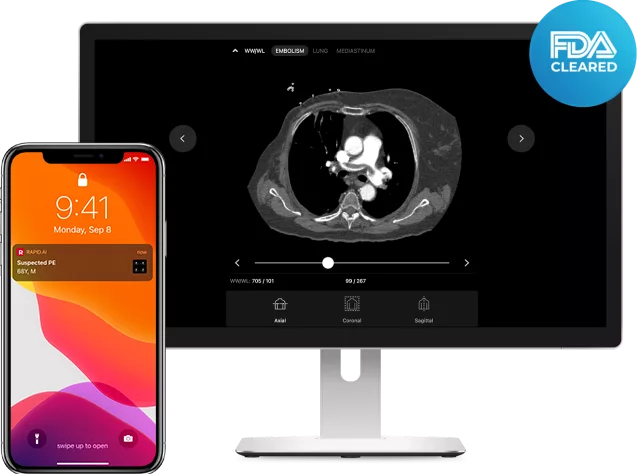
The transformation of cardiology continues with two U.S. FDA actions to promote the use of artificial intelligence (AI): a 510(k) clearance for Rapidai Inc.’s pulmonary embolism (PE) triage and notification product and breakthrough device designation for Anumana Inc.’s pulmonary hypertension (PH) early detection algorithm.
Idorsia Ltd. looks on course to produce another marketed drug after supportive phase III results for its hypertension drug, aprocitentan. The company’s first U.S. FDA-approved drug, Quviviq (daridorexant), was launched in April and another product, Pivlaz (clazosentan), was approved and launched in April for cerebral vasospasm in Japan.
Following last week’s FDA approval of its Onyx Frontier drug eluting stent (DES), Medtronic plc released results at EuroPCR from a real-world, multicenter prospective study using its Resolute Onyx platform for percutaneous coronary interventions (PCI) in the left main artery. Rehovot, Israel-based Pi-Cardia Ltd. also released early data for patients treated with its Short Cut transcatheter device for coronary obstruction prevention.
Keros Therapeutics Inc. announced preliminary results from a phase I trial of its engineered ligand trap KER-012 that gave its team confidence to proceed with larger studies in pulmonary arterial hypertension (PAH) and potentially some bone diseases. But company shares (NASDAQ:KROS) fell 16.6% to $38.50 May 18, following the announcement, perhaps over concerns about trial subjects that emerged in a company-hosted investor call.

 RSS
RSS