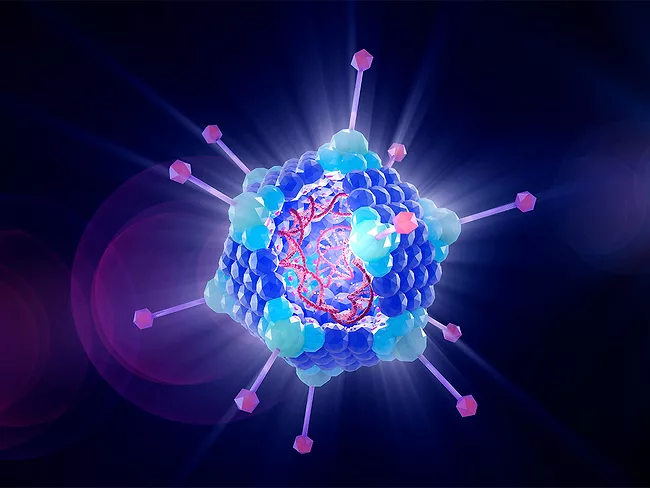
Sensorion SA has selected SENS-601 (GJB2-GT) as its lead program and has filed clinical trial applications to study its use for GJB2-related hearing loss. SENS-601 is an AAV-based gene therapy program, utilizing a gene therapy platform codeveloped with Institut Pasteur.
DFNB16, a recessive form of mild-to-moderate human deafness, is caused by mutations in the STRC gene, which encodes stereocilin, a protein essential for the effective function of outer hair cells as cochlear amplifiers. Researchers from the Institut Pasteur and Sorbonne Université in Paris, France, have developed and evaluated the efficacy of an Strc gene therapy in a mouse model of DFNB16.
Seamless Therapeutics has received big pharma endorsement of its proprietary recombinase gene editing platform, sealing a potential $1.12 billion deal with Eli Lilly and Co. to apply the technology in hearing loss.
Sensorion SA has announced a €60 million (US$72 million) financing, with a €20 million (US$24 million) strategic investment from Sanofi SA, as it advances its pipeline of therapies to restore, treat and prevent hearing loss disorders.
South Korean researchers led by Lee In-suk of Yonsei University have reported the most complete oral microbiome catalog to date, with more than 72,000 genomes. Detailed in Cell Host & Microbe on Nov. 12, 2025, the database is expected to serve as a universal platform for academia and enable “precision microbiome medicine” for the industry, Lee told BioWorld.
South Korean researchers led by Lee In-suk of Yonsei University have reported the most complete oral microbiome catalog to date, with more than 72,000 genomes. Detailed in Cell Host & Microbe on Nov. 12, 2025, the database is expected to serve as a universal platform for academia and enable “precision microbiome medicine” for the industry, Lee told BioWorld.
Hearing loss is a major global health challenge, affecting over 5% of the population and largely lacking effective biological therapies. Mutations in KCNQ4, which encodes the Kv7.4 potassium channel essential for outer hair cell function, are a leading cause of autosomal dominant, non-syndromic hearing loss (DFNA2).
Adeno-associated virus (AAV)-based gene therapy is considered a promising strategy to treat hearing loss. However, its clinical application is limited by the genetic heterogeneity of hereditary hearing loss, requiring gene-specific analysis and approach optimization for broader treatment applications.
Lineage Cell Therapeutics Inc. has entered into a research collaboration with William Demant Invest A/S to develop Lineage’s auditory neuronal cell transplant Resonance (ANP-1) for hearing loss.
 RSS
RSS