Bristol Myers Squibb Co. has agreed to pay up to $1.9 billion plus royalties, plus an up-front payment of undisclosed value, for Gentibio Inc.’s expertise in engineered regulatory T cells (Tregs) to treat inflammatory bowel diseases (IBD). The agreement follows soon after BMS’ $4.1 billion acquisition of cancer biotech Turning Point Therapeutics Inc., as well as an expansion of its oncology partnership with Bridgebio Pharma Inc. to the tune of $905 million.
Verve Therapeutics Inc. has packed a lot into the past few weeks. The latest is a four-year research deal with Vertex Pharmaceuticals Inc. to find and develop an in vivo gene editing program for an undisclosed liver disease. Vertex will pick up the tab for program costs as Verve does the preclinical R&D. Verve is getting an up-front $60 million from Vertex, along with a $35 million equity investment.
Microbiome specialist Enterome SA has out-licensed its lead human hormone mimetic, EM-1010, to Nestlé Health Sciences SA, in a deal that underlines the potential of its approach to generating novel drugs from proteins expressed by gut bacteria. EM-1010, the first program derived from Enterome’s Endomimics platform, is an orally available molecule that acts by promoting local release of interleukin 10 in the gut, with the aim of reducing inflammation. It is in development for the treatment of inflammatory bowel disease and food allergies and due to enter clinical trials in 2023.
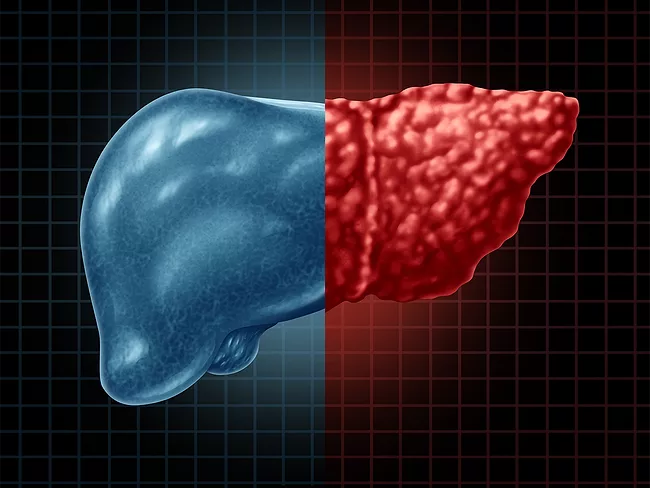
More than two years after the U.S. FDA shocked Intercept Pharmaceuticals Inc. with its rejection of obeticholic acid to treat fibrosis due to nonalcoholic steatohepatitis (NASH), the company has announced data it said will form the basis of a NDA refile in the disease for which there is no approved therapy.
Treating sooner in the disease course – “hit them hard, hit them early,” as CEO Tahir Mahmood put it – may change outcomes for the better with AMT-101, the candidate from Applied Molecular Transport Inc. (AMT) tested in a combo trial against ulcerative colitis (UC), officials said during a conference call with investors.
New data confirming that Gilead Sciences Inc.’s Hepcludex (bulevirtide) effectively cures hepatitis delta virus (hepatitis D), one of the most severe viral infections of the liver, and favorable phase III results from Madrigal Pharmaceuticals Inc.’s nonalcoholic steatohepatitis (NASH) contender were among the highest-profile scientific announcements at the International Liver Congress (ILC) 2022.
In this case, more is just too much. The number of participants needed to determine a significant clinical outcome in 9 Meters Biopharma Inc.’s phase III of larazotide in treating celiac disease has grown too large to support the study. The company said an independent statistician’s interim analysis convinced it to take a step back and re-evaluate its options for developing the zonulin inhibitor in the indication.
Poor phase II top-line data for Immunic Inc.’s lead candidate, vidofludimus calcium (IMU-838) hammered the stock June 2 as the study of the selective oral DHODH inhibitor missed its primary endpoint of clinical remission in treating moderate to severe ulcerative colitis. The failure means Immunic won’t pursue a phase III study on its own in the indication, but it won’t affect the company’s planned phase III studies of IMU-838 in treating relapsing multiple sclerosis (MS) and a phase II in treating progressive MS.
New and updated preclinical and clinical data presented by biopharma firms at Digestive Disease Week 2022, including: Ardelyx, Ferring, Ironwood, Janssen, Phathom, Rebiotix, Redhill, Second Genome.
Unveiling further positive data for SER-109 in preventing recurrent Clostridium difficile infection at Digestive Disease Week (DDW) over the weekend, Seres Therapeutics Inc. reiterated plans to file a BLA with the U.S. FDA in mid-2022. Should the FDA accept the application and grant priority review – SER-109 has breakthrough and orphan status – the medicine could be the first microbiome-based therapy to reach the market.
 RSS
RSS