In a deal potentially worth up to $15.2 billion, Jiangsu Hengrui Pharmaceuticals Co. Ltd. is joining efforts with Bristol Myers Squibb Co. to advance 13 early development programs in the fields of oncology, hematology and immunology. Shanghai-based Hengrui will hold exclusive rights in mainland China, Hong Kong and Macau, while Princeton, N.J.-based BMS will hold exclusive rights in the rest of the world. The deal includes four oncology/hematology assets from Hengrui, four immunology assets from BMS, and five assets that the two companies will jointly discover and develop.
Continuing biopharma’s IPO resurgence in 2026, Hemab Therapeutics Holdings Inc. priced an upsized offering of 16.75 million shares at $18 per share, the high end of its proposed price range, for gross proceeds of $301.5 million. Another $45 million could come if underwriters exercise their full overallotment.
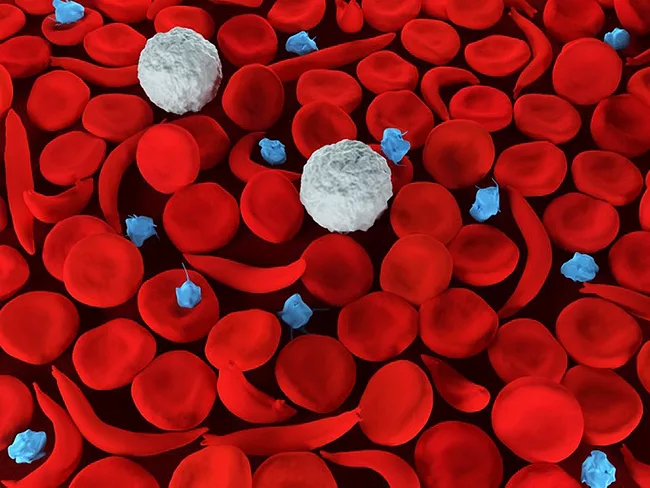
Novo Nordisk A/S reported top-line results from the phase III Hibiscus study of its pyruvate kinase-R activator, etavopivat, which was acquired through the 2022 buyout of Forma Therapeutics Holdings Inc. The results set up a potential competition for patients afflicted by sickle cell disease with fellow PKR activator mitapivat from Agios Pharmaceuticals Inc.
Hematopoietic stem cell research over the past century has shown that leukemia may be driven by an invisible hand of inflammation. The bone marrow and inflammation, then, may hold the keys to preventing blood cancers, according to John E. Dick’s plenary session at the 2026 Korean Society of Hematology International Conference, held March 26, 2026.
Deep molecular advances are enabling precision medicine for the field of hematology, Wyndham Wilson said during a plenary session at the 2026 Korean Society of Hematology International Conference March 26.
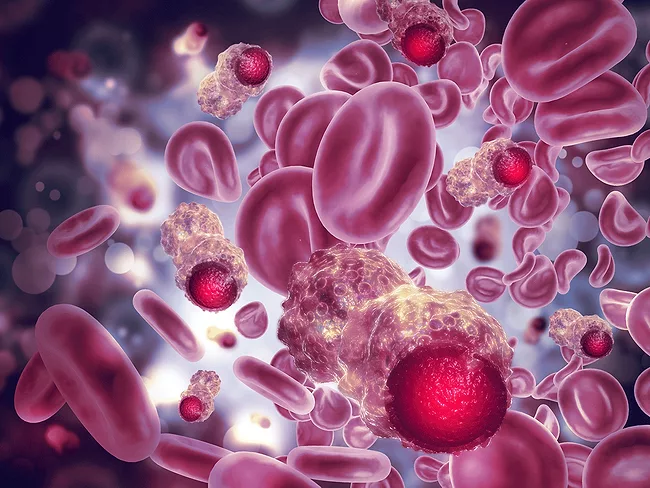
What one analyst called an “intriguing” overall survival signal in phase III results has Karyopharm Therapeutics Inc. planning to meet with the U.S. FDA about a would-be sNDA filing for Xpovio (selinexor) in myelofibrosis (MF).
On the heels of China’s approval of Sino Biopharmaceutical Ltd.’s rovadicitinib, Sanofi SA is now inlicensing the first-in-class dual JAK/ROCK inhibitor in a deal worth more than $1.4 billion.
China’s National Medical Products Administration has approved Sino Biopharmaceutical Ltd.’s rovadicitinib, branded as Anxu, for first-line treatment of adults with intermediate- or high-risk primary myelofibrosis, as well as post polycythemia vera myelofibrosis or post-essential thrombocythemia myelofibrosis.
Agios Pharmaceuticals Inc. is preparing to present a mixed bag of phase III Rise Up data to the U.S. FDA in hopes of “full approval” for mitapivat in sickle cell disease (SCD), which would make it its third indication in rare hematology.
The pressure to replace animal testing with human-relevant assays that are more predictive of human-drug responses has now reached a tipping point, and there is a movement toward greater acceptance of these potentially more translatable tests.
 RSS
RSS





-cells-in-blood-flow.webp?height=488&t=1772563584&width=650 "Primary myelofibrosis (PMF) cells in blood flow")
