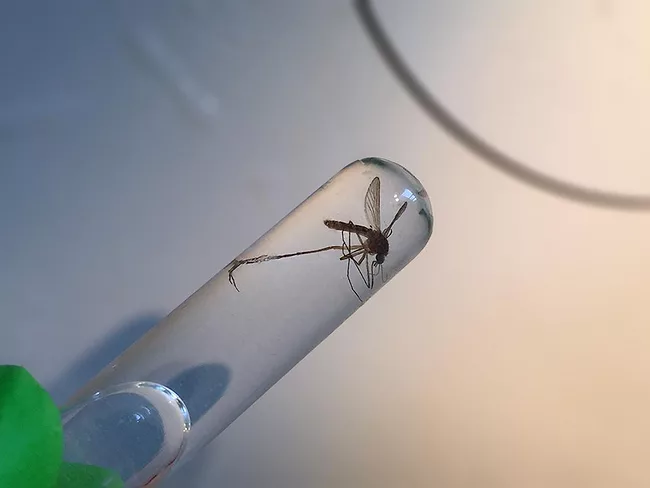
The Global Health Innovative Technology (GHIT) Fund has announced new investments in the development of a new prophylactic vaccine against malaria, a new anti-malarial drug, and product development projects against neglected tropical diseases.
Arialys Therapeutics Inc. launched this month with $58 million in seed funding, an experimental compound it is developing for autoimmune encephalitis and autoimmune psychosis, and high aspirations for its field. “Yes, I want to treat these patients, I want these patients to have a better life. But I also want drug discovery and development folks to think differently about discovering new drugs for the CNS,” Jay Lichter told BioWorld.
Toleranzia AB has begun a regulatory GLP-toxicology study of TOL-2, being developed for myasthenia gravis. Animals will receive daily doses of TOL-2 on multiple days to determine the safety and tolerability of TOL-2.
Phylex Biosciences Inc. has announced plans to pursue the development of a nanoparticle mRNA vaccine against the Nipah virus. Last year, the company published proof of principle for its second-generation nanoparticle mRNA vaccine against the SARS-CoV-2 delta virus.
Astellas Pharma Inc. and Mitobridge Inc. have synthesized stimulator of interferon genes protein (STING; TMEM173) antagonists reported to be useful for the treatment of autoimmune diseases, neurodegeneration, type I interferonopathy and Sjögren’s syndrome.
Transimmune AG has been awarded a $5 million investment from the Bill & Melinda Gates Strategic Investment Fund that will be used to leverage Transimmune’s physiologically induced dendritic cells (phDCs) to enhance the potency of mRNA vaccines in infectious diseases. The initial focus will be on a therapeutic vaccine for people with HIV.
Benevolentai Ltd. has signed a strategic collaboration with Merck KGaA to identify novel drug candidates, initially for three targets in oncology, neurology and immunology.
Evaxion Biotech A/S has announced the initiation of a novel pipeline program, EVX-B3, an artificial intelligence (AI)-designed vaccine candidate against an undisclosed bacterial pathogen. The new vaccine project will be the subject of a co-funded collaboration between Evaxion and an undisclosed partner.

 RSS
RSS