Researchers at Obleno Bio Inc. have reported preclinical efficacy data for LBL-051-S3, a trispecific T-cell engager antibody targeting CD3, CD19 and BCMA, in nonhuman primate models.
At the recent European Congress of Rheumatology (EULAR) meeting in London, researchers from Antegene Corp. Ltd. presented the preclinical characterization of ATG-207, an αCD3-TGF-β bifunctional fusion protein, in models of T-cell-driven autoimmune disease.
Systemic lupus erythematosus (SLE) is a chronic autoimmune disorder characterized by dysregulation in humoral immunity and sustained activation of B cells and autoantibody release, where BAFF (B-cell activating factor) and APRIL (a proliferation-inducing ligand) play crucial roles in B-cell differentiation and survival. Genescience Pharmaceutical Co. Ltd. has released data for its dual BAFF and APRIL inhibitor Gensci-136 for the treatment of SLE.
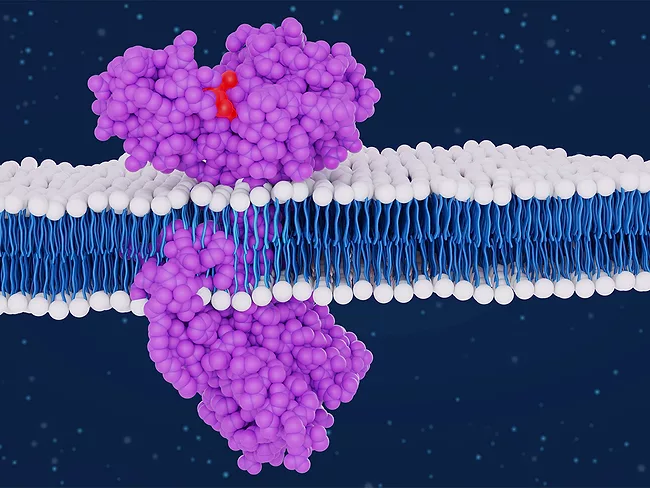
Modulating G protein-coupled receptors (GPCRs) is one of the major challenges in biomedicine. These are flexible proteins with small, deep binding pockets. The scientific community has explored small molecules, antibodies and nanobodies to develop ligands. Skape Bio Inc. is betting on creating miniproteins, a strategy that brings precise solutions for different functions.
Genome-wide association studies (GWAS) have identified multiple loci associated with complex diseases, but these are mostly on regulatory genes in the non-coding part of the genome and it has proved difficult to identify the effector genes that they control. Now, researchers in the U.K. have shown how single cell sequencing at scale can be used to precisely link non-coding GWAS loci to specific protein coding genes and cell types.
The Coalition for Epidemic Preparedness Innovations (CEPI) will provide up to $9.7 million in additional funding to Pop Biotechnologies Inc. to advance the company’s Pop Bio SNAP (Spontaneous Nanoliposome Antigen Particle) protein vaccine platform into a phase I trial.
IMU Biosciences Ltd. has closed its series A at £40 million (US$53.9 million), adding £28.5 million to the initial close in January 2024, and bringing the total raised since the company’s formation in 2021 to £45 million. Since that first close, IMU has built what is claimed as the world’s largest high-definition immune system dataset, with almost 25,000 profiles of healthy volunteers and disease-specific patient cohorts.
The Coalition for Epidemic Preparedness Innovations (CEPI) has announced funding and support to urgently accelerate development of three investigational vaccines targeting the Bundibugyo Ebola virus.
Moderna Inc. has announced an expanded collaboration with the Coalition for Epidemic Preparedness Innovations (CEPI) to advance the development of a potential vaccine against Bundibugyo Ebola virus (BDBV), a cause of Ebola virus disease.
Protuoso Biosciences has announced the close of an oversubscribed $9.5 million seed financing round, the proceeds of which will be used to advance its multifunctional protein engineering platform and broad pipeline across cardiometabolic, oncology and autoimmune diseases.
 RSS
RSS