December 2025 was a big month for announcements from Psithera Inc. The Watertown, Mass.-based newco announced its name change from Psivant Therapeutics, having come out from under the Roivant Sciences Ltd. umbrella – thus the dropping of the “-vant” name. The company also announced a $47.5 million series A financing and disclosed that Eric Shaff had started as the company’s new president and CEO.
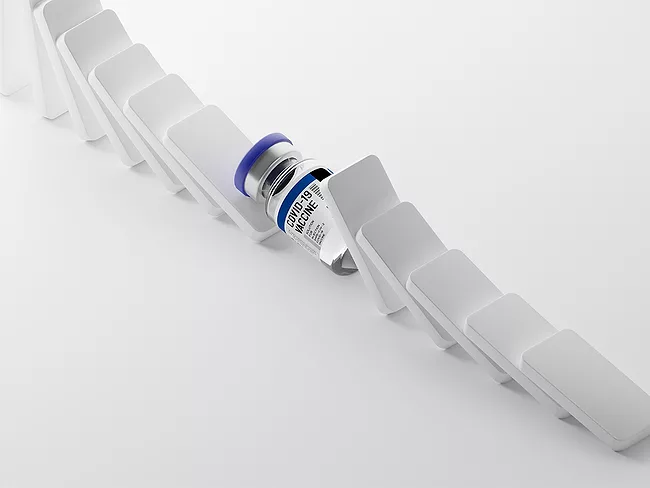
Excessive production of pro-inflammatory cytokines or aging-related chronic inflammation disrupts immunity and diminishes the efficacy of vaccines, although the underlying mechanisms remain unknown. Moreover, these pro-inflammatory cytokines are linked to adverse vaccine reactions. These two issues can lead to vaccine hesitancy, resulting in lower vaccination rates.
A review of 2025's noteworthy advances in medical research, including GLP-1 receptor agonists as anti-aging drugs, tumor-agnostic therapies and xenotransplants.
Multiple sclerosis (MS) is a chronic immune-mediated disease characterized by the destruction of myelin sheaths, neuroaxonal damage, glial cell activation and formation of demyelinated plaques in the CNS. Since MS is considered a prototypic antigen-specific autoimmune disease, restoring immune tolerance to self-antigens is being explored as a therapeutic strategy.
In October, the Nobel Committee awarded the 2025 Nobel Prize in Physiology or Medicine to Shimon Sakaguchi, Mary Brunkow and Fred Ramsdell for their discoveries in the field of autoimmunity. As has become typical for the scientific Nobel Prizes, the award-winning research is by now several decades old. But the discoveries were the basis for ongoing research into how to prevent autoimmunity that notched significant wins in 2025, in both basic research and in the clinic.
Driven by a deeply antiscientific political agenda, the current U.S. government is not just sabotaging some of the most groundbreaking technology that has been developed in the past decades. It is also destroying the country’s past successes, such as measles elimination and the reduction of hepatitis B infections in infants to near zero.
BioWorld’s 2022 end-of-year highlights included a toast to the future – of universal vaccines. Even before SARS-CoV-2 vaccines were developed in record time and saved countless lives during the COVID-19 pandemic, vaccines were a rare bright spot in the fight against infectious diseases. Bacteria are becoming multidrug resistant far faster than new classes of antibiotics are being developed, viral spillover events and vector ranges are increasing, and climate change is helping bacteria and fungi alike breach human thermal protections against infections.
Meta Pharmaceuticals Inc. and Shenzhen Moyuan Pharmaceuticals Co. Ltd. have divulged lactate dehydrogenase A (LDHA) inhibitors reported to be useful for the treatment of autoimmune disorders.
Advances in antiretroviral therapy (ART) now allow people living with HIV to lead normal lives with undetectable and nontransmissible levels of the virus in their blood. Yet that reality is limited to those with access to treatment. More than 40 million people worldwide live with HIV, with over a million new infections and hundreds of thousands of deaths each year, underscoring that major challenges remain.
A team at the University of Macau aimed to develop a novel peptide targeting the tumor necrosis factor (TNF)-TNFR2 interaction as a selective regulatory T cell (Treg) stimulator. Through phage display screening, they identified the peptide UMR2-705 that functions as an agonist that enhances TNF-induced Treg expansion.
 RSS
RSS