Biolojic Design Ltd. has earned an additional milestone payment from its collaboration partner, Teva Pharmaceutical Industries Ltd., for TEV‘325 (TEV-56308, formerly BD-9), a multibody targeting IL-13 and thymic stromal lymphopoietin (TSLP) for autoimmune disease
Researchers from Chengdu Kanghua Biological Products Co. Ltd. recently published information on their novel varicella zoster virus (VZV) mRNA vaccine candidate (KH014). KH014 contains sequence-optimized mRNAs encoding full-length glycoprotein E encapsulated in ionizable lipid nanoparticles.
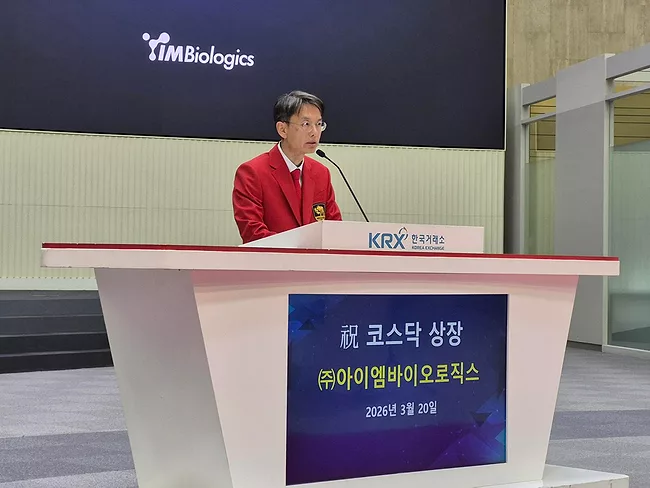
Imbiologics Corp.’s market capitalization reached ₩1.5 trillion (US$1.02 billion) on its Kosdaq debut March 20, as the biotech seeks to become a leading antibody drugmaker for autoimmune diseases.
Gilead Sciences Inc. said after U.S. market close March 23 that it will acquire privately held Ouro Medicines LLC and its autoimmune BCMA/CD3 bispecific T-cell engager, gamgertamig, in a deal valued at $2.17 billion.
At BioEurope Spring 2026, pharma representatives and investors shared their thoughts about current and future landscapes of different disease areas, and on how to move toward success – both at the level of individual companies and for indications as a whole.
Newco Immutrin Ltd. has raised £65 million (US$86.9 million) in a series A to take its lead antibody program through to clinical proof of concept in transthyretin amyloid cardiomyopathy.
For a company founded only four years ago, Quotient Therapeutics Inc. entered its third major deal, this time with Merck & Co. Inc. to find novel drug targets for inflammatory bowel disease (IBD) using its somatic genomics platform technology.
CDR-Life Inc. has announced the achievement of the first preclinical milestone under its 2025 license agreement with Boehringer Ingelheim Pharma GmbH & Co. KG. This milestone underscores progress in the companies’ efforts to develop next-generation antibody-based therapies for autoimmune diseases.
T-cell engager company Kali Therapeutics Inc. licensed its lead product, CD19/BCMA/CD3 trispecific antibody KT-501, to Sanofi SA in a global deal that could be worth more than $1.2 billion. The San Mateo, Calif.-based biotech first emerged in 2024 and moved KT-501 into a phase Ia trial last week to treat adults with rheumatoid arthritis.
Imbiologics Corp.’s market capitalization reached ₩1.5 trillion (US$1.02 billion) on its Kosdaq debut March 20, as the biotech seeks to become a leading antibody drugmaker for autoimmune diseases.
 RSS
RSS