Multidrug-resistant Klebsiella pneumoniae is a major health problem globally, with relevant infection-related mortality reported. Researchers from the Instituto de Salud Carlos III in Spain and their collaborators recently presented data regarding an outer membrane vesicle (OMV) vaccine for the management of K. pneumoniae infection, Kp-OMV4.
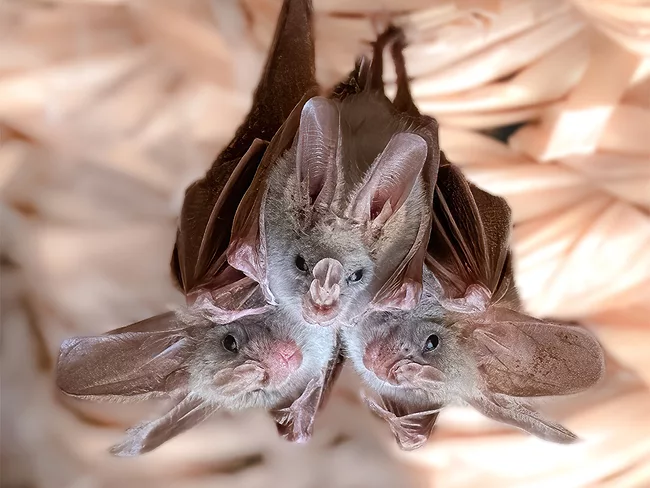
Researchers in the U.K. have developed an AI-driven method of identifying viruses in wild animals with the potential to spillover into humans. The technique makes it possible to use the genome sequences of the spike proteins by which viruses enter host cells to assess the potential to infect humans without having to isolate an individual virus and tests its infectivity in the lab.
The Global Health Innovative Technology (GHIT) Fund has invested in a number of R&D projects for the development of drugs for malaria, including a global partnership led by Medicines for Malaria Venture (MMV), Tanabe Pharma Corp. and the University of Georgia.
Klebsiella pneumoniae and Acinetobacter baumannii are both major contributors to the global antimicrobial resistance crisis, causing rapidly progressive and often severe infections. Researchers from Vaxdyn SL and collaborators presented efficacy data for K-Vax, an inactivated, LPS-null whole-cell A. baumannii-based vaccine engineered to display conserved K. pneumoniae outer-membrane proteins on the bacterial cell surface.
Arriving a week ahead of April 28 PDUFA date, the U.S. FDA approval of Merck & Co. Inc.’s Idvynso (doravirine/islatravir) brings a new treatment option to adults with HIV-1 infection who are virologically suppressed. The approval is for those with no history of virologic treatment failure and no known substitutions associated with resistance to doravirine.
As U.S. President Donald Trump’s third nominee for CDC director, Erica Schwartz will soon find out if three times really is a charm. Trump announced the nomination on social media April 16, touting Schwartz’s credentials for the job. Calling her “incredibly talented,” Trump cited her “distinguished career” as a military doctor, in the Navy and Coast Guard, and her service as deputy surgeon general during his first term in office.
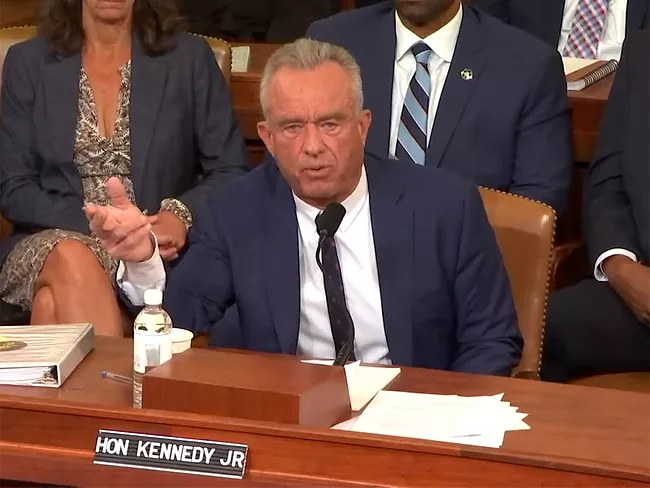
U.S. Health and Human Services (HHS) Secretary Robert Kennedy made his first stop April 16 on a congressional tour in support of President Donald Trump’s proposed fiscal 2027 budget, which would reduce discretional spending for HHS and its agencies by about 12%.
While most human papillomavirus (HPV) infections are cleared by the host immune system, persistent infection with high-risk HPV genotypes, particularly HPV16 and HPV18, can promote cervical cancer development. Researchers from Huazhong University of Science and Technology reported the development and preclinical characterization of KDTV-001, an HPV vaccine comprising a nonreplicating adenovirus type 5 vector encoding a codon-optimized fusion protein of the early antigens E6 and E7 derived from HPV genotypes 16, 18 and 52.
The Scripps Research Institute has identified new baloxavir analogues and their prodrugs acting as new influenza cap-dependent endonuclease (CEN) inhibitors potentially useful for the treatment of influenza viral infections.
 RSS
RSS