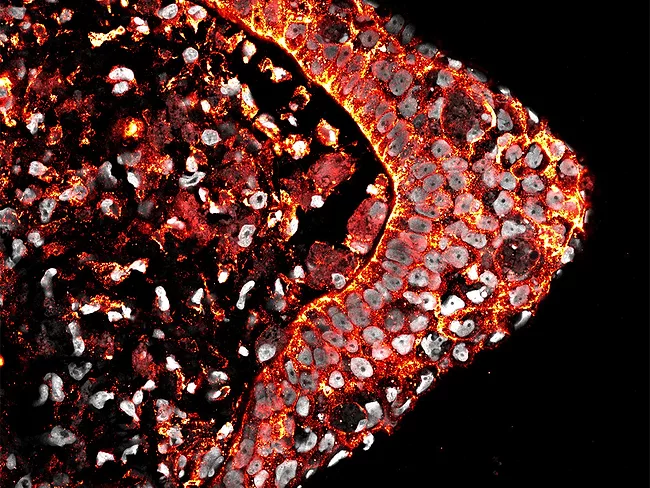
A new strategy aims to improve gene therapy for Pompe disease by optimizing both the genetic component that restores the function of a deficient lysosomal enzyme and the vector that delivers it to the target tissue while avoiding the liver. The findings suggest that combining an optimized transgene with a targeted capsid could significantly enhance the effectiveness of gene therapy for Pompe disease.
At the European Congress of Endocrinology in Prague, researchers from Juvena Therapeutics Inc. presented the effects of JUV-161, a fusion protein consisting of human insulin-like growth factor 2 linked to human serum albumin, in preclinical models of myotonic dystrophy type 1 (DM1) and sarcopenia.
Researchers from Rottapharm Biotech Srl have reported preclinical efficacy data on CR-10049, a long-acting osteoarthritis-targeted multikinase inhibitor, designed to treat both osteoarthritis pain and inflammatory joint degeneration.
Researchers from Alzecure Pharma AB and collaborators reported preclinical efficacy data on ACD-137, a selective negative allosteric TrkA modulator in models of peripheral neuropathy and osteoarthritis.
Changchun Genescience Pharmaceuticals Co. Ltd. has reported new parathyroid hormone receptor 1 (PTHR1) agonists potentially useful for the treatment of arthritis, fracture, hyperphosphatemia and more.
The loss of regenerative capacity in mammals over the course of evolution may be linked to certain environmental conditions rather than to a genetic limitation. Tissue stiffness around an amputated area, oxygen availability, or epigenetic regulation could determine this ability, according to two simultaneously published but independent studies published in Science, as reported by BioWorld yesterday.
The loss of regenerative capacity in mammals over the course of evolution may be linked to certain environmental conditions rather than to a genetic limitation. Tissue stiffness around an amputated area, oxygen availability, or epigenetic regulation could determine this ability, according to two simultaneously published but independent studies published in Science today.
Renovare Therapeutics Inc. has announced its formal launch from stealth mode with a focus on developing regenerative therapies for musculoskeletal diseases, including osteoarthritis.
Fortitude Biomedicines Inc. has disclosed that its lead program, FORT-202, is a first-in-class T-cell-targeting bispecific antibody for the potential treatment of axial spondyloarthritis. As a bispecific antibody, FORT-202 is designed to address multiple disease-causing pathways and is expected to significantly improve therapeutic efficacy.
Ernexa Therapeutics Inc. is advancing its lead program, ERNA-101, toward an IND submission in the third quarter of this year and the initiation of a first-in-human trial in the fourth quarter for the treatment of platinum-resistant ovarian cancer.
 RSS
RSS