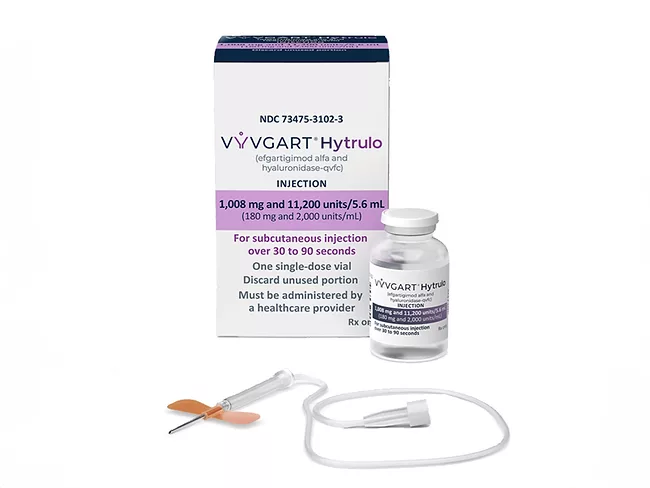
Argenx SE gained U.S. FDA approval of subcutaneously given Vyvgart Hytrulo (efgartigimod alfa and hyaluronidase-qvfc) for adult patients with chronic inflammatory demyelinating polyneuropathy (CIDP). The company’s stock (NASDAQ:ARGX) was up 11.7% to $440.59 at the close of trading June 24. About 24,000 people in the U.S. are being treated for CIDP, and patients are generally diagnosed between 40 and 60 years of age.
Alzheon Inc. has raised $100 million in a series E financing round to push its oral drug candidate for early Alzheimer’s disease (AD), ALZ-801 (valiltramiprosate), through a late-stage, Apolloe4 study.
A nearly two-year-old partial clinical hold has been lifted by the U.S. FDA on PTC Therapeutics Inc.’s pivotal phase II study in Huntington’s disease. The agency had paused enrollment in October 2022, saying it wanted more data on PTC-518, an orally bioavailable small-molecule splicing modifier, before enrollment could continue.
Wall Street is mulling Intra-Cellular Therapeutics Inc.’s chances of replicating with Caplyta (lumateperone) the path followed by Abbvie Inc. with Vraylar (cariprazine) in major depressive disorder (MDD), and possibly overtaking the latter in the difficult indication.
The adverse effects of PD-1 blockers on the CNS observed in cancer patients could occur through their effects on an enzyme that activates microglia. Pharmacological inhibition of the enzyme in mice reduced microglial activation and cognitive deficit without altering the antitumor capacity of the immunotherapy.
Following a day of deals that collectively bring a potential $3.75 billion into three biopharma companies – namely Ascidian Therapeutics Inc., Belharra Therapeutics Inc. and Mabcare Therapeutics – researchers will be busy discovering new therapies for neurological and immunological diseases, and advancing globally a candidate for solid tumors.
Disappointing top-line data from two failed phase III studies of soticlestat for Dravet syndrome (DS) and Lennox-Gastaut syndrome (LGS) have crumpled the stock of co-developer Ovid Therapeutics Inc., which lost three-quarters of its value June 17.
Following a phase II/III failure, Stamford, Conn.-based Cara Therapeutics Inc. discontinued its only pipeline program, that of oral difelikefalin for moderate to severe pruritis in adults with notalgia paresthetica, placing the company’s future in question.
Evercore ISI analyst Umer Raffat recently called orexin a “red hot neuropsychiatry target,” and the recent Sleep 2024 meeting in Houston bolstered such a view. Also known as hypocretin, the neuropeptide orexin is known to play a crucial role in regulating wakefulness, arousal, and appetite. It’s made in the hypothalamus, and was discovered in the late 1990s. Investigators found that people with narcolepsy can show a deficiency of orexin due to the loss of neurons.
Just as it is for terminally ill cancer patients, time is of the essence for people in the early stages of Alzheimer’s disease. Thus, the clinical meaningfulness of Eli Lilly and Co.’s donanemab is the time it gives patients before the disease progresses, Reisa Sperling, a neurology professor at Harvard Medical School and director of the Center for Alzheimer’s Research and Treatment at Brigham and Women’s Hospital, told the U.S. FDA’s Peripheral and Central Nervous System Drugs Advisory Committee June 10.
 RSS
RSS