Biogen Inc. and partner Eisai Co. Ltd. said the EMA’s Committee for Medicinal Products for Human Use has adopted a negative opinion on the marketing bid for lecanemab in early Alzheimer’s disease (AD) and mild AD. The humanized anti-soluble aggregated amyloid-beta monoclonal antibody is approved in the U.S., Japan, China, South Korea, Hong Kong and Israel, and is being sold in the U.S., where it’s branded Leqembi, as well as Japan and China. Eisai, of Tokyo, will ask the CHMP to re-examine the matter.
Alkira Bio, a new spinout from Australia’s Florey Institute of Neuroscience and Mental Health has emerged from stealth mode thanks to seed funding from Curie.bio. Although the amount of funding is not disclosed, Curie.bio typically invests $5 million to $10 million in a founder company and then co-pilots the drug discovery program, deploying drug development experts to its portfolio companies to help navigate decision making as part of the deal, Florey researcher turned Alkira Bio CEO Daniel Scott told BioWorld.
A phase II failure with SAGE-324 in essential tremor (ET) had Wall Street speculating about the fate of Sage Therapeutics Inc.’s partnership with Biogen Inc. Shares of Cambridge, Mass.-based Sage (NASDAQ:SAGE) ended July 24 at $10.38, down $2.70, or 20.6%, after the firm disclosed top-line results from the phase II Kinetic 2 dose-ranging study of oral SAGE-324 (also known as BIIB-124) for ET. The trial did not show a statistically significant dose-response relationship based on the primary endpoint, the Essential Tremor Rating Assessment Scale (TETRAS) Performance Subscale Item 4 (upper limb) total score.
After reaching a height in 2021, seed and series A rounds have fallen in recent years, and 2024 is no exception, although amounts raised are tracking slightly ahead of last year. On July 23, the numbers were given a boost when two new companies – namely Dover, Del.-based Brenig Therapeutics Inc. and Boston-based Third Arc Bio Inc. – raised $65 million and $165 million, respectively, in series A financings. A third new company, Abiologics Inc., also received $50 million in initial funding.
A schizophrenia drug in Cerevel Therapeutics Inc.’s lineup understandably stole much of the thunder during coverage of Abbvie Inc.’s takeover late last year to the tune of $8.7 billion, but much further back in the pipeline awaits another potentially lucrative prospect: a kappa opioid receptor antagonist (KORA) for major depressive disorder (MDD).
Asceneuron SA has raised $100 million in an oversubscribed series C to take its lead small molecule, ASN-51, into phase II, with aim of demonstrating it prevents the formation of tau tangles and slows the progression of Alzheimer’s disease.
The word “niche” implies a specialized environment. But to Fiona Doetsch, the stem cell niche is anything but. For brain stem cells, “the whole organism is the niche,” Doetsch told the audience at the third plenary session of the International Society for Stem Cell Research (ISSCR) annual meeting in Hamburg this week. It’s a surprising idea at first, given the brain’s protection from many circulating substances via a series of barriers, including the blood-brain barrier and the blood-cerebrospinal fluid barrier.
Interim data from two early stage Friedreich’s ataxia (FA) cardiomyopathy studies from Lexeo Therapeutics Inc. hit the mark by reducing heart muscle thickness, a key cause of death among patients with the rare disease. The results came from the Sunrise-FA phase I/II study and an investigator-initiated phase Ia study of LX-2006, an adeno-associated virus-mediated gene therapy encoding the human frataxin gene. The drug is designed to improve frataxin protein expression to improve mitochondrial cell function.
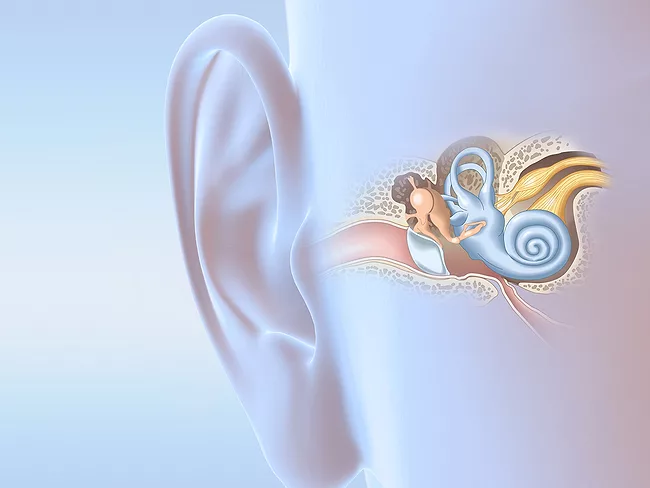
Patients with congenital hearing loss could benefit from a gene therapy currently in development. Although there are approaches that could reverse the process in children and young people before it becomes severe, so far, adults do not have any treatment that prevents the progressive deterioration of auditory sensory cells caused by this disease.
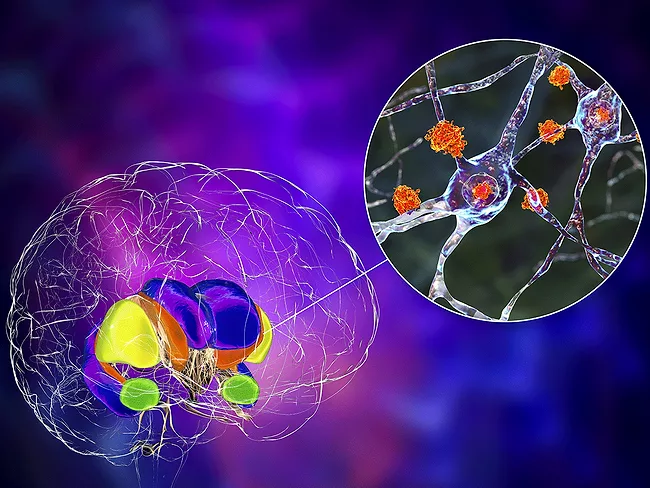
Uniqure NV shares (NASDAQ:QURE) closed July 9 at $6.67, up $2.89, or 76%, after the firm made public updated interim data including up to 24 months of follow-up findings from 29 treated patients enrolled in the ongoing U.S. and European phase I/II trials of AMT-130 for Huntington’s disease (HD).

 RSS
RSS