Schizophrenia remains one of the toughest mental health issues to treat, as well as an indication that has created substantial challenges for drug makers. The pipeline of potential new schizophrenia medicines is busy, with Cortellis showing that 10 new phase III schizophrenia trials that began recruiting patients in 2021 and 59 phase III trials ongoing at the end of the year.
Researchers at PTC Biotherapeutics Inc. have identified orally available small-molecule compounds that broadly lowered the levels of mutant huntingtin protein in both the brain and the periphery by affecting its splicing. One of those compounds, PTC-518, is currently in phase I trials as a therapy for Huntington's disease.
Attempts to modernize the conceptual framework of brain function and dysfunction are one prerequisite for brain disorders to benefit from precision medicine. For the circuit-based insights that are slowly emerging to benefit patients, though, better targeting methods are needed.
Brain disorders have not yet profited from advances in precision medicine to the same extent that other disorders have. With the advent of magnetic resonance imaging and other technologies, watching the brain at work has made great strides in recent decades. But those data have often been shoehorned into the categories of the Diagnostic and Statistical Manual of Mental Disorders. Researchers are working to bring diagnostic categories in line with a modern understanding the brain.
Wall Street didn’t much like Uniqure NV’s decision to hold off reporting efficacy measures in the phase I/II trial with one-time gene therapy AMT-130 for the treatment of Huntington’s disease (HD), but safety findings proved encouraging and analysts held out hope.
Clonal hematopoiesis of indeterminate potential (CHIP) was associated with a 35% reduced risk of Alzheimer's disease (AD) in studies presented at the plenary session of the American Society of Hematology (ASH) annual meeting on Sunday.
While financings have reached record levels, the stocks of BioWorld’s Neurological Diseases Index are now underground by 12.5%, a trajectory shadowed by the Nasdaq Biotechnology Index, down by 3.45%. The Dow Jones Industrial Average representing the broader markets, however, is up by nearly 13%.
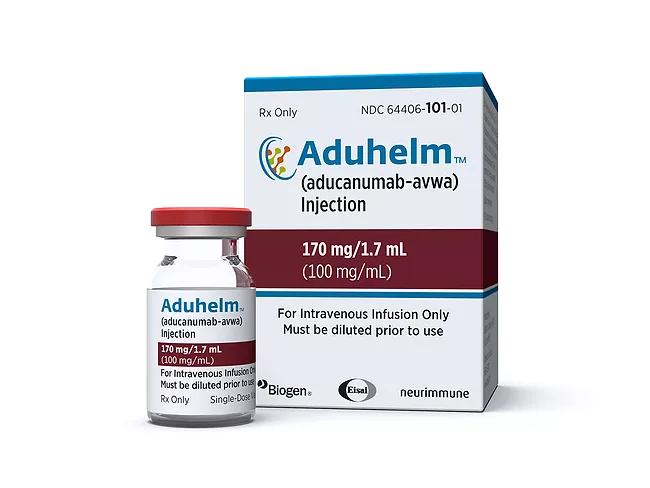
In 2021, no drug approval garnered as much attention and debate as Biogen Inc.’s Aduhelm (aducanumab). The FDA’s surprise, accelerated approval of Aduhelm for Alzheimer’s disease flew in the face of the recommendation by an advisory committee, causing a stir that included the resignation of three adcom members, along with publicly made claims that the company’s relationship with regulators had become too cozy.
After struggling in the past year, Ionis Pharmaceuticals Inc. will collaborate with Astrazeneca plc to develop eplontersen for treating transthyretin amyloidosis, which is systemic, progressive and fatal. At stake for Ionis is $2.9 billion in potential sales-related milestone payments.
PERTH, Australia – Neuren Pharmaceuticals Ltd.’s stock nearly doubled on positive top-line phase III results for trofinetide in Rett syndrome, meeting all primary and secondary endpoints in the pivotal phase III trial run by partner Acadia Pharmaceuticals Inc.
 RSS
RSS