LONDON – Aviadobio Ltd. has raised $80 million in a series A round to take a precision microdosed gene therapy for treating familial frontotemporal dementia into a phase I/II clinical trial.
Novartis AG, keen to expand its central nervous system franchise as generics chase down crown jewel Gilenya (fingolimod), has secured rights from UCB SA to co-develop and commercialize two potential Parkinson's disease therapies for $150 million up front and milestone payments approaching $1.5 billion.
LONDON – Newco Loqus23 Therapeutics Ltd. has closed a £7 million (US$9.4 million) extension of its seed round, providing the means to progress its lead small-molecule program in Huntington’s disease through lead optimization. The extended round, from the Novartis Venture Fund and the U.K. government-backed Dementia Discovery Fund, follows an initial seed investment of £4.5 million by DDF in 2019, that was not made public at the time.
LONDON – Sosei Heptares is to get $100 million up front in a potential $2.6 billion deal with Neurocrine Biosciences Inc., in which the pair will develop muscarinic receptor agonists in the treatment of schizophrenia, dementia and other neuropsychiatric disorders. San Diego-based Neurocrine is taking rights to a portfolio of small molecules against specific subtypes of the muscarinic receptor family, targeting M1 and M4 alone, plus a dual M1/M4 agonist.
A European approval for Alzheimer’s drug aducanumab by year-end looks even more in doubt. A week after being called in before the EMA’s Committee for Medicinal Products for Human Use (CHMP) for an oral explanation of the trial data, Biogen Inc. said it received a “negative trend vote” on the marketing authorization application. A formal opinion by the CHMP is expected at its December meeting, but analysts are not optimistic.
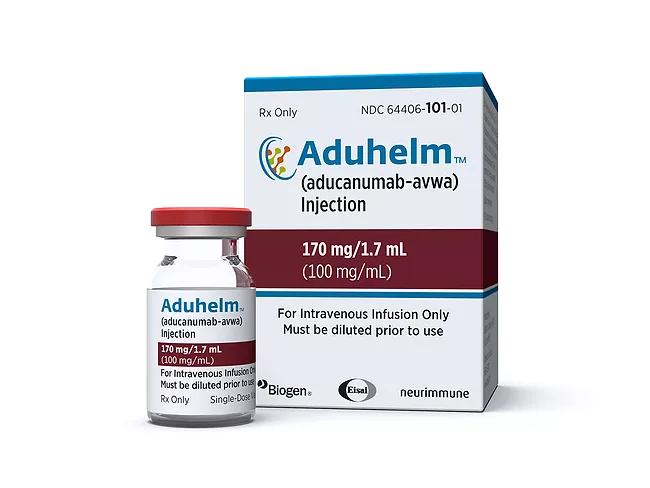
Technically speaking, the scientific community as a whole cannot say for sure whether and how well Aduhelm (aducanumab, Biogen Inc./Eisai, Co., Ltd.) works. After all, two years after the initial report of the Engage and Emerge data at the 2019 Clinical Trials in Alzheimer’s Disease (CTAD), the full trial data have still not been published in a peer-reviewed publication. Which, of course, is one of the problems with Aduhelm.
European regulators have put off a decision on Biogen Inc and Eisai, Co. Ltd.’s controversial Alzheimer’s drug, aducanumab, for likely another month, after the companies announced further supportive data from a follow-up under review by the FDA.
PERTH, Australia – Australian researchers have debunked previous research that suggests autism spectrum disorder behavior may be caused by differences in the composition of the gut microbiota.
Vaxxinity Inc. priced its IPO below the targeted range, selling 6 million shares (NASDAQ:VAXX) at $13 each for proceeds of $78 million, but came out of the gate impressively, closing at $16.55, up $3.55, or 27%, after reaching $22.77 during the day.
Investors were thrilled when Roche Holding AG subsidiary Genentech Inc. and AC Immune SA reported top-line results from the Lauriet trial on Aug. 31, giving a positive jolt to AC Immune’s stock on the day of the announcement. At the Clinical Trials in Alzheimer’s Disease 2021 meeting, the reaction of the medical community was more skeptical.
 RSS
RSS