Data on C2N Diagnostic LLC’s new blood test combining a proprietary p-tau217 measurement with the amyloid beta (a-beta) 42/40 ratio, a component of C2N’s commercially available PrecivityAD blood test, could help to predict people at risk for Alzheimer’s disease (AD) – even at the earliest stages.
Akili Interactive Labs Inc. has kicked off a phase III study of its digital treatment for children with attention-deficit/hyperactivity disorder (ADHD) living in Japan, the first pivotal trial of its video game-based cognitive treatment outside the U.S. Conducted by Osaka-based Shionogi & Co. Ltd., this marks the first pivotal trial of Akili’s video game-based cognitive treatment outside the U.S.
Cognetivity Neurosciences Ltd. is making progress in promoting its cognitive assessment tool as the brain health equivalent of a blood pressure check, following feedback from clinicians indicating the test could have broad applicability.
Investors are backing neurostimulation device company Stimdia Medical Inc. with $16 million, in the first tranche of a series B offering expected to total $30 million. The Minneapolis-based company is developing a device that stimulates the phrenic nerves in a patient’s neck to exercise the diaphragm during mechanical ventilation and minimize ventilation-induced diaphragmatic dysfunction (VIDD).
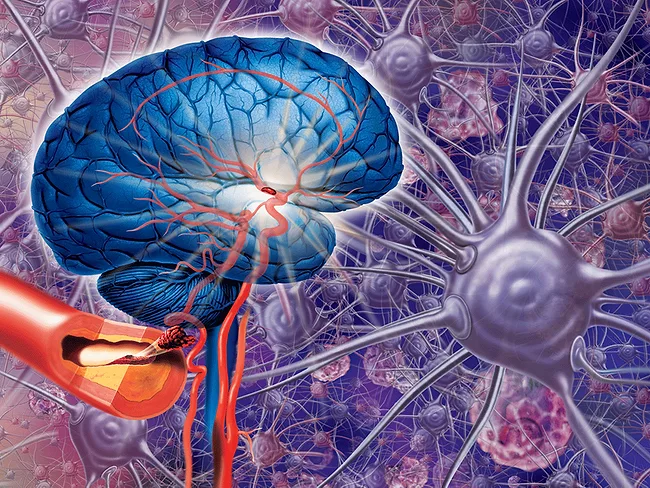
Infervision Medical Technology Co. Ltd. received approval from China’s NMPA for its radiological computer-assisted triage and notification software device Inferread CT Stroke. This is the first class III approval that the firm obtained in the cerebro-cardiovascular field. Class III approvals are for high-risk medical devices.
Peijia Medical Ltd. has received two marketing approvals from China’s NMPA for its catheters to be used in neurointerventional surgery. They are the balloon guide catheter (BGC) Fluxcap and delivery balloon dilation catheter Fastunnel. Both were developed by Peijia’s wholly owned subsidiary Achieva Medical Ltd.
Ekso Bionics Holdings Inc. added a new indication for its robotic Eksonr exoskeleton with a U.S. FDA 510(k) clearance for use of the mobility device in patients with multiple sclerosis (MS). The green light for MS follows clearances for stroke and spinal cord rehabilitation in 2016 and acquired brain injury (ABI) in 2020.
The U.S. FDA has granted clearance for Earlitec Diagnostics Inc.’s Earlipoint evaluation tool for the diagnosis and assessment of autism spectrum disorder (ASD) in children aged 16-30 months. The eye-tracking technology utilizes Dynamic Quantification of Social-Visual Engagement (DQSVE), which captures a child’s moment-by-moment looking behavior. The clearance was based on positive results from two studies in which more than 500 children were enrolled.
Bipolar disorder (BPD) is disabling, destructive and notoriously difficult to diagnose. Research indicates that up to 40% of patients diagnosed with major depressive disorder or unipolar depression actually have BPD and treating them with antidepressants alone runs an elevated risk of worsening their condition. But the issue is not one-sided: other studies found that 30% to 60% of patients diagnosed with BPD do not meet the clinical criteria for the illness and may be taking powerful mood stabilizers needlessly while failing to receive potentially beneficial therapies.
Otsuka Pharmaceutical Co. Ltd. and Ai-Brainscience Inc. signed an exclusive sales agreement for Japan that will see Otsuka market Ai-Brainscience’s eye-tracking application to test for cognitive function. The eye-tracking app, AiBS-01, could become the first dementia diagnosis application to receive regulatory approval in Japan. Ibaraki, Japan-based Ai-Brainscience (AiBS) is developing devices that use the eye-tracking based cognitive assessment test to detect early dementia beyond the conventional assessment methods performed by specialists.
 RSS
RSS