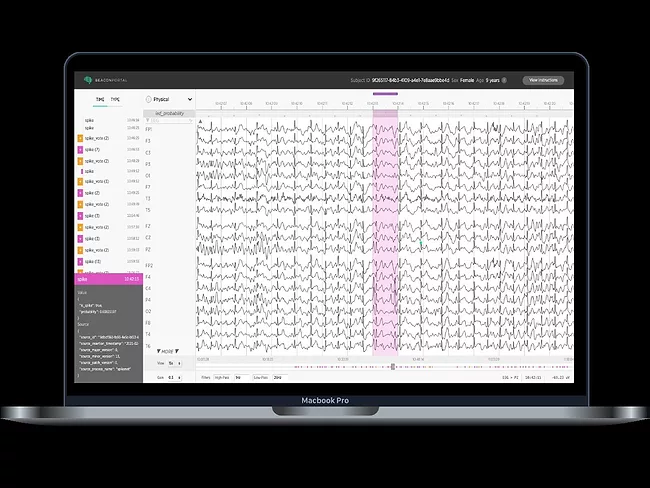
Beacon Biosignals Inc. has teamed up with Stratus Inc., a provider of electroencephalogram (EEG) services, to improve at-home brain monitoring and neurodiagnostics using Beacon’s machine learning-driven neuroanalytics platform. The collaboration will increase opportunities for home-based studies of Alzheimer’s and other neurological diseases.
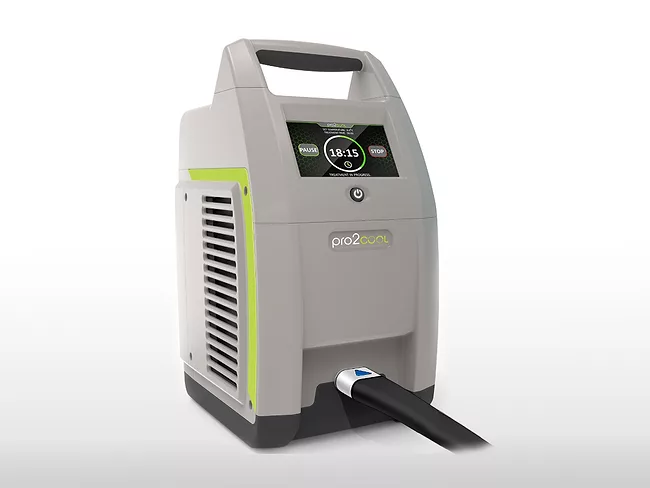
Hypothermic therapy startup Tectraum Inc. has finished enrolling patients in a pivotal trial of its Pro2cool device for the treatment of concussion. The company expects to submit the results to the U.S. FDA to support regulatory clearance by the end of this year and commercially launch Pro2cool in the U.S. in the first quarter of 2023.
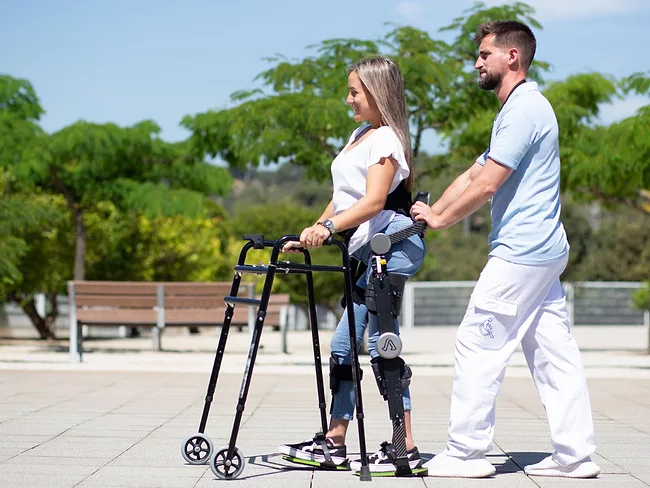
The rehabilitation robot market will soon have a new entrant as Able Human Motion SL prepares to launch a next-generation robotic exoskeleton. The Universitat Politècnica de Catalunya spin-off is on a mission to shake up the exoskeleton technology market with a low-cost, lightweight model that can be accessed by anyone with mobility impairments.
A research team led by neuroscientists and neurosurgeons from Paris-Saclay University have recently managed to demonstrate that electrical stimulation of the thalamus can restore consciousness when this has been impaired.
Impel Neuropharma Inc. presented multiple abstracts affirming the effectiveness of Trudhesa (dihydroergotamine mesylate) nasal spray in treating migraine attacks. The data – all subsets from the phase III, open-label, pivotal STOP-301 trial – show that acute use of Trudhesa delivered via Impel’s Precision Olfactory Delivery (POD) technology may enhance patients’ quality of life by reducing migraine-associated disability, prolonging headache-free periods and limiting the number of migraine attacks over time.
Results from a new peer-reviewed study show people develop emotional bonds with artificial intelligence (AI) therapy chatbots in a similar way to in-person therapists. The study evaluated 1,205 people using a mental health app developed by Wysa Ltd. to assist symptoms of anxiety or depression. The chatbot guides users through therapy exercises including cognitive-behavioral techniques (CBT), dialectical behavior therapy, meditation, breathing and yoga to build mental resilience skills.
Akili Interactive Labs Inc. has made grabbing and holding attention a distinguishing feature of its digital therapeutics and overall company strategy. Last month, it made news with its hire of gaming industry veteran Jon David as its chief product officer. Now, a study indicates a new product in development may help people with depression extend their attention span and possibly improve cognition, two common symptoms associated with the mood disorder that are not treated by most medications.
Boston Scientific Corp.’s image-guided programming software, Vercise Neural Navigator with Stimview XT, got the green light from the FDA for use with the company’s deep brain stimulation (DBS) portfolio in patients with essential tremor or Parkinson’s disease. The software, developed in a collaboration with Brainlab AG, provides more sophisticated image-guided programming tools for personalization of the stimulation therapy, halving the time needed for adjustments and increasing precision.
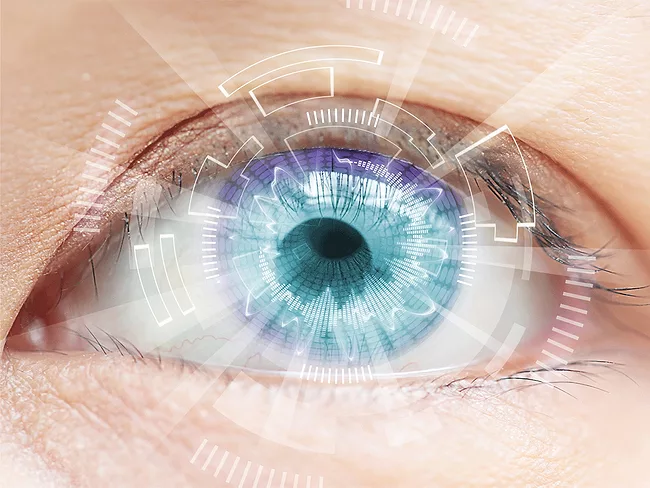
Meduni Vienna, the Medical University of Vienna, Austria, is working on a novel eye scanner combining the structural and functional sensitivity of optical coherence tomography (OCT) with the chemical specificity of Raman spectroscopy, to acquire data from the living human eye.
Quanterix Corp.’s Simoa technology helped drive a large, international study to establish reference ranges of serum neurofilament light chain (sNfL) to assess individual disease activity and drug response in multiple sclerosis (MS) patients. The study, published in The Lancet Neurology, utilized Simoa’s ability to precisely detect sNfL protein at ultra-low levels, enabling it to be reliably measured across a broad range of healthy individuals.
 RSS
RSS