BioWorld. Link to homepage.

Clarivate
  • BioWorld
  • BioWorld Science
  • BioWorld Asia
  • Data Snapshots
    • Biopharma
    • Medical technology
    • Infographics: Dynamic digital data analysis
    • Index insights
    • NME Digest
  • Special reports
    • Infographics: Dynamic digital data analysis
    • Ebola outbreak
    • Hantavirus
    • Trump administration impacts
    • Med-tech outlook 2026
    • Under threat: mRNA vaccine research
    • BioWorld at 35
    • Biopharma M&A scorecard
    • Bioworld 2025 review
    • BioWorld MedTech 2025 review
    • BioWorld Science 2025 review
    • Women's health
    • China's GLP-1 landscape
    • PFA re-energizes afib market
    • China CAR T
    • Alzheimer's disease
    • Coronavirus
    • More reports can be found here

BioWorld. Link to homepage.

  • Sign In
  • Sign Out
  • My Account
Subscribe
BioWorld - Wednesday, June 10, 2026
Home » Topics » Neurology/psychiatric, Medical technology

Neurology/psychiatric, Medical technology
Neurology/psychiatric, Medical technology RSS Feed RSS

insightec-exablate-neuro-12-13.png

Insightec low-intensity focused ultrasound opens blood-brain barrier in Alzheimer’s patients

Dec. 13, 2019
By Stacy Lawrence
There is no FDA-approved medication for Alzheimer’s disease. But there is some hope that if the blood-brain barrier could be more easily penetrated by drug candidates they would prove more effective. That is the line of research being pursued by Israeli company Insightec Ltd. via its Exablate Neuro that provides low-intensity focused ultrasound treatment.
Read More

Bioworld MedTech’s Neurology Extra for Dec. 13, 2019

Dec. 13, 2019
By Andrea Applegate
Keeping you up to date on recent developments in neurology.
Read More
Neural network

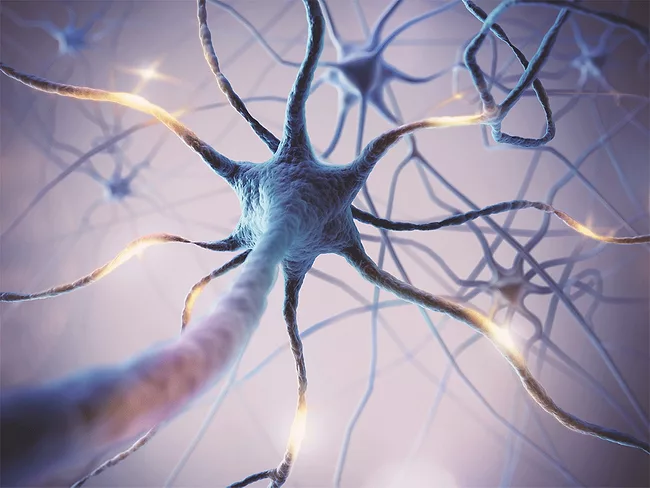
Scientists create artificial neurons capable of mimicking biological counterparts

Dec. 11, 2019
By Nuala Moran
LONDON – Scientists in the U.K. are claiming a world first, after successfully reproducing the electrophysiology of biological neurons in silicon chips. It is said that artificial neurons respond to non-linear physiological feedback in real time, in exactly the same way as their biological counterparts. Crucially, in terms of their use in medical implants, the analogue chips have a power consumption 109 times lower than equivalent digital microprocessors, which other attempts to make synthetic neurons have used.
Read More

Bioworld MedTech’s Neurology Extra for Dec. 6, 2019

Dec. 6, 2019
By Andrea Applegate
Keeping you up to date on recent developments in neurology.
Read More

Micro-leads raises $10M to develop and test precision spinal cord stimulation

Dec. 5, 2019
By Stacy Lawrence
Spinal cord stimulation to treat pain has long been associated with mixed efficacy and substantial side effects such as paresthesia, which is an unpleasant tingly or prickly sensation. Redwood City, Calif.-based Nevro Corp. famously has built a multi-billion-dollar business on next-gen, pain neurostimulation technology that improves efficacy and reduces side effects. Sommerville, Mass.-based Micro-leads Medical Inc. hopes that it could be next in successfully further refining spinal cord stimulation.
Read More
Righeye-system-12-3.png

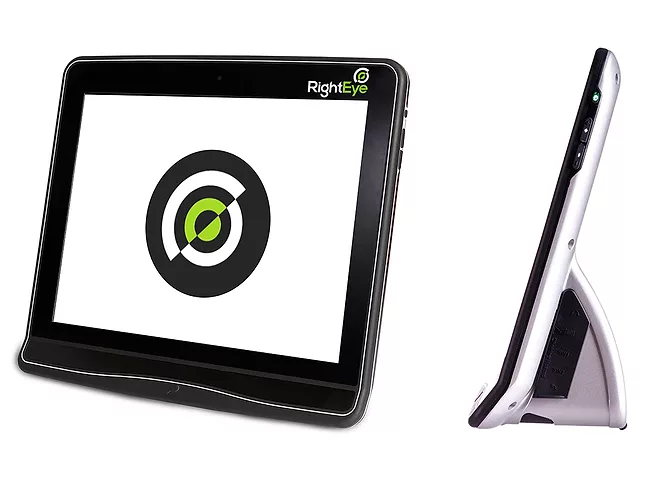
Righteye wins breakthrough device designation for Parkinson’s test

Dec. 3, 2019
By Meg Bryant

The U.S. FDA has granted breakthrough device designation for Righteye LLC’s eye movement-tracking vision system as a test for Parkinson’s disease. Developed by researchers at PADRECC and Virginia Commonwealth University with funding from the Michael J. Fox Foundation, and licensed to Righteye in 2016, the test requires patients to sit in front of an all-in-one tablet-looking device and follow a series of moving targets. The goal is to identify ocular tremors, a persistent issue with Parkinson’s patients that prevents steady fixation on objects and images. The noninvasive test, which measures an individual’s ability to follow objects on a screen, could help doctors not only confirm the difficult-to-diagnose disease, but also detect it at earlier stages.


Read More
MRI film

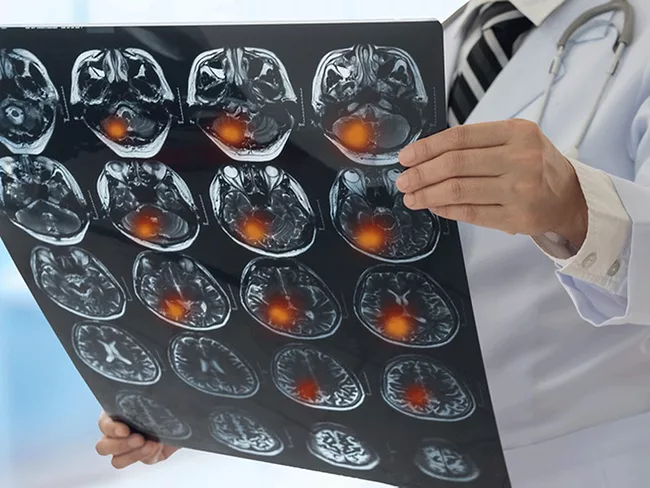
AI-based diagnostics company Neurophet secures ₩6 billion in series A

Dec. 2, 2019
By Jihyun Kim
HONG KONG – Neurophet Inc., a South Korean AI-based brain disease diagnostics company, has secured ₩6 billion (US$5.1 million) in series A funding. The med-tech startup produces solutions based on Segengine, the company’s own technology that automatically segments brain magnetic resonance (MR) images into 107 regions within a minute.
Read More
DNA illustration

Asuragen to develop CDx for Huntington’s disease gene therapies

Nov. 25, 2019
By Meg Bryant
Huntington’s disease is a fatal hereditary disease that results in the progressive breakdown of nerve cells in the brain. It erodes a person’s physical and mental abilities, usually beginning in their 30s and 40s, and to date has no cure. Now Austin-based Asuragen Inc. is joining forces with Wave Life Sciences USA Inc., of Cambridge, Mass., to develop companion diagnostics (CDx) for Wave’s investigative allele-selective therapeutic programs targeting the genetic cause of the disease.
Read More

Bioworld MedTech’s Neurology extra

Nov. 22, 2019
By Andrea Applegate and Anette Breindl
Keeping you up to date on recent developments in neurology.
Read More

BioWorld MedTech's Neurology Extra

Nov. 18, 2019
By Liz Hollis
Keeping you up to date on recent developments in neurology.
Read More
Previous 1 2 … 78 79 80 81 82 83 84 85 86 Next

Popular Stories

  • Today's news in brief

    BioWorld
    BioWorld briefs for June 9, 2026.
  • New York University identifies new analogues of mannose-6-phosphate

    BioWorld Science
    New York University has discovered new analogues of mannose-6-phosphate reported to be potentially useful for the treatment of memory impairment,...
  • China compass

    ASCO 2026: Chinese biopharma arrives at ASCO with pivotal wins

    BioWorld
    If the 2026 American Society of Clinical Oncology (ASCO) annual meeting in Chicago from May 30 to June 3 demonstrated anything about the evolution of China’s...
  • News in brief

    BioWorld Asia
    BioWorld Asia briefs for June 9, 2026
  • 3D rendering of β2-Adrenergic receptor GPCR protein molecule embedded in lipid bilayer membrane.

    Skape Bio unlocks GPCR targets with de novo-designed miniproteins

    BioWorld
    Modulating G protein-coupled receptors (GPCRs) is one of the major challenges in biomedicine. These are flexible proteins with small, deep binding pockets. The...
  • BioWorld
    • Today's news
    • Analysis and data insight
    • Clinical
    • Data Snapshots
    • Deals and M&A
    • Financings
    • Medical technology
    • Newco news
    • Opinion
    • Regulatory
  • BioWorld Science
    • Today's news
    • Biomarkers
    • Cancer
    • Conferences
    • Endocrine/metabolic
    • Immune
    • Infection
    • Neurology/psychiatric
    • NME Digest
    • Patents
  • BioWorld Asia
    • Today's news
    • Analysis and data insight
    • Australia
    • China
    • Clinical
    • Deals and M&A
    • Financings
    • Newco news
    • Regulatory
    • Science
  • More
    • About
    • Advertise with BioWorld
    • Archives
    • Article reprints and permissions
    • Contact us
    • Cookie policy
    • Copyright notice
    • Data methodology
    • Infographics: Dynamic digital data analysis
    • Index insights
    • Podcasts
    • Privacy policy
    • Share your news with BioWorld
    • Staff
    • Terms of use
    • Topic alerts
Follow Us

Copyright ©2026. All Rights Reserved. Design, CMS, Hosting & Web Development :: ePublishing