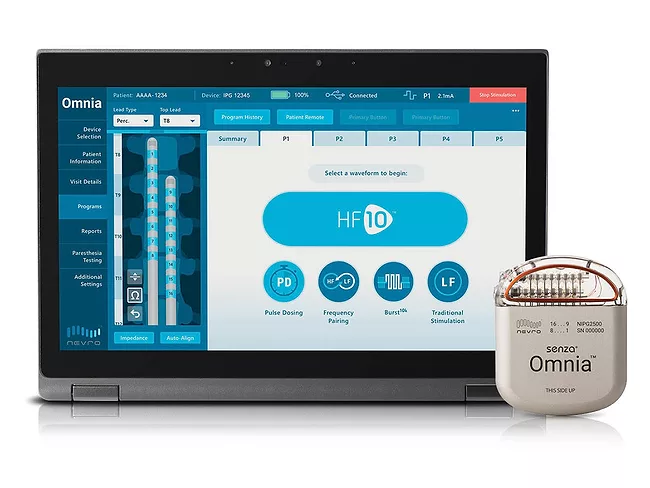
SAN FRANCISCO – After slowing growth starting in mid-2018 and a court battle with Boston Scientific Corp. that ended in a favorable resolution, 2019 was a much better year for pain neurostimulation player Nevro Corp., as it launched a major new product. So far, 2020 is looking up too. Its shares (NYSE:NVRO) gained 5% following a presentation at the J.P. Morgan (JPM) Healthcare Conference, where it preannounced 2019 revenues and offered 2020 guidance.
LONDON – Cognetivity Neurosciences Ltd. has received CE software as a medical device approval for its cognitive assessment tool, a five-minute test intended as a diagnostic aid to identifying the earliest stages of dementia.
The U.S. has granted final approval to Microvention Inc., a subsidiary of Terumo Corp. based in Aliso Viejo, Calif., for its Flow Redirection Endoluminal Device (FRED) for the treatment of brain aneurysms. The flow diverter – Microvention’s third PMA approval in less than two years – is the first in the U.S. to utilize a self-expanding, braided nitinol mesh to aid in rerouting blood flow away from the weakened area and promote occlusion.
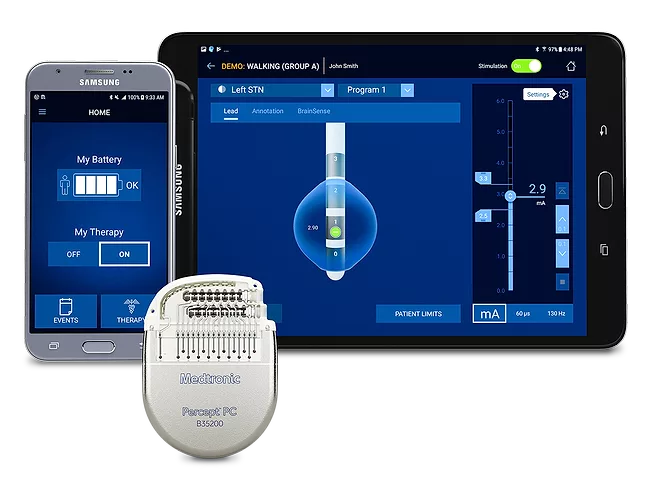
Dublin-based Medtronic plc received a CE mark for its Percept PC neurostimulator to treat neurologic disorders such as Parkinson’s disease. It is the first deep brain stimulation system launched in the EU that integrates the company’s technology to sense and record brain signals, known as Brainsense. It’s intended to enable more personalized treatment driven by that data.
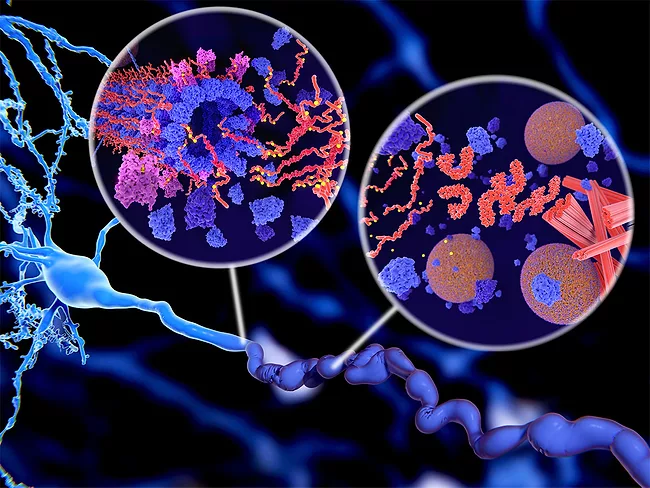
Amyloid and tau proteins are both involved in the disease pathology of Alzheimer’s disease. The diagnostic and treatment research focus has long been on amyloid, which has proven almost entirely fruitless after decades of effort. But tau is becoming better understood, as investigational tau imaging agents offer the ability to visualize its presence in the brain.
Saluda Medical Pty. Ltd., of Artarmon, Australia, made waves in 2019, winning the CE mark for its Evoke closed-loop spinal cord stimulation (SCS) system. The good news kept coming following the publication of results from a pivotal study in The Lancet Neurology.
With many on Wall Street transfixed by the three injectable calcitonin gene-related peptide (CGRP) therapies cleared in the prophylactic migraine market, Satsuma Pharmaceuticals Inc.’s prospects with STS-101 may have gone overlooked, at least until lately.

 RSS
RSS