Keeping you up to date on recent developments in neurology, including: High-resolution 3D model reveals similarity in Alzheimer's, diabetes; New MRI test shows promise in detecting CTE in football players; Neuropointdx reports metabolic biomarker found in children with ASD.
The potential for neurological complications, including seizures and stroke, is a growing concern with COVID-19 patients. To ensure rapid diagnosis and treatment, Ceribell Inc., a Mountain View, Calif.-based startup, is deploying its cloud-linked, portable electroencephalogram (EEG) device to enable EEG assessments in minutes in emergency rooms and intensive care units.
The disconnect between the need for sleep and the possession of a brain is what prompted Dragana Rogulja, an assistant professor of neurobiology in the Blavatnik Institute at Harvard Medical School, and her team to take a look at multiple tissues in sleep-deprived flies and mice.
Keeping you up to date on recent developments in neurology, including: Three stages to COVID-19 brain damage identified; ApoE4’s role in Alzheimer’s blood vessels; Lifespan synaptic atlas gives developmental insights.
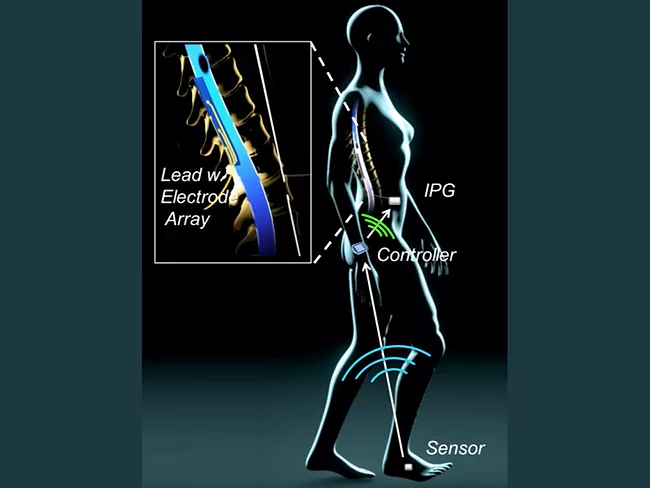
The U.S. FDA granted Gtx Medical BV a breakthrough device designation for its implantable Go-2 Targeted Epidural Spinal Stimulation (TESS) system. The device enabled patients who had sustained traumatic spinal cord injuries to regain voluntary control over previously paralyzed muscles and walk again four or more years after paralysis, according to a study previously published in Nature.
Boston-based startup Cerevasc Inc. scooped up $43.9 million in a series A round that was led by Perceptive Xontogeny Venture (PXV) Fund and Aton Partners LLC. The funds are earmarked to support a first-in-human trial of the company’s Eshunt system for the treatment of hydrocephalus, as well as subsequent clinical studies to support regulatory approvals.
Keeping you up to date on recent developments in neurology, including: Wearable brain scanner technology expanded for whole head imaging; New biomarker assay demonstrates improved detection for Alzheimer's; Protecting the brain from a nasal virus infection; App promises to improve pain management in dementia patients.
Hydrocephalus involves the buildup of excess fluid in the brain. It affects more than 1 million people in the U.S. – most of them children – and can result in brain damage and related neurological impairments. Shunt implants are the standard treatment to drain that fluid, but more than half of them fail within the first couple of years of placement.
TORONTO – Toronto-based Epineuron Technologies Inc. reported the completion of a financing round to develop and clinically validate neuroregenerative technology intended for the recovery of patients suffering from peripheral nerve injuries. Designated a breakthrough device by the U.S. FDA, the “nerve bandage” uses brief bioelectronic stimulation of injured nerves to “upregulate” associated genes that accelerate nerve regeneration.
Keeping you up to date on recent developments in neurology, including: Vagus nerve research improves stimulation for chronic pain; Restoring nerve-muscle communication in ALS; Biomarkers may help us understand recovery time after concussion; Study: MS risk 29% higher for people living in urban areas.

 RSS
RSS