Targeting the toxic alpha-synuclein protein found in the brains of people with Parkinson’s is one of the most promising approaches to treat the disease in the clinic – but getting any drug into the brain is a challenge. Sanofi SA has joined with ABL Bio Inc. to solve this problem, in-licensing ABL-301, a preclinical bispecific antibody that locks on to misfolded alpha-synuclein but also includes a molecular “shuttle” that allows it to penetrate the blood-brain barrier.
Not heeding earlier FDA advice has earned Levo Therapeutics Inc. a complete response letter (CRL) for its NDA seeking approval for intranasal carbetocin (LV-101) in hyperphagia associated with Prader-Willi syndrome (PWS). The CRL followed a 12-1 negative advisory committee vote in November.
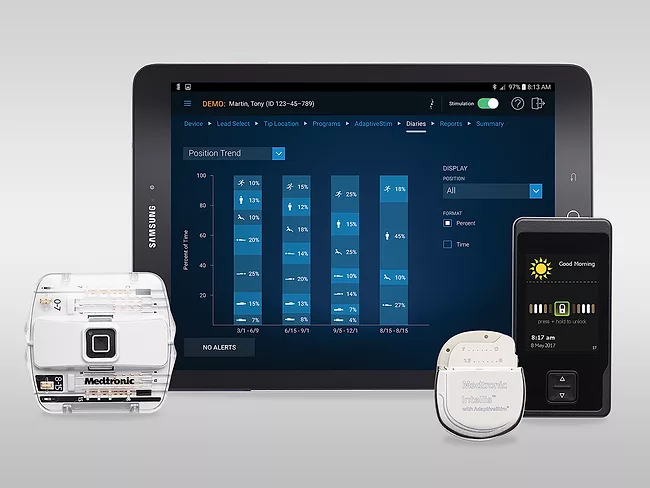
Medtronic plc released initial results showing meaningful pain relief using differential target multiplexed (DTM) spinal cord stimulation (SCS) endurance therapy, a lower-energy form of its DTM SCS treatment for overall, back or leg pain. At three months, patients in the on-label, prospective, multicenter study reported that their overall pain was about half what it was at the start of the study, measured by a 3.9 cm reduction on the 10 cm Visual Analog Scale (VAS) vs. 7.8 cm at baseline. Patients in the study also reported an average decrease in back and leg pain or 4.3 cm and 5.0 cm, respectively. Medtronic plans to offer the DTM SCS endurance therapy on its rechargeable Intellis and primary cell Vanta platforms.
That excruciating moment when patients learn their lives are potentially at risk to a “wide neck” brain aneurysm could be softened by results of a long-awaited international study led by researchers at Massachusetts General Hospital (MGH) and Harvard Medical School. According to lead author Adam Dmytriw, wide-neck aneurysms will respond better to the Woven Endobridge Web device than metal stents and blood thinners.

 RSS
RSS