Anavex Life Sciences Corp. reported top-line data from the 33-subject phase III study with Anavex 2-73 (blarcamesine) in adult females with Rett syndrome, turning up a statistically significant improvement over placebo for the primary efficacy endpoint as well as for all the secondary efficacy endpoints. The sigma-1 receptor activator, given as a once-daily, oral liquid, proved well-tolerated, too, with good compliance by patients, Anavex said.
While comments continue to pour in, both in opposition and support, regarding the U.S. Centers for Medicare & Medicaid Services’ (CMS) proposed national coverage decision that would restrict Medicare coverage of monoclonal antibodies intended to treat Alzheimer’s to those used in CMS- or NIH-approved clinical trials, some groups also are appealing to Health and Human Services (HHS) Secretary Xavier Becerra to step into an HHS agency turf war.
Galvani Bioelectronics Ltd. reported the first patient implanted with its experimental direct splenic nerve stimulation therapy for rheumatoid arthritis (RA). The first-in-human implant is part of a small trial at the NHS Greater Glasgow & Clyde Health Board in Scotland.
South Korea’s Gwangju Institute of Science and Technology (GIST) has completed a preclinical study for a noninvasive therapy for Alzheimer’s disease. The "ultrasound-based gamma entrainment” technique involves syncing up gamma waves, or brain waves above 30 Hz, with an external oscillation of a given frequency. This happens naturally by exposing a subject to a repetitive stimulus, such as sound, light, or mechanical vibrations.
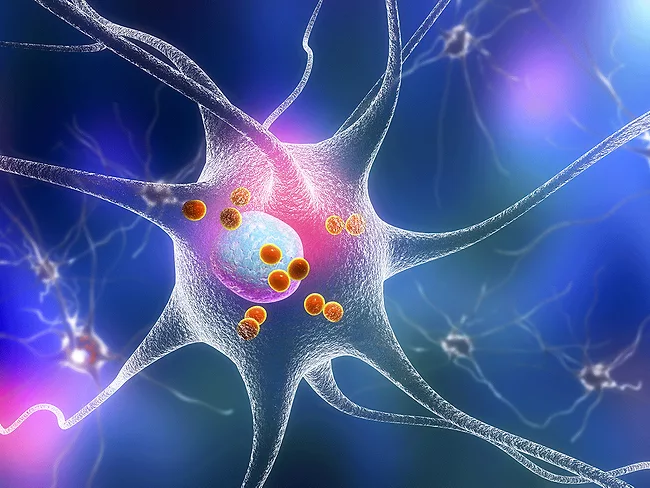
Several pharma companies think that targeting a rogue protein known as alpha-synuclein could be the key to halting or reversing neurodegeneration in Parkinson’s disease – but has the industry learned from a string of failures in Alzheimer’s? In the space of a few weeks, Novartis AG and Sanofi AS have signed major deals for molecules targeting misfolded alpha-synuclein, the rogue protein thought to be the root cause of Parkinson’s disease.
Drugs targeting receptors of the neurotransmitter serotonin (5-hydroxytryptamine [5-HT]) are widely used in neuropsychiatry and some such agents, most notably psilocybin, have shown potential for further drug development, but hallucinogenic effects have limited their clinical use. The findings of a new multicenter Chinese structural pharmacology study may now provide a solid basis for the structure-based design of safe and nonhallucinogenic psychedelic analogues with therapeutic efficacy, the authors reported in the January 28, 2022, edition of Science.
 RSS
RSS