As it advances its nonopioid analgesic ATX-101 breakthrough therapy through a phase IIb registration trial, Allay Therapeutics secured $57.5 million in a series D round, which included an investment from the company’s Japanese partner.
Aribio Co. Ltd. signed a $600 million license deal with Acino International AG, an Arcera Life Sciences subsidiary, granting the latter commercial rights to its oral Alzheimer’s disease therapy, AR-1001, in select countries including the Middle East.
Solve FSHD and Modalis Therapeutics Corp. have established a strategic collaboration to develop an innovative therapy for facioscapulohumeral muscular dystrophy (FSHD).
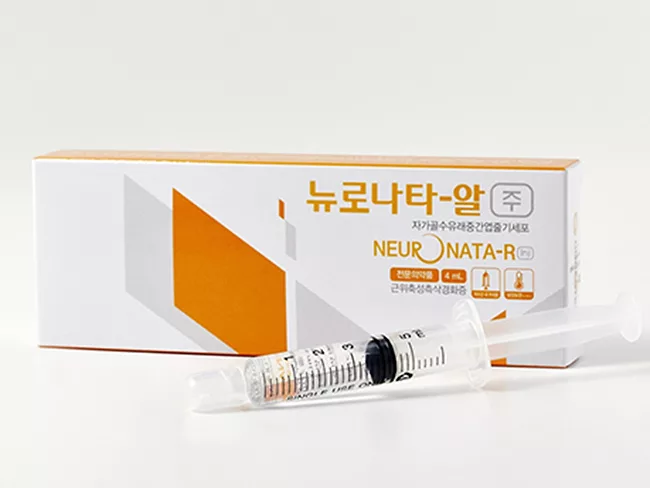
Corestemchemon Inc. is planning to file a BLA for Neuronata-R (lenzumestrocel) by the end of 2025 to gain accelerated approval from the U.S. FDA, company officials confirmed to BioWorld during a June 2 interview. Neuronata-R is an autologous bone marrow-derived mesenchymal stem cell therapy that first gained approval in South Korea in 2014 to delay the progression of amyotrophic lateral sclerosis (ALS), a progressive neurodegenerative disorder also known as Lou Gehrig’s disease.
As it advances its nonopioid analgesic ATX-101 breakthrough therapy through a phase IIb registration trial, Allay Therapeutics secured $57.5 million in a series D round, which included an investment from the company’s Japanese partner. ATX-101, a configuration of sodium ion channel blocker bupivacaine and a biopolymer, which is in a phase IIb registration study, is designed to offer pain relief following total knee arthroplasty.
Merck Sharp & Dohme LLC has identified compounds acting as potassium/sodium hyperpolarization-activated cyclic nucleotide-gated channel 1 (HCN1) and/or 2 (HCN2) blockers reported to be useful for the treatment of neuropathic pain, tinnitus, psychiatric and neurological disorders.
Mindimmune Therapeutics Inc. has been awarded a grant by Rhode Island Life Science Hub to accelerate preclinical development work on MITI-101 for the treatment of mild to moderate Alzheimer’s disease. The award will accelerate development work needed to start first-in-human studies.
Scientists at Shanghai Tech University have used the scaffold-hopping artificial intelligence model Geminimol to identify N-methyl-D-aspartate (NMDA) receptor ligands that show selectivity and specificity. The researchers found that GM-10 could be a potent inhibitor of the GluN1/GluN3A subunits of the NMDA receptor, demonstrating the utility of this technique to develop new drugs.
Solvonis Therapeutics plc has completed synthesis of development candidates for its SVN-SDN-014 program, a novel series of serotonin, dopamine and noradrenaline modulators.
 RSS
RSS