U.K. biopharma is working with the country’s space agency and Civil Aviation Authority (CAA) to plot a route for manufacturing biologic drugs in low earth orbit.
The signaling axis orchestrated by OX40L-OX40 is a T-cell costimulatory pathway implicated in multiple autoimmune diseases, such as atopic dermatitis (AD). Antibodies targeting this pathway have proven useful at treating AD in the clinical setting. Earendil Labs recently presented data regarding HXN-1021, an anti-OX40L antibody with potent activity and extended half-life, in vivo.
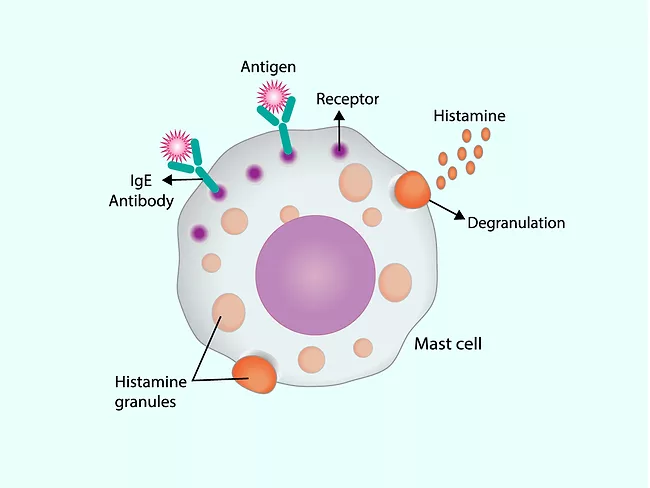
IgE is known to drive allergic disease, and omalizumab is the only approved anti-IgE antibody to date that has shown suboptimal IgE affinity and limited use in scenarios with high IgE levels.
Belgian pharma giant UCB SA is putting skin in the bispecific T-cell engager (TCE) game, announcing a potential $1.1 billion deal to license Antengene Corp.’s ATG-201. ATG-201 is a CD19/CD3 bispecific TCE antibody aimed at autoimmune disorders, though specific indications were not disclosed.
Antiverse Ltd. has announced the close of a $9.3 million series A financing. The funding will support expansion of the company’s proprietary AI antibody design platform, accelerate development of its internal therapeutic pipeline, and advance lead antibody programs toward in vivo efficacy studies.
Broadly neutralizing antibodies (bNAbs) target conserved HIV envelope regions to neutralize diverse strains, eliminate infected cells and reduce viral reservoirs, complementing antiretroviral therapy and supporting prevention and functional cure strategies.
Harbour Biomed is spinning out newco Solstice Oncology and is outlicensing its CTLA-4 antibody, porustobart (HBM-4003), to the newco in a cash and equity deal worth more than $1.2 billion.
Newco Vesalic Ltd. has formed to take forward research indicating extracellular vesicles secreted by skeletal muscle cells carry toxic payloads that are key drivers of motor neuron diseases, including amyotrophic lateral sclerosis. The discovery of this process, which is largely external to the brain and the central nervous system, has opened up new targeting possibilities, and Vesalic is now working on in vivo studies to demonstrate preclinical proof of concept.
CD137 is a potent immune costimulatory receptor that promotes T-cell activation and enhances antitumor immune responses. However, systemic activation of CD137 can result in excessive immune stimulation and associated safety risks, such as hepatotoxicity, limiting its clinical use.
 RSS
RSS