Sun Pharmaceuticals Industries Ltd. will pay $11.75 billion cash to acquire Organon & Co. The transaction is expected to close in early 2027. The addition of Organon’s women’s health products, legacy drug brands and biosimilars are expected to boost Mumbai, India-based Sun’s global reach. The all-cash buy is also expected to relieve Jersey City, N.J.-based Organon of an $8.6 billion debt pile, accumulated after its debt-laden 2021 spinout from Merck & Co. Inc.
South Korea is rolling out regulatory changes to speed biosimilar development, including reforms to shorten review timelines, ease phase III trial requirements and simplify oversight of manufacturing changes.
China’s National Medical Products Administration has accepted for review Jiuyuan Genetic Biopharmaceutical Co. Ltd.’s drug application for Jikeqin, a biosimilar product to Novo Nordisk A/S’s Wegovy (semaglutide) for obesity.
China’s National Medical Products Administration approved Innovent Biologics Inc.’s NDA for Tabosun (ipilimumab N01, IBI-310) in combination with sintilimab as neoadjuvant treatment for stage IIB-III resectable microsatellite instability-high or mismatch repair deficient colon cancer.
Speed and innovation from Asia Pacific’s (APAC) biotechnology sector had big pharma scouring the region for the next oncology heir to Keytruda (pembrolizumab), Merck & Co. Inc.’s reigning blockbuster cancer drug.
Shanghai Henlius Biotech Inc. and Organon & Co. announced Nov. 17 that the U.S. FDA cleared Poherdy (pertuzumab-dpzb) as the first and only interchangeable biosimilar to Perjeta (pertuzumab, Genentech Inc./Roche Holding AG).
Celltrion Inc. announced Oct. 29 the signing of an $87.75 million joint drug R&D agreement with AI and spatial transcriptome-based biotech Portrai Inc.
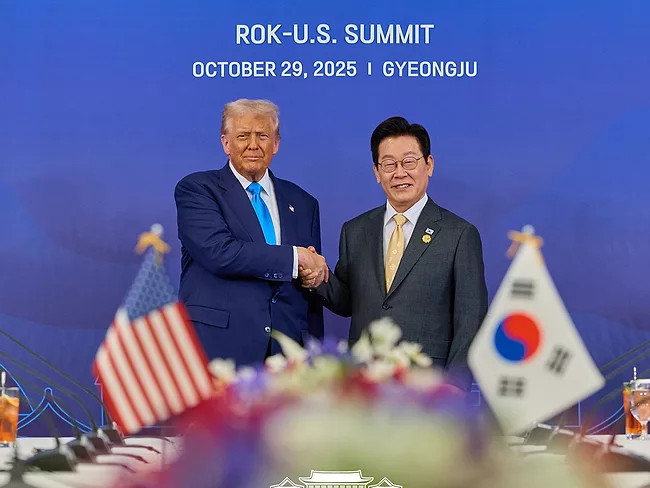
The Korea Biotechnology Industry Organization on Oct. 30 welcomed the bilateral trade deal between the U.S. and South Korea announced during U.S. President Donald Trump’s state visit alongside the Asia-Pacific Economic Cooperation forum in Gyeongju, South Korea.
Celltrion Inc. announced plans to acquire from Eli Lilly and Co. a Branchburg, N.J.-based biologics cGMP facility for $330 million up front, with plans to invest up to a total of ₩1.4 trillion (US$1 billion) in plant acquisition and expansion.
South Korea’s Ministry of Food and Drug Safety announced Sept. 12 plans to significantly raise drug application fees for biosimilars but slash their review times starting next year.
 RSS
RSS