Samsung Bioepis Co. Ltd., of Incheon, South Korea, is the latest to announce a win in the biosimilar space, gaining MFDS approval of Epyztek (SB-17) as the country’s first biosimilar to Stelara (ustekinumab, Janssen Pharmaceutical Inc.) on April 11.
Biosimilar competition to Amgen Inc.’s denosumab (Prolia/Xgeva) is rising globally, with Mabwell (Shanghai) Bioscience Co. Ltd. gaining the latest China NMPA approval of Maiweijian (TK-006) on April 8. Mabwell’s wholly owned subsidiary, Jiangsu T-mab Biopharma Co. Ltd., gained NMPA clearance of Maiweijian (120 mg) as the first denosumab biosimilar for the indications of U.S.-licensed Xgeva for bone-related diseases.
South Korean biosimilar-focused Alteogen Inc. said on March 27 that Chung Hye-shin, former chief strategy officer (CSO) and co-founder, sold 1.6 million of Alteogen shares for ₩316.4 billion (US$234.24 million) to foreign institutional investors.
As investment in Asia biohubs continues into 2024, Merck KGaA’s Milliporesigma is the latest to drop more than €300 million (US$328 million) into a new bioprocessing production center in Daejeon, South Korea.
South Korean biopharmaceutical company Celltrion Inc. submitted a BLA to the U.S. FDA on March 10 to gain approval for its Xolair (omalizumab; Novartis AG) biosimilar, CT-P39, across major indications of asthma, food allergy and chronic spontaneous urticaria.
Amid intensifying competition in the PD-1/PD-L1 checkpoint space, Samsung Bioepis Co. Ltd. kicked off a phase I study of SB-27, a biosimilar of Merck & Co Inc.’s blockbuster immunotherapy, Keytruda (pembrolizumab), for lung cancer. Posted on clinicaltrials.gov on Feb. 20, the randomized, double-blind, three-arm, parallel group and multicenter phase I study will examine the pharmacokinetics, efficacy and safety of SB-27 against an EU-sourced and U.S.-sourced Keytruda in 135 patients with non-small-cell lung cancer.
Biologics innovators typically take a lifecycle approach to developing new indications and formulations of their prescription drugs, especially when biosimilar competition is on the horizon.
As South Korea increases its stakes on the “bioeconomy” as its next growth engine and as its “second semiconductor industry,” leading domestic biologic and biosimilar drug producers such as Samsung Biologics Co. Ltd. and Celltrion Inc. are setting record production targets to become forerunners in the global playing field.
National support for the biosimilar sector and the domestic industry’s efforts to increase production and sales may not be enough for South Korean biosimilar firms to box out competition in the ever-changing regulatory court of the U.S.
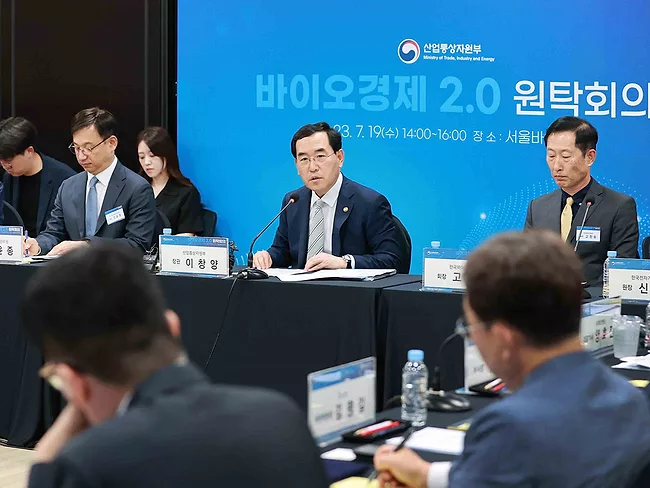
In July 2023, South Korea’s Ministry of Trade, Industry and Energy ramped up efforts to kickstart the so-called “Bio Economy 2.0,” the newfound initiative that banks on the biopharmaceutical industry to potentially revitalize the country’s slowing economic and social growth. Highlighting four major areas – biopharmaceuticals, biomaterials, bioenergy and digital technologies – as the four “wheels” to carry the biopharma industry, the new plan underscored the government’s unwavering support for the sector while highlighting its vision to become the “number one bioeconomy” worldwide.
 RSS
RSS