Tanvex Biopharma Inc. said its U.S. subsidiary, Tanvex Biopharma U.S.A. Inc., received an FDA complete response letter (CRL) on Jan. 3 for its TX-05 BLA, a biosimilar that references Roche AG’s Herceptin (trastuzumab). The CRL cites unnamed issues that need to be addressed by the downstream manufacturer of TX-05, which is a third-party service provider of Tanvex U.S. for its drug product.
From local drug discovery to global innovation, economic uncertainty is taking a toll on China’s innovative biotech system, forcing local companies to weather unpredictable storms, investors said during the Chinabio Partnering Forum in Shanghai in September.
South Korean billionaire and chairman of Celltrion Group Jungjin Seo is returning Celltrion Inc. to its contract manufacturing organization (CMO) roots, as it relies on biosimilar sales to anchor the company in a fiercely competitive novel drug R&D arena.
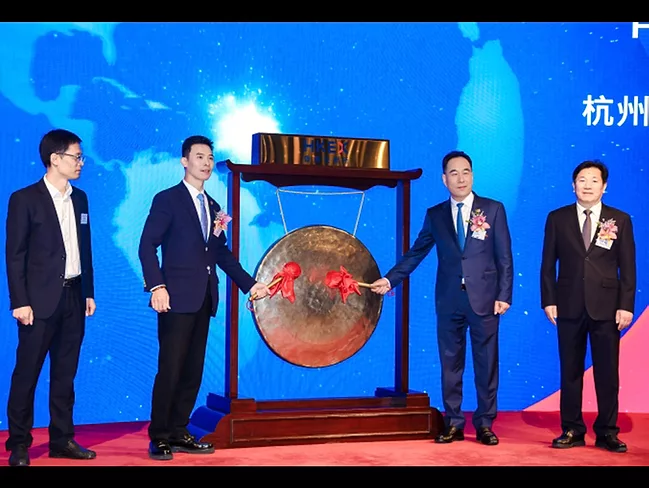
Hangzhou Jiuyuan Gene Engineering Co. Ltd. raised HKD$485.4 million (US$62.38 million) in a November 28 IPO on the main board of the Hong Kong Stock Exchange (HKEX:2566).
The Ministry of Food and Drug Safety (MFDS) approved South Korea’s first denosumab (Prolia/Xgeva) biosimilars, developed by Celltrion Inc. under the brand names of Stoboclo/Osenvelt (CT-P41) for respective indications, a move the company hopes will help secure first-mover advantage for the drugs, currently under review in the U.S. and Europe.
Celltrion Inc. said it would acquire Iqone Healthcare Switzerland SA in the fourth quarter of 2024 for about ₩30 billion (US$21.34 million) to expand its European business. “This move represents a strategic shift in our growth strategy,” Taehun Ha, Celltrion vice president and Europe head, said in a statement Nov. 15.
Chinese pharmaceutical and biotech companies are leading development of glucagon-like peptide-1 receptor agonists as Novo Nordisk A/S and Eli Lilly and Co. edge closer to launching blockbuster therapies in China. At the heart of the GLP-1 boom is a nationwide obesity problem driven by a confluence of factors, including the rise of a modern, sedentary lifestyle, according to Clarivate. Despite the rising prevalence of obesity and type 2 diabetes, the gap in obesity therapeutics is “substantial and leaves a solid market opportunity for weight loss drugs,” Karan Verma, principal analyst of healthcare research & data analytics at Clarivate, said.
Although last year’s massive U.S. launch of Humira biosimilars captured headlines, the market adoption of those competitors has been nothing to write home about, even with discounts as low as 85% off the innovator price.
Samsung Bioepis Co. Ltd., of Incheon, South Korea, gained U.S. FDA approval of Epysqli (eculizumab-aagh) as the second biosimilar product to Alexion Pharmaceuticals Inc.’s Soliris (eculizumab) to treat two rare diseases. The regulatory clearance July 22 grants use of Epysqli to treat paroxysmal nocturnal hemoglobinuria and atypical hemolytic uremic syndrome – two rare hematologic- and kidney-related disorders known to affect about 50,000 and 5,000 patients in the U.S., respectively.
Altos Biologics Inc., founded as an eye disease-focused subsidiary of Alteogen Inc. in 2020, raised ₩24.5 billion (US$17.7 million) in a series B financing round to advance its pipeline of therapeutics for eye-related conditions, including age-related macular degeneration (AMD). Daejeon, South Korea-based Alteogen said July 9 that the funds raised will be funneled to develop OP-01, Altos’ candidate therapy for AMD.
 RSS
RSS