China’s National Medical Products Administration authorized the country’s first cetuximab biosimilar with the approval of Simcere Zaiming’s Enlituo (CMAB-009, cetuximab beta injection) in combination with chemotherapy as first-line treatment for RAS/BRAF wild-type metastatic colorectal cancer. The biosimilar references originator drug Erbitux (cetuximab, Eli Lilly and Co.).
The U.S. FDA approved three biosimilar products from Samsung Bioepis Co. Ltd., Tanvex Biopharma Inc. and Formycon AG as follow-on biologics to Stelara (ustekinumab), Neupogen (filgrastim) and Eylea (aflibercept), respectively, on June 28.
Shanghai Fosun Pharmaceutical Co. Ltd announced it will buy out partner Shanghai Henlius Biotech Inc. for up to HKD$5.4 billion (US$691.7 million), according to a joint announcement on the Hong Kong Stock Exchange.
As competition rises in the Keytruda (pembrolizumab) biosimilar space, Celltrion Inc. is the latest to announce that it filed an IND application to the U.S. FDA to start a global phase III trial for its own Keytruda biosimilar, dubbed CT-P51. Incheon, South Korea-based Celltrion, which previously said it would differentiate from the pack by developing an easier-to-administer subcutaneous biosimilar of pembrolizumab, announced June 17 plans to start a global comparative phase III study of CT-P51 and Keytruda.
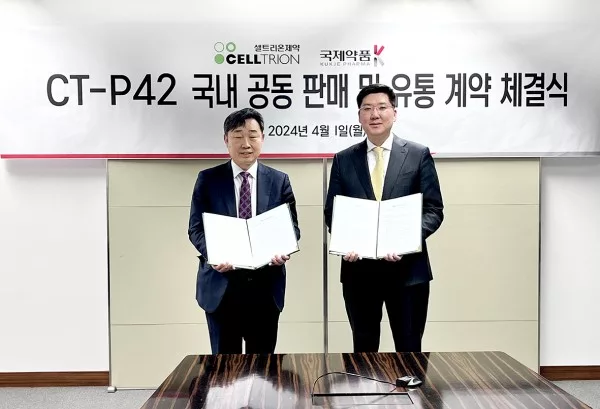
Celltrion Inc., of Incheon, South Korea, gained MFDS clearance of Eydenzelt (CT-P42) as a biosimilar referencing Regeneron Pharmaceuticals Inc./Bayer AG’s Eylea (aflibercept) on May 30. The news comes on the heels of the U.S. FDA approving the first Eylea interchangeable biosimilars on May 20.
South Korea’s Celltrion Inc. secured May 22 the European Commission’s go-ahead for Omlyclo (CT-P39) to be the first biosimilar to Genentech Inc./Novartis AG’s Xolair (omalizumab) in Europe for three of its major indications.
The U.S. FDA approved the country’s first two interchangeable biosimilars, or copy products, of Regeneron Pharmaceuticals Inc./Bayer AG’s Eylea (aflibercept) on May 20, to treat four eye-related conditions. The FDA granted the approvals to U.S.- and India-based Johnson & Johnson Services Inc./Biocon Biologics Ltd.’s Yesafili (aflibercept-jbvf; M-710) and South Korea’s Samsung Bioepis Co. Ltd.’s Opuviz (aflibercept-yszy; SB-15).
Samsung Bioepis Co. Ltd. and Celltrion Inc. are making headway in Europe and U.S. with respective follow-on biologic products, with Samsung Bioepis the latest to gain EMA approval for Pyzchiva, a Stelara (ustekinumab, Janssen Pharmaceuticals Inc.) biosimilar, on April 23.
The timing is ripe for a robust biosimilar market in China, given the rapid increase of novel biologics approved to treat cancer and inflammatory diseases in the country over the past decade and the looming patent cliffs for several established biologics. As of December, the NMPA had approved more than 20 biosimilars that were developed in China. Most of those referenced just two biologics – Roche AG’s cancer drug Avastin (bevacizumab) and Abbvie Inc.’s immunology drug Humira (adalimumab). In 2022, the oncology and immunology biosimilar market in China garnered sales of about $2 billion, according to Clarivate estimates. To reach their full potential in China though, biosimilars must win over prescribers and patients.
Follow-on biologic makers in China have been working to capitalize on looming patent cliffs of blockbuster biologics. Advancing biosimilars of denosumab (Prolia/Xgeva; Amgen Inc.) and semaglutide are the latest examples.
 RSS
RSS