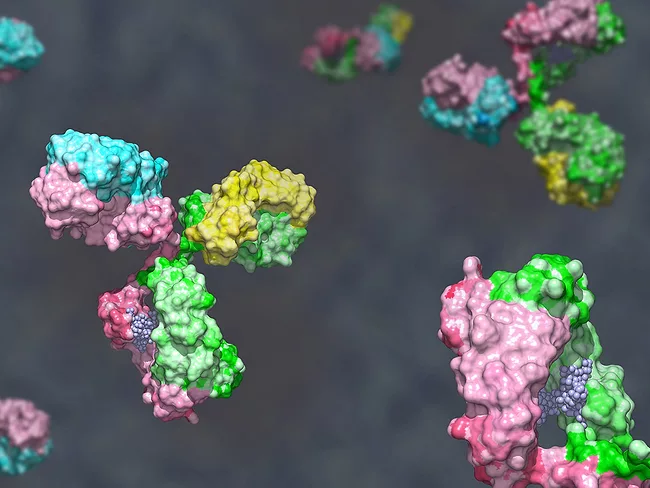
Zymeworks Inc. has obtained IND clearance from the FDA for ZW-171, a novel T-cell targeting bispecific antibody for mesothelin (MSLN)-expressing cancers. Clinical development will begin this year, and additional applications will be filed in the second half of the year seeking trial clearances in other territories.
Indupro Inc. has announced a $85 million series A financing to support its work on precisely defining the spatial proximity of proteins on the surface of cells with high therapeutic potential across a broad range of indications and applications, including for the treatment of cancer and autoimmune diseases.
Two years after signing a $1.6 billion partnership with Marengo Therapeutics Inc., Paris-based Ipsen SA is back at it again, this time teaming up for two additional assets that target “cold” tumors in a deal that could bring privately held Marengo $1.2 billion. “We do something really novel and innovative and I think it’s very important to continue to validate it,” Marengo CEO Zhen Su told BioWorld, adding that with the newest deal, “we see validation all around this … It’s a success on success.”
Miami-headquartered Summit Therapeutics Inc. expanded rights to Akeso Inc.’s non-small-cell lung cancer (NSCLC) drug, ivonescimab (SMT-112; AK-112), June 3 while raising $200 million to advance the therapy.
After shares climbed 36% on May 24 following the release of an American Society of Clinical Oncology abstract detailing an impressive phase II overall response rate in first-line head and neck cancer with bispecific antibody petosemtamab in combination with pembrolizumab, Merus NV is raising $400.2 million in an upsized follow-on offering.
Gaining full rights to a bispecific antibody to treat atopic dermatitis, Johnson & Johnson is paying $1.25 billion to acquire Yellow Jersey Therapeutics, a wholly owned subsidiary of Numab Therapeutics AG. The subsidiary houses all assets related to NM-26, which targets IL-4Ra (type I and II receptors) and IL-31, and was designed with Numab’s MATCH (Multispecific Antibody-based Therapeutics by Cognate Heterodimerization) technology platform. It is ready for phase II development for atopic dermatitis, although J&J intends to develop, manufacture and commercialize the drug globally for follow-on indications as well.
Bispecific T-cell-engaging antibodies have emerged as therapeutic options for the treatment of cancer, but limitations such as short half-life remain to be addressed. Researchers from Biontech SE reported the preclinical pharmacology and efficacy of BNT-142, a bispecific antibody targeting claudin-6 (CLDN6) and the T-cell marker CD3.
Johnson & Johnson is adding to its dermatology portfolio with the $850 million purchase of privately held Proteologix Inc. The Redwood City, Calif.-based company brings with it two bispecific antibodies into a space dominated by the blockbuster injectable Dupixent (dupilumab). Proteologix has PX-128, which targets IL-13 plus thymic stromal lymphopoietin for treating moderate to severe atopic dermatitis and moderate to severe asthma, and PX-130, which also targets IL-13 plus IL-22, for treating moderate to severe AD. Both are in preclinical development, but Johnson & Johnson said PX-128 is ready for its phase I close-up.
Newco Commit Biologics ApS has arrived on the scene after raising €16 million (US$17.2 million) in a seed round to advance bispecific antibodies that are designed to activate the complement system and direct it to selectively kill cancer cells.
 RSS
RSS