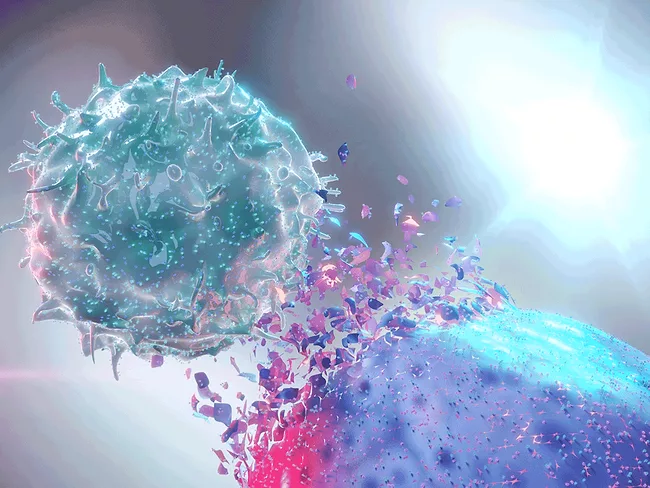
Researchers from Tr1x Inc. presented the development of TRX-319, a novel allogeneic regulatory T-cell therapy designed for the treatment of autoimmune disorders.
Liver fibrosis in the course of metabolic dysfunction-associated steatohepatitis (MASH) could be significantly reduced using CAR T-cells generated in vivo. Scientists at the Icahn School of Medicine at Mount Sinai have developed an experimental cell therapy that eliminates only one type of liver cell, the stellate cells that express fibroblast activation protein alpha (FAP). This strategy not only reduced fibrosis but also reversed liver damage.
CAR T cells have made headlines for their ability to fight hematological cancers, but they have proven largely ineffective against solid tumors. To fight such tumors, many groups have engineered T cells to carry T-cell receptors (TCRs) that target cancer antigens, but this approach requires using T cells taken from the patient and it is ineffective against parts of the tumor that have lost expression of the target antigen. As an alternative strategy, researchers at Zelluna ASA in Norway have engineered natural killer (NK) cells to express TCRs against solid tumor antigens.
A2 Biotherapeutics Inc. has gained IND clearance from the FDA for A2B-543 for the treatment of germline heterozygous HLA-A*02 adults with recurrent unresectable, locally advanced or metastatic solid tumors.
Ernexa Therapeutics Inc. has successfully completed a pre-IND meeting with the FDA, setting a pathway toward submitting an IND and initiating a first-in-human trial for the treatment of ovarian cancer, expected in the second half of this year.
Secondary lymphedema is a chronic condition that often affects the upper or lower extremities and is characterized by progressive retention of lymphatic fluid at affected sites. At the affected sites, this progressive fluid retention often leads to pain, decreased function and wounds. The condition is commonly associated with cancer surgery that requires the removal of draining lymph nodes.
In October, the Nobel Committee awarded the 2025 Nobel Prize in Physiology or Medicine to Shimon Sakaguchi, Mary Brunkow and Fred Ramsdell for their discoveries in the field of autoimmunity. As has become typical for the scientific Nobel Prizes, the award-winning research is by now several decades old. But the discoveries were the basis for ongoing research into how to prevent autoimmunity that notched significant wins in 2025, in both basic research and in the clinic.
Zelluna ASA has submitted a clinical trial application (CTA) to the UK’s Medicines and Healthcare products Regulatory Agency (MHRA) for ZI-MA4-1 (ZIMA-101), the company’s lead candidate. ZI-MA4-1 is a novel MAGE-A4-targeting T-cell receptor-natural killer (TCR-NK) therapy.
Vycellix Inc. has successfully completed preclinical development for its universal cell engineering platform (VY-UC) and will now seek clinical trial clearance in Sweden to begin a phase I study of VNK-101, an allogeneic natural killer (NK) cell therapy engineered with VY-UC for relapsed or refractory multiple myeloma.
Fibrobiologics Inc. has received public and private Human Research Ethics Committee (HREC) approvals in Australia for a phase I/II trial evaluating CYWC-628 for the treatment of refractory diabetic foot ulcers.
 RSS
RSS