Two big pharma firms placed high offers on Dec. 26 to acquire companies focused on radiopharmaceuticals and cell therapies in what Evercore ISI analysts are calling a “good sign for the end of the year.”
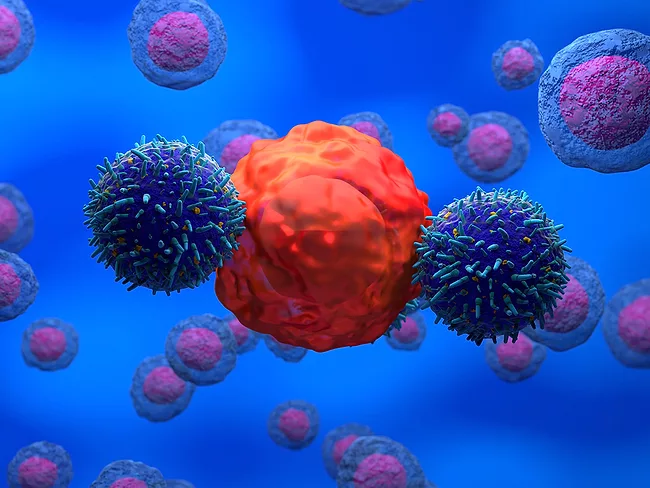
Japan-California startup Shinobi Therapeutics Inc. has emerged from stealth mode with a $51 million series A round to advance its first off-the-shelf induced pluripotent stem cell (iPS)-T cell therapy against glypigan-3 (GPC3)-positive cancers toward the clinic.
Japan-California startup Shinobi Therapeutics Inc. has emerged from stealth mode with a $51 million series A round to advance its first off-the-shelf induced pluripotent stem cell (iPS)-T cell therapy against glypigan-3 (GPC3)-positive cancers toward the clinic.
CAR T-cell therapies have worked well at curing blood malignancies, but a group out of the University Hospital of Erlangen have repurposed the technology as a treatment for autoimmune diseases. The expansion into new diseases has required cooperation between multiple departments, with CAR T experts taking the lead on treatment and potential side effects, and rheumatologists measuring the outcomes of the treatment.
With the number of high-priced cell and gene therapies expected to grow dramatically over the next decade, U.S. Sen. Bill Cassidy (R-La.) is asking for input from patients, doctors, manufacturers, payers and policy wonks on how to pay for the treatments and ensure patient access when they become more mainstream across the ultra-rare disease spectrum.
Researchers have developed a new approach for the development of improved CAR T cells with bifunctional degraders, which linked ubiquitin to an endogenous target protein. The key to the design was the use of multispecific protein degraders and E3 ligases, which increased the proliferation of CAR T cells and their antitumor potency. This combination can be adapted to different uses of cell therapies.
In one of the larger biopharma IPOs in 2023, Cargo Therapeutics Inc. pulled in $281.3 million on Nov. 10, selling 18.75 million shares at $15 each, the low end of its price range. The market debut comes just eight months after the San Mateo, Calif.-based company raised $200 million in an oversubscribed series A round.
Astrazeneca plc is making a $220 million equity investment and tossing in $25 million up front to Cellectis SA as part of a new collaboration agreement. The deal is part of Astrazeneca’s efforts, including a July licensing agreement worth about $1 billion with Pfizer Inc., to delve deeper into gene therapy for treating cancer and rare diseases.
At the IDWeek 2023 infectious disease conference held last week in Boston, fungal infections got the audience’s attention during the session titled, “The antifungal evolution: novel strategies for a changing world.” With the emergence of some resistant pathogens such Candida auris and the growing disease burden in the population at risk for life-threatening fungal infections, these pathogens are more than ever standing out within the infectious diseases arena.
Moderna Inc. has more than COVID-19 vaccines in the hopper, and the company aims to add still more oomph by way of an oncology deal with Immatics NV that could be worth more than $1.7 billion for the latter, which banks $120 million up front and stands to collect research funding as well.
 RSS
RSS