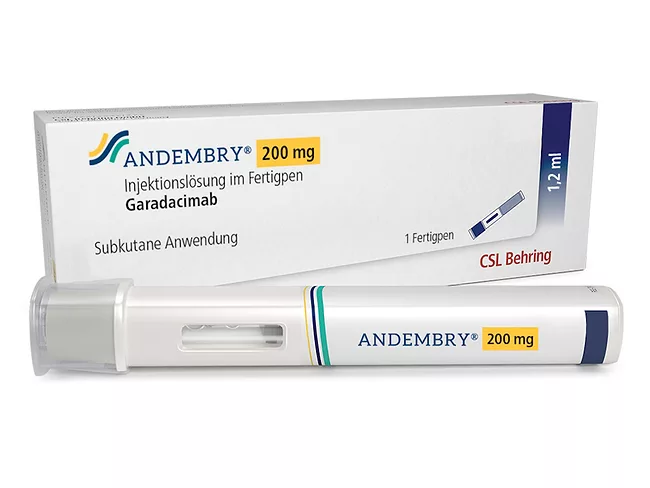
Following a complete response letter issued last October over CMC issues, CSL Behring LLC gained U.S. FDA approval June 16 of its humanized anti-factor XIIa monoclonal antibody, garadacimab (CSL-312), to prevent hereditary angioedema attacks.
Ligachem Biosciences Inc. signed two license agreements with Novarock Biotherapeutics Inc., a subsidiary of CSPC Pharmaceutical Group Ltd., to bring in two of Novarock’s antibodies and create antibody-drug conjugate (ADC) candidates with novel cancer targets.
With the U.S. FDA’s approval of Enflonsia (clesrovimab) to prevent respiratory syncytial virus (RSV) infection lower respiratory tract disease in newborns and infants, Merck & Co. Inc. steps into a space of competition and regulatory shifts. The preventive, long-acting monoclonal antibody (MAb)
will take its place in the market alongside the blockbuster Beyfortus (nirsevimab) from Sanofi SA and Astrazeneca plc. The MAb for pediatric use brought in about $1.77 billion in 2024.
Ligachem Biosciences Inc. signed two license agreements with Novarock Biotherapeutics Inc., a subsidiary of CSPC Pharmaceutical Group Ltd., to bring in two of Novarock’s antibodies and create antibody-drug conjugate (ADC) candidates with novel cancer targets.
New and positive phase III cancer data for two monoclonal antibodies from two pharma giants opened the second day of the American Society of Clinical Oncology (ASCO) conference this past weekend.
The recent 8-1 adcom vote against the U.S. applicability of Genentech Inc.’s Starglo trial is being seen as a warning signal expanding beyond the confirmatory trial for Columvi (glofitamab) as a treatment for relapsed/refractory diffuse large B-cell lymphoma.
Immuneoncia Therapeutics Inc. raised ₩33.9 billion (US$24 million) from its Kosdaq listing May 19. Shares closed at ₩7,500 – 108% higher than its offering price of ₩3,600 per share. Immuneoncia, a joint venture founded in 2016 between Seoul, South Korea-based Yuhan Corp. and San Diego-based Sorrento Therapeutics Inc., noted that the funds will support R&D operations until 2026.
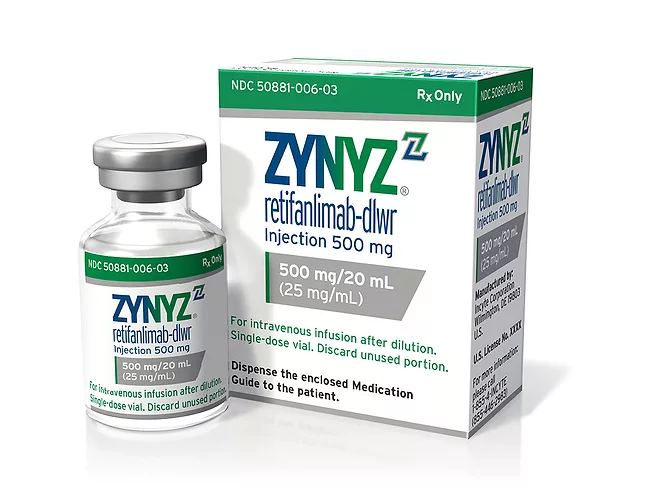
Incyte Corp.’s Zynyz (retifanlimab-dlwr) has received another U.S. FDA approval and put some distance between it and a 2021 complete response letter. The FDA gave the humanized monoclonal antibody targeting PD-1 the nod for first-line treatment of adults with inoperable locally recurrent or metastatic squamous cell carcinoma of the anal canal. That makes it the only approved first-line treatment for this cancer.
TIGITs took another tumble with GSK plc’s decision to end a development program and a collaboration with Iteos Therapeutics Inc. New top-line results from a phase II study in non-small-cell lung cancer using belrestotug, an anti-TIGIT monoclonal antibody, were disappointing so the companies are calling it a day.
With positive phase IIa cardiovascular disease results in hand, Marea Therapeutics Inc. said it is ready to move on to a phase IIb study sometime in the second quarter of 2025. MAR-001, a monoclonal antibody targeting the protein coding gene ANGPTL4, produced an up to a 52.5% placebo-adjusted mean reduction in remnant cholesterol and up to a 52.7% placebo-adjusted mean reduction in triglycerides at 12 weeks.
 RSS
RSS