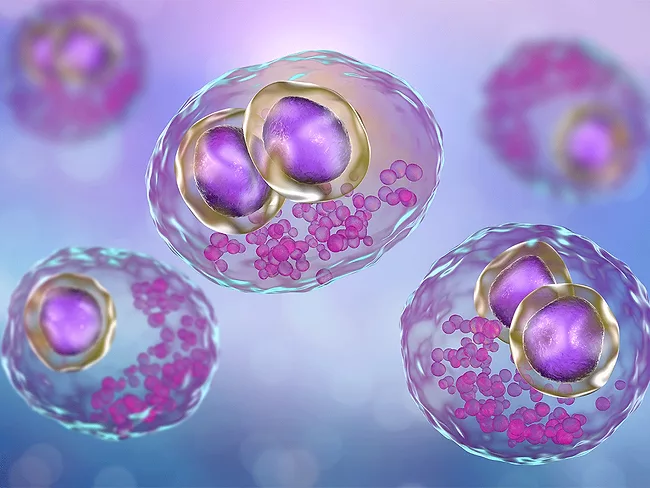
Spybiotech Ltd. has filed a clinical trial application (CTA) with the U.K. Medicines and Healthcare products Regulatory Agency (MHRA) to evaluate SPYVLP-01, a vaccine targeting human cytomegalovirus (CMV) using its hepatitis B virus-like-particle platform technology.
Evaxion Biotech A/S has announced the initiation of a novel pipeline program, EVX-B3, an artificial intelligence (AI)-designed vaccine candidate against an undisclosed bacterial pathogen. The new vaccine project will be the subject of a co-funded collaboration between Evaxion and an undisclosed partner.
Biontech SE and the Coalition for Epidemic Preparedness Innovations (CEPI) have established a strategic partnership to advance mRNA-based vaccine candidates with the development of BNT-166 for the prevention of mpox (formerly monkeypox).
Messenger RNA, or mRNA, represents a relatively new class of therapeutics with the potential to prevent and treat a wide range of diseases. A well-known success story is of the mRNA vaccines that controlled the COVID-19 pandemic, which has fueled enthusiasm for the field. But biotechs are also developing mRNA candidates for several other infectious diseases, including malaria, tuberculosis and HIV, as well for cancer, autoimmune and allergic diseases. However, delivering nucleic acid therapeutics can be challenging, since mRNA cannot get into cells on its own.
The Coalition for Epidemic Preparedness Innovations (CEPI) and the International Vaccine Institute (IVI) have announced a renewed collaboration to accelerate the development of vaccines against emerging infectious diseases.
The Coalition for Epidemic Preparedness Innovations (CEPI) and the University of Oxford have entered into a strategic partnership to accelerate the development of safe, effective and globally accessible vaccines against ‘disease X,’ the threat of unknown pathogens with the potential to cause pandemics.
Imunon Inc. has entered into a cooperative research and development agreement with the National Institute of Allergy and Infectious Diseases (NIAID) for the evaluation of the immunogenicity and efficacy of two Imunon DNA-based Lassa virus vaccine candidates. Under the 3-year agreement, the NIAID will assess the efficacy of Placcine DNA constructs against Lassa virus in guinea pig and non-human primate disease models, including both prime and prime-boost vaccine strategies.
Evaxion Biotech A/S has presented promising results on EVX-B1, a vaccine against Staphylococcus aureus containing antigens identified using artificial intelligence. EVX-B1 induces strong immune responses, both cellular and humoral, that translate to a high level of protection in preclinical models for skin infection and sepsis.
Researchers from the U.S. National Cancer Institute and collaborators had previously demonstrated the therapeutic efficacy of an autologous whole tumor cell vaccine, named rWTC-MBTA, to prevent primary tumor growth and enhance mouse survival in a colon carcinoma model. The vaccine is composed of irradiated entire tumor cells (rWTC) pulsed with mannan-BAM (a pathogen-associated molecular pattern), TLR agonists and anti-CD40 antibody (MBTA).
The protection against SARS-CoV-2 provided by spike-based vaccines, although effective, tends to decrease as the virus evolves and new variants of concern appear. Researchers from Osivax SAS reported the first results on cross-protection with OVX-033, a new human SARS-CoV-2 vaccine generated via the oligoDOM platform.
 RSS
RSS