Biopharma and med-tech companies raising money in public or private financings, including: Amani, Karyopharm, Outlook, Research Alliance, Rybodyn, Sernova, Sol-Gel, Turn, Virchow.
Rybodyn Inc. has announced the initial close of a $10 million seed financing to support its work decoding the dark proteome using an AI-powered novel sequencing and discovery platform. The financing will accelerate the company’s transition from foundational discovery into scaled platform execution and progress early-stage programs into IND-enabling studies.
Epifrontier Therapeutics Inc. has been awarded a grant of up to $32 million in nondilutive funding from the Japan Agency for Medical Research and Development (AMED) to advance the clinical development of EPF-001 (RK-701), a first-in-class G9a inhibitor being developed for sickle cell disease and β-thalassemia.
Excalipoint Therapeutics Inc. launched with an oversubscribed $68.7 million seed financing round to advance a portfolio of T-cell engagers for solid tumors, marking one of the largest early stage financings in China biotech history.
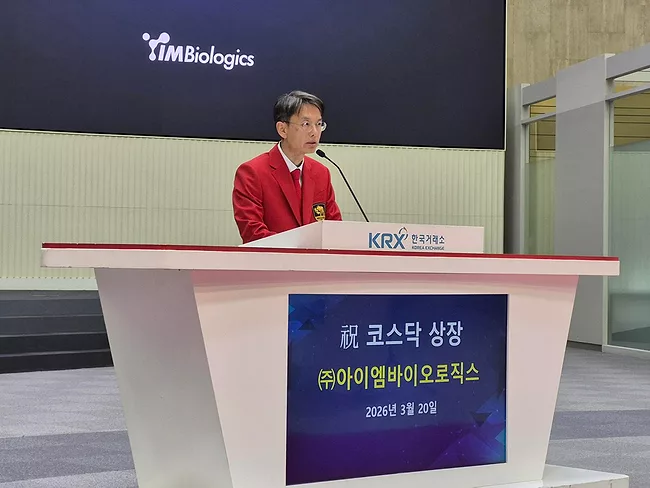
Imbiologics Corp.’s market capitalization reached ₩1.5 trillion (US$1.02 billion) on its Kosdaq debut March 20, as the biotech seeks to become a leading antibody drugmaker for autoimmune diseases.
Newco Immutrin Ltd. has raised £65 million (US$86.9 million) in a series A to take its lead antibody program through to clinical proof of concept in transthyretin amyloid cardiomyopathy.
Immutrin Ltd. has successfully raised £65 million ($87 million) in series A financing to advance its lead asset through clinical proof of concept in ATTR cardiomyopathy. Immutrin’s novel antibody selectively binds to amyloid fibrils and is engineered to deplete amyloid deposits in tissue via a targeted and coordinated immune response.
Biopharma and med-tech companies raising money in public or private financings, including: Azitra, Bioxytran, Blue Water Acquisition, Bonus, Capsovision, Earendil, Hansa, Verily.
Laigo Bio BV has extended its seed round to €17 million (US$19.8 million), after making progress with translating its novel E3 ubiquitin ligase targeted protein degradation technology toward the clinic.

 RSS
RSS