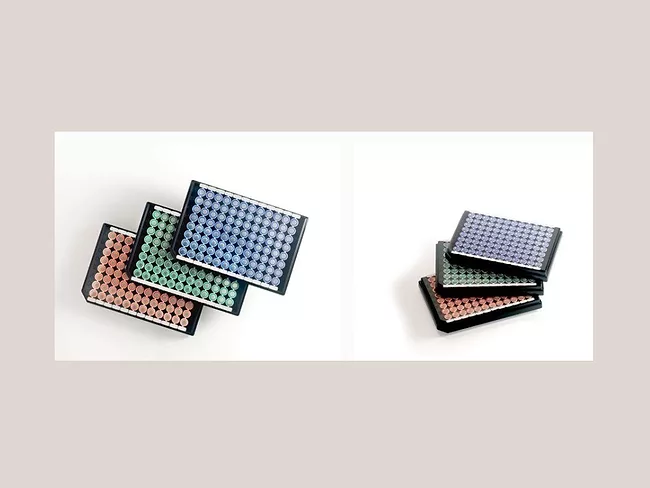
Startup Scipher Medicine, of Waltham, Mass., is developing a blood test to predict which rheumatoid arthritis (RA) patients will not respond to Tumor necrosis factor (TNF) inhibitor therapies.
VANCOUVER – Sorrento Therapeutics Inc., which is working to build a comprehensive lineup of COVID-19 products, has in-licensed a self-contained test for SARS-CoV-2 that may produce accurate results in half an hour.
Liquid biopsy startup Thrive Earlier Detection Corp. has raised $257 million in a series B round led by Casdin Capital and Section 32. The funds will be used to finalize the design of its first product, Cancerseek, conduct a trial to support U.S. FDA approval and prepare for commercialization.
Thermo Fisher Scientific expanded its Globalaccess Sequencing Program to include oncology laboratories in addition to research labs working on COVID-19 studies. The company will subsidize a limited number of Genexus systems to help pathology laboratories around the world.
Diagnostics testing company Laboratory Corp. of America Holdings Inc. (Labcorp) saw its second-quarter revenue decline by 4% to $2.8 billion, but that still beat the Street consensus of $2.5 billion. Diagnostics revenue fell 3.9% year over year to $1.7 billion, but that was offset by solid demand for the company’s COVID-19 tests.
CYBERSPACE – Data presented at the virtual 2020 Alzheimer's Association International Conference (AAIC) and reported in the July 28, 2020, online issue of the Journal of the American Medical Association (JAMA) demonstrated that blood levels of phosphorylated tau-217 (Ptau-217) did as well as cerebrospinal (CSF)- and PET-based biomarkers, and significantly better than other blood-based biomarkers, at discriminating individuals with Alzheimer’s disease (AD) from those with other neurodegenerative disorders.
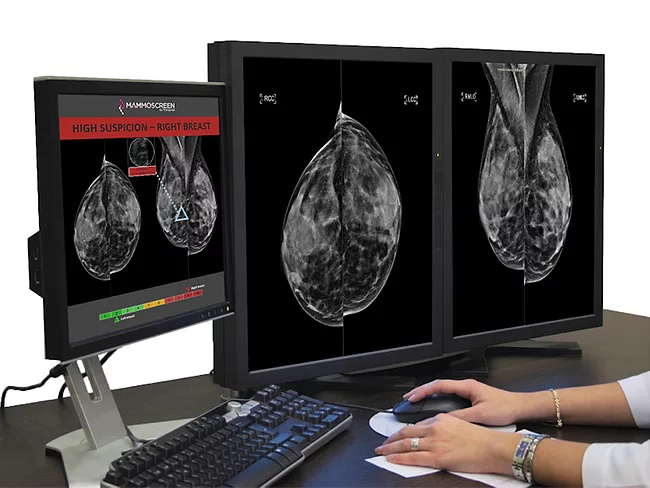
PARIS – Therapixel SA, of Nice, France, has obtained 510(k) clearance from the U.S. FDA for its Mammoscreen technology, a software platform based on artificial intelligence (AI) and used by radiologists for reading screening mammograms. “Obtaining FDA clearance is the result of working with radiologists over the past three years in order to develop a powerful tool providing relevant assistance in their day-to-day work,” Matthieu Leclerc-Chalvet, CEO of Therapixel, told BioWorld.
The U.S. FDA has rewritten the emergency use authorization (EUA) for the Laboratory Corp. of America Holdings Inc. (Labcorp) COVID-19 polymerase chain reaction (PCR) test to allow for diagnostic testing of those who are asymptomatic and those who have no reason to suspect they are infected with the SARS-CoV-2 virus.
The question of screening for the COVID-19 pandemic continues to absorb the interest of both the U.S. FDA and test developers, and Tim Stenzel, director of the FDA’s Office of In Vitro Diagnostics and Radiological Health (OIR), said in a July 22 webinar that the FDA is “very interested” in a fingerstick test at the point of care for screening purposes, adding that the agency sees any such applications as a priority.
Becton, Dickinson and Co. (BD) has received a green light for a premarket approval supplement from the U.S. FDA for an expanded version of its BD Onclarity HPV assay. It includes the expansion for genotype reporting beyond human papilloma virus (HPV) genotypes 16, 18, and 45.
 RSS
RSS