The U.S. FDA cleared Ezra AI Inc.'s artificial intelligence (AI) system for prostate cancer and its cloud-based picture archiving and communication system (PACS) that enables radiologists to use the Prostate AI from their browser. The New York-based company’s Prostate AI is the first prostate-focused artificial intelligence system to gain clearance. The Prostate AI accurately quantifies prostate volume, lesion size, and renders 3D volumes of the prostate gland and lesions.
The U.S. FDA’s device center has declared it will not review emergency use authorization (EUA) requests for lab-developed tests (LDTs) for the COVID-19 pandemic, but on the agency’s most recent town hall, on Oct. 14, FDA officials were uncertain as to whether labs should file those EUAs, leaving labs in a state of limbo yet again.
Nec Corp.’s bioinformatics subsidiary Nec Oncoimmunity AS said it is working with Oslo University Hospital to develop an artificial intelligence (AI) platform that will allow the team to design a T-cell diagnostic to complement the current serological tests for infectious diseases, including COVID-19.
Keeping you up to date on recent developments in diagnostics, including: Remote speech analysis detects early bulbar changes in ALS; Novel NGS approach captures both mtDNA mutation and copy number; Neutrophils are literal obstacle to stroke recovery.
PERTH, Australia – During the COVID-19 pandemic, 90% of Australia’s clinical trials were put on hold, and the market cap of biotech and medical device companies on the Australian Securities Exchange dropped 5% to AU$11 billion (US$7.78 billion), according to a recent report by Australia’s Medical Technologies and Pharmaceuticals Industry Growth Centre.
Intervenn Biosciences said it has identified stark differences in the glycoproteomic profile of COVID-19 patients who became very sick and people infected with the SARS-CoV-2 virus who were either asymptomatic or experienced only minimal effects. The contrast could help clinicians better understand the biological mechanisms of the disease and triage patients at risk of responding detrimentally to early treatments and more intensive care.
Time is of the essence when treating patients with advanced or metastatic cancer, and diagnostic insights can inform treatment plans. To that end, Exact Sciences Corp. has launched its Oncotype MAP Pan-Cancer Tissue test for patients with advanced, metastatic, refractory or recurrent cancer. From a small tissue sample, the test detects genomic alterations in hundreds of cancer-related genes, helping doctors better depict a patient’s tumor and recommend effective therapies or clinical trials.
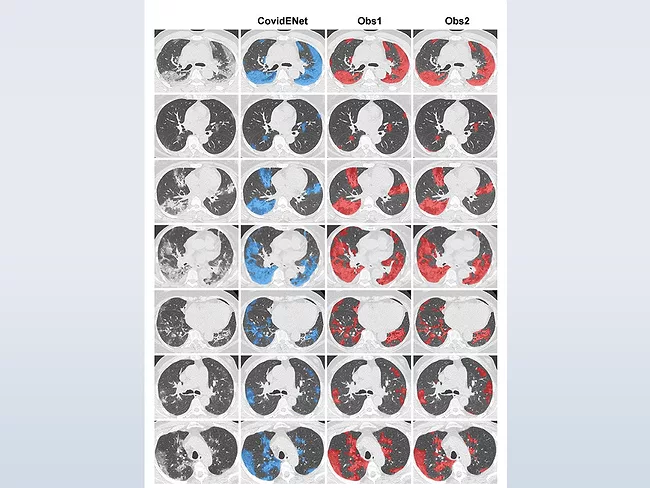
PARIS – A consortium that includes Therapanacea SAS, GE Healthcare France SAS, Orange Healthcare SA, the AP-HP group of 39 hospitals in the Paris region and the French academic society for thoracic imaging has created a database for COVID-19.
Keeping you up to date on recent developments in diagnostics, including: Improving sensitivity of COVID-19 tests; Deep learning algorithm helps triage suspected COVID-19 cases; Cancer image analysis tool incorporates HER2 biomarker assay.
 RSS
RSS