Semiconductors chips, a key component in many medical devices, continue to be in short supply as COVID-19-driven supply chain disruptions continue. The shortage comes at the worst possible time, with demand for the chips on an upward trend. Nano-x Imaging Ltd.’s (Nanox) solution to the shortage was to open a semiconductor chip fabrication plant in Yongin, South Korea, to produce Nanox.source, a semiconductor chip that replaces the filament in the analog X-ray tube.
Clinicians are still at liberty to use medical products outside the labeled indication for use, but the U.S. FDA believes radiologists may be unaware of the limitations of radiological computer-aided triage and notification (CADt) software for intracranial large-vessel occlusion (LVOs). The agency advised clinicians that these programs are not intended for use as a substitute for radiologist review of images, but instead should be used only to flag suspect images as part of an effort to triage these patients.
The U.S. CMS has suspended the effective date of the radiation oncology (RO) model for bundled care under the Medicare outpatient prospective payment system. The development stems from congressional legislation that pushed the start date back until next year, giving stakeholders who are opposed to the program more time to press their case with Congress and the agency.
Elekta AB signed a commercial agreement with GE Healthcare Co. Ltd. to expand hospital access to radiotherapy. Marlborough, Mass.-based GE Healthcare said it will combine its precision imaging solutions with Elekta’s radiation therapy portfolio to provide hospitals worldwide with a more comprehensive oncology offering.
There has been some skepticism about the value of electronic health records (EHRs) beyond their role as a source of income for EHR developers, but an April 3 presentation at the 2022 America College of Cardiology scientific sessions being held in Washington suggests this type of software offers some real value for heart failure patients. Tariq Ahmad of Yale School of Medicine said a study of EHRs suggests their power lay in part in prompting compliance with heart failure medication regimes, an application of this type of software that can both save lives and cut costs for the Medicare program and Medicare beneficiaries.
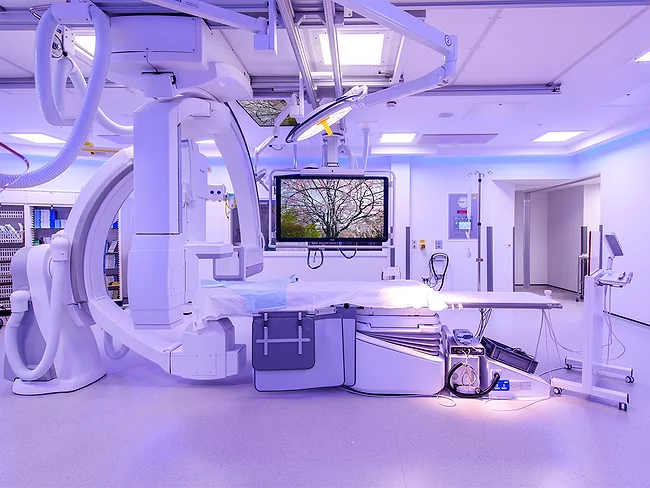
Royal Philips NV launched a new solution, Ambient Experience with Flexvision display, for use in interventional rooms. The system, intended to reduce patient anxiety in the run up to a procedure, is commercially available globally, including in the North American region. According to the company, Ambient Experience connects to its Azurion image-guided therapy system and is designed to enable interventional team members to adapt the room’s ambient lighting and sound to enhance the overall feeling of calm.
Diagnostic imaging group Bracco Imaging SpA signed a licensing and collaboration agreement with Philochem AG. The companies will focus on developing and commercializing a small molecule for diagnostic imaging applications that can detect metastatic solid tumors in cancer patients.
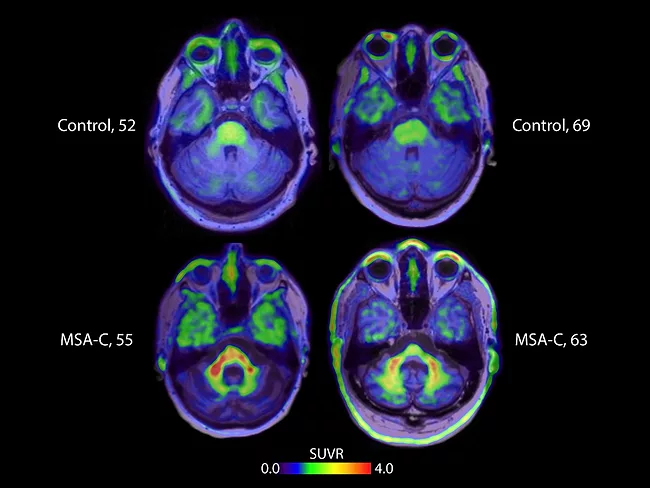
At the AD/PD 2022 international conference on Alzheimer’s and Parkinson’s Diseases, AC Immune SA presented images showing its positron emission tomography (PET) tracer detecting pathological alpha-synuclein (a-syn) in human subjects’ brains. The abnormal accumulation of a-syn, a natively unfolded and soluble presynaptic protein, is a neuropathological feature of neurodegenerative disorders.
A research team from the Technical University of Munich (TUM) in Germany has for the first time managed to integrate the dark-field X-ray technique into a CT scanner suitable for clinical application. They have just published an article describing how they integrated this technology, in the journal Proceedings of the National Academy of Sciences.
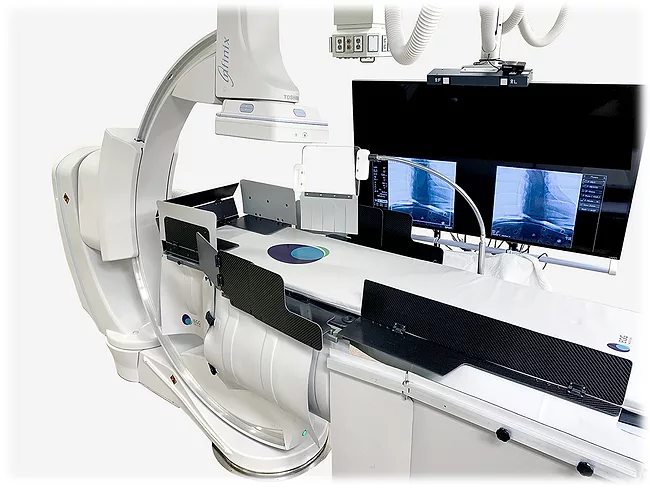
Egg Medical Inc. secured a $13 million investment from TVM Capital Life Science to solve the Humpty-Dumpty problem that plagues interventional cardiology – the scattering of radiation during X-ray guided procedures. The company’s Eggnest XR product contains the radiation using a carbon fiber platform with integrated radiation shielding that replaces the patient mattress on the X-ray table.
 RSS
RSS