Actinium-226 (226Ac) has been previously proposed as a potential surrogate isotope for the development of 225Ac radiopharmaceuticals for targeted alpha therapy (TAT). The benefits of 226Ac include its theoretically superior therapeutic potency as well as a short half-life of its progeny, expected to minimize the toxicities. Researchers from TRIUMF, University of British Columbia and affiliated organizations recently reported the discovery of a novel matched 225/226Ac-radiopharmaceutical pair, [225Ac]crown-TATE and [226Ac]crown-TATE, and conducted studies aiming to compare the radiation dosimetry of these candidates.
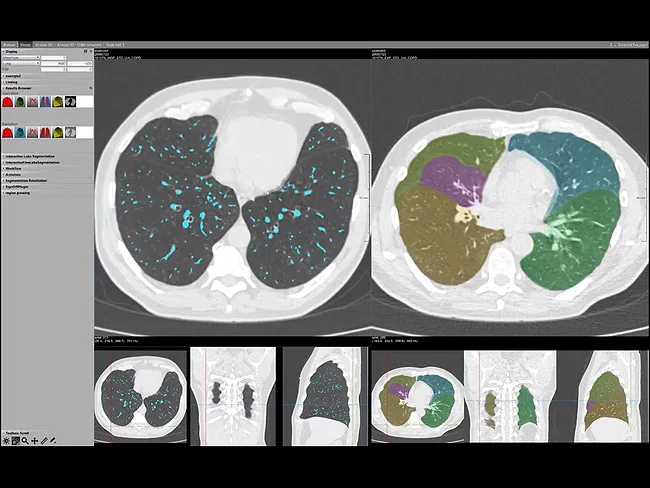
Thirona BV has been awarded $2.73 million in funding from the European Innovation Council (EIC) to fast-track the development of its artificial intelligence (AI)-based lung platform to analyze chest CT imaging. In competition with 554 other submissions, Thirona was one of 51 innovative technology companies awarded the EIC accelerator program grant, the total budget for which is €261 million (US$286.28 million) in 2023.
Helmholtz Zentrum Dresden Rossendorf has patented 3-((3-([1,1’-biphenyl]-3-ylmethoxy)phenoxy)methyl)benzonitrile derivatives that are radiolabeled compounds targeting programmed cell death 1 ligand 1 (PD-L1; CD274). They are reported to be potentially useful for the diagnosis and/or radionuclide therapy treatment of cancer and SARS-CoV-2.
Researchers from the Mayo Clinic have reported findings from the preclinical evaluation of a novel cardiac targeting peptide (CTP)-based radiotracer – [68Ga]NOTA-CTP – being developed as a myocardial perfusion imaging PET probe.
Researchers from the Chinese Academy of Medical Sciences and Peking Union Medical College reported on the development of a novel EDB-FN-targeted Gd-based contrast agent, named EDB-Gd-DOTA-Cy7, for imaging and treatment planning of pancreatic ductal adenocarcinoma (PDAC).
Researchers from Stanford University and affiliated organizations have provided details on the discovery and preclinical evaluation of [11C]MGX-10S, a novel PET tracer for GPR84, which is a G protein-coupled receptor (GPCR) expressed predominately on myeloid cells.
Monoacylglycerol lipase (MAGL) is a key regulator of the endocannabinoid system (ECS), which has a critical neuromodulatory involvement in numerous functional mechanisms in the CNS. Based on this, MAGL is considered a promising therapeutic target in neuroinflammation and neurodegeneration. Researchers from ETH Zürich and affiliated organizations have recently presented their work on (R)-[18F]YH-134, a novel reversible radiotracer for imaging MAGL in the brain.
Artificial intelligence (AI) continues to entice. On the exhibition floor at the 2023 Congress of the European Academy of Neurology, one company’s booth featured “Mindart” technology. A passersby could answer a short series of prompts, and get a unique image based on the input made by generative AI. Entertainment aside, medically speaking, AI applications “are still research,” Riccardo Soffietti told his audience at one of several sessions devoted to AI. “But obviously, research is the future.”
The U.K. government created a new £21 million ($US26.55 million) fund to accelerate the roll out of artificial intelligence (AI) diagnostics and treatment tools across the NHS. The AI Diagnostic Fund will enable hospitals to bid for funding to speed up the deployment of the most promising AI imaging and decision support tools to help patients with cancers, strokes and heart conditions.
Gleamer SAS reported closing a series B round of $29.6 million to help expand its portfolio of artificial intelligence (AI) systems for radiologists and ramp international expansion. The exercise was led by Supernova Invest SAS who put up $11 million, joined by Heal Capital SAS with $5.5 million.
 RSS
RSS