Results from a new peer-reviewed study show people develop emotional bonds with artificial intelligence (AI) therapy chatbots in a similar way to in-person therapists. The study evaluated 1,205 people using a mental health app developed by Wysa Ltd. to assist symptoms of anxiety or depression. The chatbot guides users through therapy exercises including cognitive-behavioral techniques (CBT), dialectical behavior therapy, meditation, breathing and yoga to build mental resilience skills.
Clinicians are still at liberty to use medical products outside the labeled indication for use, but the U.S. FDA believes radiologists may be unaware of the limitations of radiological computer-aided triage and notification (CADt) software for intracranial large-vessel occlusion (LVOs). The agency advised clinicians that these programs are not intended for use as a substitute for radiologist review of images, but instead should be used only to flag suspect images as part of an effort to triage these patients.
Diagnostic testing group Clinisys Inc. has acquired cloud-based laboratory operations software company Apollolims in an undisclosed deal. Headquartered in Chertsey, U.K., and Tucson, Ariz., Clinisys will expand its public health, toxicology, and molecular diagnostics offering through the acquisition. The deal builds on the company’s combination with Sunquest and Horizon announced in January.
Akili Interactive Labs Inc. has made grabbing and holding attention a distinguishing feature of its digital therapeutics and overall company strategy. Last month, it made news with its hire of gaming industry veteran Jon David as its chief product officer. Now, a study indicates a new product in development may help people with depression extend their attention span and possibly improve cognition, two common symptoms associated with the mood disorder that are not treated by most medications.
Boston Scientific Corp.’s image-guided programming software, Vercise Neural Navigator with Stimview XT, got the green light from the FDA for use with the company’s deep brain stimulation (DBS) portfolio in patients with essential tremor or Parkinson’s disease. The software, developed in a collaboration with Brainlab AG, provides more sophisticated image-guided programming tools for personalization of the stimulation therapy, halving the time needed for adjustments and increasing precision.
Pfizer Australia Holdings Pty Ltd. has made an offer to acquire digital health company Resapp Health Ltd. in all cash offer worth AU$100 million (US$74.25 million). The two companies have entered into a binding scheme that is contingent upon shareholder agreement and regulatory clearances in Australia. Shareholders will vote on the proposed acquisition in June, and directors have unanimously recommended that shareholders vote in favor of the acquisition.
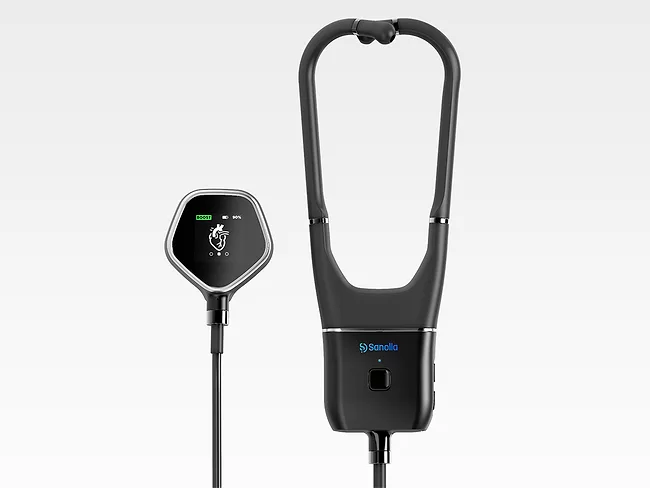
Israeli startup Sanolla Ltd. won U.S. FDA 510(k) clearance for its smart-infrasound stethoscope Voqx. The artificial intelligence (AI)-based device is the first stethoscope cleared by the U.S. FDA to detect infrasound and audible information to identify clinical conditions. The auscultation capabilities are designed to support early assessment of cardiopulmonary conditions.
Truscreen Group Ltd. completed its largest clinical trial to date that showed its cervical cancer screening device surpassed liquid-based cytology (LBC) screening in 15,651 women across 64 hospitals in nine provinces in China over three years.
Pangea Biomed Ltd. picked up $7 million in seed financing to fast-track development of its multicancer, multitherapy response predictor Enlight. The platform combines machine learning and RNA sequencing to map tumor molecular signatures and predict how different cancer types will respond to oncology drugs. Pangea said instead of using transcriptomic data, it is utilizing ‘unsupervised’ AI techniques that harvest information about gene interactions.
Valuations in the med-tech space lately call into question the old medical adage: “If you hear hoofbeats, think horses.” These days, you would be wise to consider unicorns in the differential diagnosis. Two new companies achieved the formerly rare status just this week. Viz.ai Inc.’s closing today of a $100 million series D financing propelled it into the stratosphere with a $1.2 billion valuation, joining Bostongene LLC which completed its own $150 million round Wednesday.
 RSS
RSS