The European Commission (EC) has proposed new legislation directed toward formation of a European Health Data Space (EHDS), which is nominally intended to address some perceived gaps in the General Data Protection Regulation (GDPR). While this legislative proposal seems to interact with both the GDPR and pending EU legislation on artificial intelligence, the EHDS takes on the massive challenge of compulsory interoperability of electronic health records (EHRs). The EC unveiled the proposal with an emphasis on health data accessibility, although both the European Council and the European Parliament will now have their say over how the legislation will ultimately read.
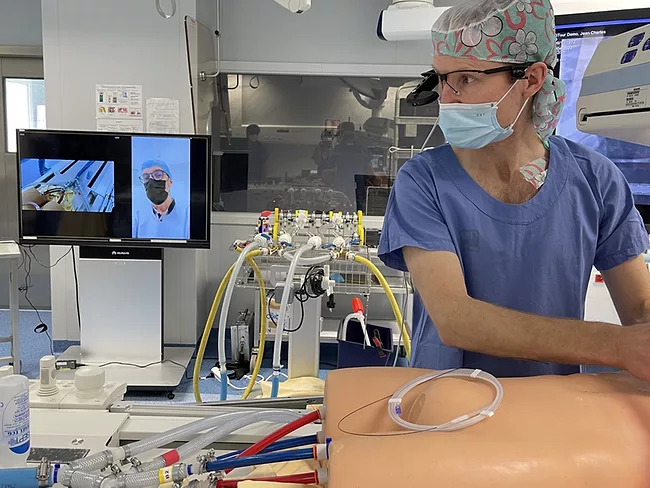
Rennes University Hospital in France has just this April completed a surgical procedure in the operating room wirelessly, thanks to the 5G network. Cardiologist Erwan Donal performed a heart operation there on a simulation manikin, monitored remotely from Athens, Greece, by heart surgeon Alexandros Stefanidis, from the department of cardiology at the General Hospital of Nikea.
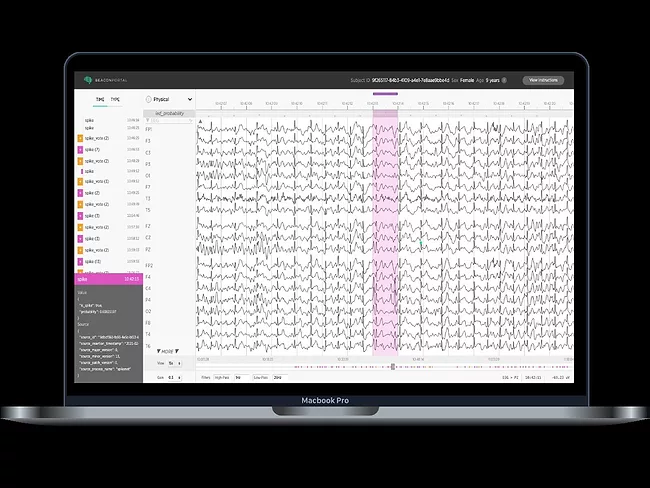
Beacon Biosignals Inc. has teamed up with Stratus Inc., a provider of electroencephalogram (EEG) services, to improve at-home brain monitoring and neurodiagnostics using Beacon’s machine learning-driven neuroanalytics platform. The collaboration will increase opportunities for home-based studies of Alzheimer’s and other neurological diseases.
Pharma and tech companies including Amazon Inc., Astrazeneca plc, Pfizer Inc., Merck & Co. Inc. and Teva Inc. are partnering with an innovation lab based in Israel to accelerate artificial intelligence (AI) driven antibody discovery. Rehovot, Israel-based Aion Labs recently launched a venture hub for innovators and scientists from around the world.
Wysa Ltd.’s artificial intelligence-based digital therapy received FDA breakthrough device designation for adults with chronic musculoskeletal pain, depression and anxiety. The device delivers cognitive behavioral therapy (CBT) via a digital companion or conversational agent on a smartphone.
In the post COVID world, digital transformation is at the forefront of every company’s agenda, but which innovations can fuel the next era of health care? At the ongoing Biomed Israel conference in Tel Aviv, Anat Naschitz founder and CEO of 9xchange and co-founder of Orbimed Israel, lead a digital health track exploring the technologies aiming to reconstruct the future of health care.
Ten years from now, what medical technologies will generate the most economic value and where is the industry heading? At the annual Biomed Israel conference, held in Tel Aviv, health care, pharmaceutical and technology advisor, and board director Sandra Morgan examined research from consulting firm McKinsey & Co. and beyond on the biggest innovation trends in the sector.
The short-term future is a little clearer for Israeli precision oncology startup Oncohost Ltd. now that it has closed a $35 million series C fundraising round. The new infusion more than doubled the previous amount raised, bringing total investment to more than $50 million. The company plans to use the funds to expand its PROPHETIC trial of the company’s machine learning-based host response profiling platform, Prophet, to additional locations worldwide and new indications.
Nano-x Imaging Ltd.’s (Nanox) subsidiary Nanox.AI has received the FDA’s 510(k) clearance for Healthost, an artificial intelligence (AI) software device providing qualitative and quantitative analysis of the spine from CT scans.
Computational disease modeling company Cytoreason Ltd. is expanding its reach into Asia with a recent partnership with South Korean big data company Helixrus Inc., which is focused on biological big data and multiomics. The alliance will focus on leveraging Helixrus’ deep knowledge of the South Korean pharmaceutical market, and extensive network of relationships in Asian markets, to highlight Cytoreason’s capabilities in prioritizing new targets, finding biomarkers, profiling combinations, stratifying patients and other use cases within the drug lifecycle.
 RSS
RSS