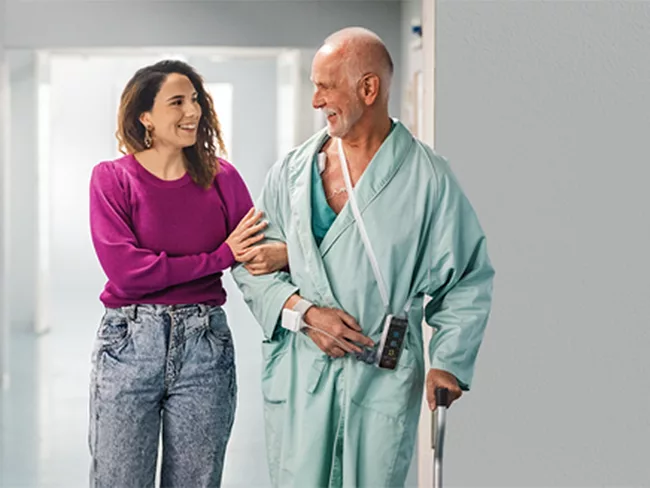
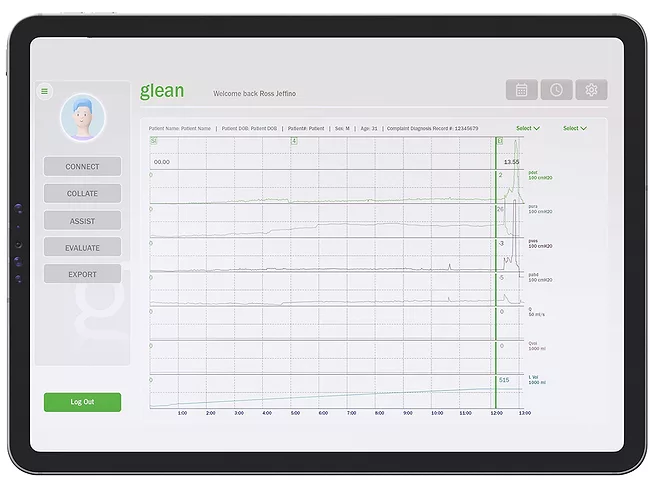
If GE Healthcare’s GM of Monitoring Solutions Neal Sandy gets his way, nursing staff will perk up and notice a newly launched wireless patient monitoring system that helps them detect patient deterioration much earlier than periodic, manual monitoring.
Ceros Capital Markets and Peregrine Ventures evidently liked what they heard about Cordio Medical Ltd.’s Hearo voice app that can detect deterioration in patients with congestive heart failure (CHF), leading them to invest $18 million in the company’s latest venture funding round.
Regulatory harmonization of artificial intelligence (AI) and machine learning (ML) is high on the checklist for companies that want to develop these products, but legislatures and regulatory agencies across the globe seem less interested. Koen Cobbaert, senior manager for quality standards and regulation with Royal Philips NV, told BioWorld that there is a race on to be the first market with a full-fledged set of regulations, a fact of life that does little to advance the cause of harmonization.
The FDA has rejected Artrya Ltd.’s 510(k) application for its Salix coronary anatomy (SCA) software that analyzes heart computed tomography scans via artificial intelligence (AI) to better diagnose coronary artery disease. “The FDA has advised that the Artrya Salix product is not equivalent to the predicate device,” Artrya CEO John Barrington told BioWorld.
Pfizer Australia Holdings Pty Ltd. has revised its offer to acquire digital health company Resapp Health Ltd. after results from an independent data confirmation study of its COVID-19 algorithm failed to meet Pfizer’s required sensitivity and specificity results.
Just three months after raising $10 million from its IPO on the Paris Euronext Growth market, SMAIO SA (Software Machines and Adaptive Implants in Orthopedics) obtained U.S. FDA 510(k) clearance for its Balance Analyzer 3D surgery planning software and for its patient-specific union rods. This spinal realignment planning software uses medical imaging of the patient’s spine in an upright static position.
The U.S. FDA is among the regulators that are taking account of the views of patients in medical device development and regulation, but artificial intelligence (AI) and machine learning (ML) are terra incognita for many, if not most patients. Rebekah Angove, vice president for patient experience and program evaluation at the Patient Insight Institute, told BioWorld that while some patients clearly want to know more about AI and ML, it is also clear that more than a certain amount of detail is more of a distraction than a help for most patients.
Resmed Inc. has entered into a definitive agreement to acquire Medifox Dan GmbH, a German developer of out-of-hospital software solutions for providers in major settings across the care continuum, from software and services investor Hg. The deal – valued at roughly $1 billion – is expected to close by the end of the year, which is the end of the second quarter of Resmed’s 2023 fiscal year.
Bright Uro Inc. has emerged from stealth mode with $4 million in seed financing from Academy Investor Network, Fred Moll and several other angel investors. The company also secured a $2 million phase II small business innovation research (SBIR) grant from the NIH.
Artificial intelligence (AI) and machine learning (ML) are all the rage in 2022 when it comes to medical radiology, but regulators across the globe are struggling to devise regulatory frameworks that ensure safety and efficacy without strangling innovation. There are a number of other stakeholders in this sphere of med tech, however, each with their own considerations. In this six-part series, BioWorld will examine these considerations in an effort to characterize the working environment for AI and ML as it exists now, and what that environment might look like in the years ahead.
 RSS
RSS