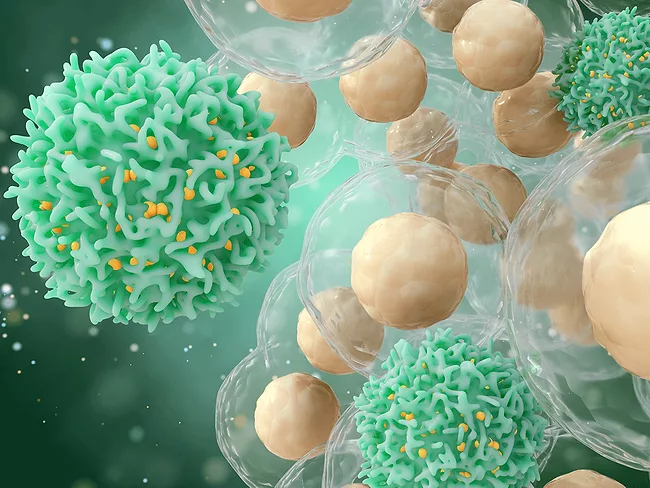
New company Pan Cancer T BV is preparing for a clinical trial of a next-generation T-cell receptor-engineered T cell it has designed to remove the current barriers and make T-cell therapies effective in treating solid tumors. Its products have two distinguishing features: They are targeted at antigens the company has shown are exclusively and robustly expressed by multiple solid cancers, and have a minor genetic modification that enhances the durability of autologous TCR-Ts in the tumor microenvironment after they are administered back into a patient.
On the heels of positive phase II results of its extended-release ketamine (R-107) in treatment-resistant depression, Douglas Pharmaceuticals Ltd. is gearing up to begin phase III trials of its ketamine treatment that is safe enough to take at home without clinical supervision.
Exsilio Therapeutics emerged from stealth mode on June 25, 2024, with $82 million from a series A financing that was co-led by Novartis Venture Fund and Delos Capital. The company plans to use naturally occurring, mobile genetic elements to integrate therapeutic genes at a defined location in the genome, making it safer than random integration, which can cause tumor formation.
Newco Yellowstone Biosciences Ltd. has been formed to develop soluble bispecific T-cell receptors against a novel class of tumor-specific antigens it has discovered in leukemia patients who were cured by a donor stem cell transplant. The company has proprietary access to a biobank of over 10,000 samples from more than 3,000 acute myeloid leukemia (AML) patients. A small number of these patients were cured by an allogeneic bone marrow transplant, whilst unusually, having no sign of graft-vs.-host disease.
Fledgling biotech Ternarx Pty Ltd. has emerged from stealth mode and is the first of its kind in Australia to develop targeted protein degrader technology to destroy disease-causing proteins that cannot be targeted by conventional drugs. The Melbourne-based company will initially develop targeted protein degraders against currently undrugged transcription factors in cancers with significant unmet need, starting with neuroblastoma and prostate cancer.
Marea Therapeutics came out of stealth mode on June 18, after raising a combined $190 million through its series A and B financings. The series A round was led by Third Rock Ventures, and the series B round was led by Sofinnova Investments and co-led by Forbion, Perceptive Xontogeny Venture Fund and Venbio.
Santa Ana Bio Inc. launched with combined series A and B rounds that pulled down $168 million for its precision immunology push in inflammatory diseases, with an aim of entering the clinic next year across several fronts.
Fresh from the sale of one antibody-drug conjugate (ADC) company, Jack Elands has formed another, raising €30 million (US$32.2 million) in seed funding for Adcytherix SAS. The newco brings together the same cast as Elands’ former company, Emergence Therapeutics, which was sold to Eli Lilly and Co. for an undisclosed sum in a deal that closed in August 2023.
Focused on oral therapies for obesity, diabetes and rare diseases, Boston-based Syntis Bio Inc., which raised $15.5 million through seed funding last year, emerged from stealth to advance its synthetic tissue-lining technology and a pipeline of candidates.
Obesity specialist Sixpeaks Bio AG emerged from stealth with $110 million in funding and an option to be acquired by Astrazeneca plc within the next two years, subject to filing an IND for the lead product.
 RSS
RSS