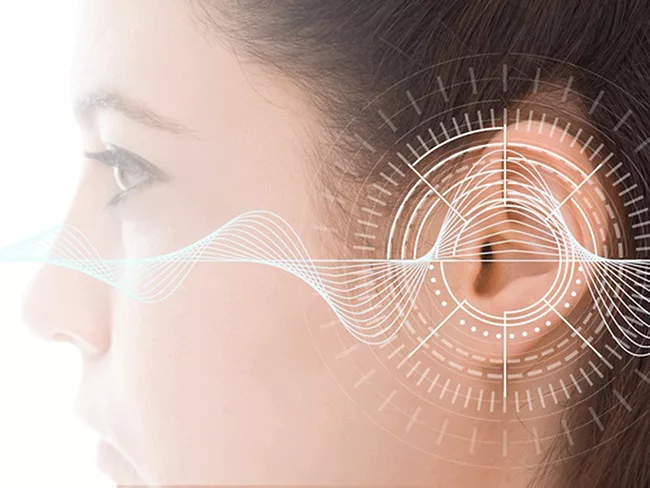
The U.S. FDA has cleared Cochlear Ltd.’s newest cochlear implant, the Osia 2 system, an active implantable bone conduction hearing system. Unlike Cochlear’s traditional implant, the Osia implant bypasses damaged parts of the ear and sends sound vibrations directly to the cochlea.
MELBOURNE, Australia – Researchers at the Murdoch Children’s Research Institute in Melbourne are pushing the boundaries on creating kidney tissue from stem cells. For more than two decades, Melissa Little and her team at Murdoch have investigated the molecular and cell development basis of kidney disease and the potential for regeneration. The team has developed approaches for directing the differentiation of human pluripotent stem cells to human kidney organoids and is applying that knowledge to disease modeling, drug screening, cell therapy and tissue engineering.
BEIJING – Questionable data found in research papers supervised by renowned Chinese immunologist Cao Xuetao have caused a stir in the life sciences community, shaking the reputation of an internationally prominent figure in the field of immunology.
HONG KONG – SK Holdings Co. Ltd. invested ₩10 billion (US$8.6 million) in Standigm Inc., an artificial intelligence (AI)-powered biotech company based in Seoul, Korea. It is the second big investment Standigm has attracted this year after a ₩13 billion series B round in March.
Australia's Therapeutic Goods Administration (TGA) proposed classifying active implantable medical devices (AIMDs), their accessories and active devices for controlling, monitoring or influencing the performance of an active device and software as high-risk class III devices. However, the agency has rethought the notion of up-classifying all implant device accessories after blowback from industry.
Australia's Therapeutic Goods Administration (TGA) recently posted a draft guidance for regulation of software as a medical device, but the Medical Technology Association of Australia expressed a preference for an international standard for risk classification.
Device makers were generally supportive of the Australian Therapeutic Goods Administration (TGA) proposal to up-classify active medical devices with an integrated diagnostic function that significantly determines patient management by the device (such as closed loop systems or automated external defibrillators) to class III, the highest risk designation used by TGA.
PERTH, Australia – Although medical device industry stakeholders agreed in principle with the Australian Therapeutic Goods Administration's (TGA) proposal to align its classification with the EU's for implantable spinal devices, they viewed the interpretation of the EU Medical Device Regulation (MDR) classification rule for these devices differently.
PERTH, Australia – Sydney-based molecular diagnostics company Genetic Signatures Ltd. is poised to extend its global footprint to the U.S. and Europe following its AU$35 million (US$24 million) capital raise.
A subtype of schizophrenia is related to abnormally high brain levels of hydrogen sulfide (H2S), which has important implications for the development of new treatments, according to a study by researchers at the RIKEN Center for Brain Science (CBS) in Japan.
 RSS
RSS