Otsuka Pharmaceutical Co. Ltd. reaped positive results from an open-label phase II study of repinatrabit (JNT-517) in adolescents with phenylketonuria (PKU), a rare disease marked by the inability to break down the amino acid phenylalanine.
Immutep Ltd.’s stock on Australia’s Securities Exchange plummeted nearly 90% on March 13 on the news that its phase III TACTI-004 trial evaluating eftilagimod alfa (IMP-321, efti) in first-line non-small-cell lung cancer was discontinued due to futility.
Multi-modality platform company Kanaph Therapeutics Inc. raised ₩40 billion (US$26.7 million) through its Kosdaq stock sale March 16, becoming the first Korean biotech to go public this year. The Seoul-based company’s shares (KOSDAQ:0082N0) climbed to ₩70,000 in intraday trading before closing at ₩50,600 – 153% higher than the offering price.
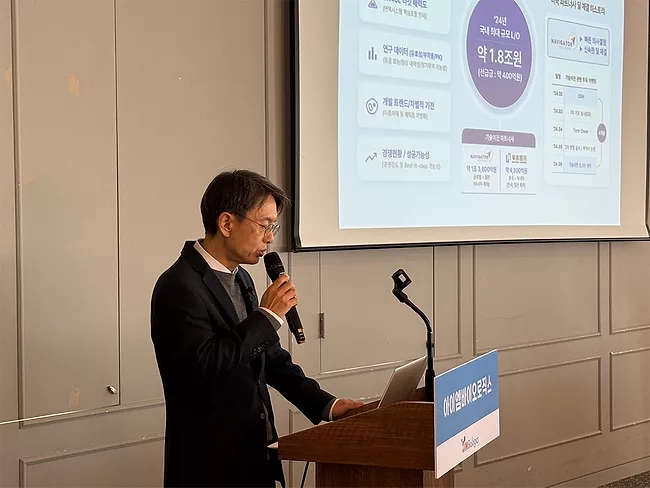
Two biotech and three med-tech companies are slated for Kosdaq debuts this month, signaling a potential rebound for Korea financings in 2026. Kanaph Therapeutics Inc. will open with a ₩40 billion (US$26.99 million) raise and Imbiologics Corp. will debut with ₩52 billion. Additionally, Mezoo Co. Ltd., Cosmo Robotics Co. Ltd. and Recensmedical Inc. will launch IPOs.
China’s National Medical Products Administration (NMPA) has accepted for review Hightide Therapeutics Inc.’s NDA for HTD-1801 for type 2 diabetes, marking the Shenzhen-based company’s first NDA submission and a major step toward commercialization.
G2Gbio Inc. secured a ₩20 billion (US$13.35 million) investment from Samsung Epis Holdings Co. Ltd. and a joint research and license agreement for two assets, including a long-acting obesity treatment, with subsidiary Samsung Bioepis Co. Ltd. March 16.
Japan has approved the world’s first therapies derived from induced pluripotent stem cells (iPSCs), marking a major milestone for regenerative medicine and, potentially, a turning point in treating Parkinson’s disease.
China’s National Medical Products Administration has approved Asieris Pharmaceuticals Co. Ltd.’s cold light photodynamic drug-device combination product, Cevira (APL-1702, hexaminolevulinate hydrochloride), which is used as a nonsurgical therapy for treating patients with cervical intraepithelial neoplasia grade 2.
On the heels of China’s approval of Sino Biopharmaceutical Ltd.’s rovadicitinib, Sanofi SA is now inlicensing the first-in-class dual JAK/ROCK inhibitor in a deal worth more than $1.4 billion.
Shortly after Amgen Inc. walked away from its partnership with Kyowa Kirin Co. Ltd., the Tokyo-based company said it is discontinuing all ongoing clinical trials for rocatinlimab due to safety concerns.
 RSS
RSS