PARIS – Neos Surgery SL has been awarded funding under the leading European program for innovative SMEs, the EIC accelerator. (previously known as SME Instrument). This Spanish med-tech company was one of just 38 projects selected from among 4,200 applicants from 18 countries across Europe. Neos has been awarded a non-repayable grant of $2.3 million towards developing its groundbreaking Disc Care device, used in the treatment of herniated disc.
LONDON – There is “a realistic possibility” that infection with the B 1.1.7 variant of SARS-CoV-2 is associated with a 30% to 40% increased risk of death compared to earlier variants of the virus, according to scientists on the U.K. government’s New and Emerging Respiratory Virus Threats Advisory Group. That conclusion is based on studies by three university groups, linking community PCR testing to mortality.
The implementation date for the European Union’s In Vitro Diagnostic Regulation (IVDR) is a mere 16 months away, although there is widespread interest in a delayed implementation date. Nonetheless, Warren Jameson, principal regulatory consultant for North American Science Associates (NAMSA) of Toledo, Ohio, urged test makers to conduct a gap analysis of the conformity of their currently marketed tests to the new regulations because a large percentage of the underlying dossiers would not pass muster under the terms of the new regulatory regime.
PARIS – France’s Comité Economique des Produits de Santé (CEPS), which reports to the Ministry of Health, has released its latest financial figures for medical device reimbursement. Health insurance expenditures amounted to $11.6 billion during the last full financial year reported by CEPS, representing annual growth of 4.66%. Over the last two years, more than half of expenditures have focused on four therapy areas: orthopedics, pulmonology/ENT, cardiac and vascular systems, and diabetes.
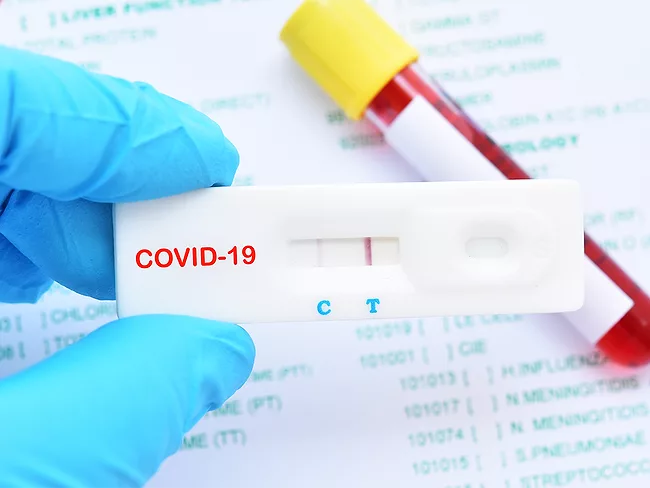
LONDON – The U.K. has launched a nationwide free testing program to diagnose COVID-19 in people who are asymptomatic, in the latest attempt to stem the tide of infection. Through the program, all local authorities will provide rapid testing using lateral flow devices. In addition, companies will be provided with free tests to set up workplace screening. Initially, the focus of both strands will be on getting people who cannot work from home to come forward for regular checks.
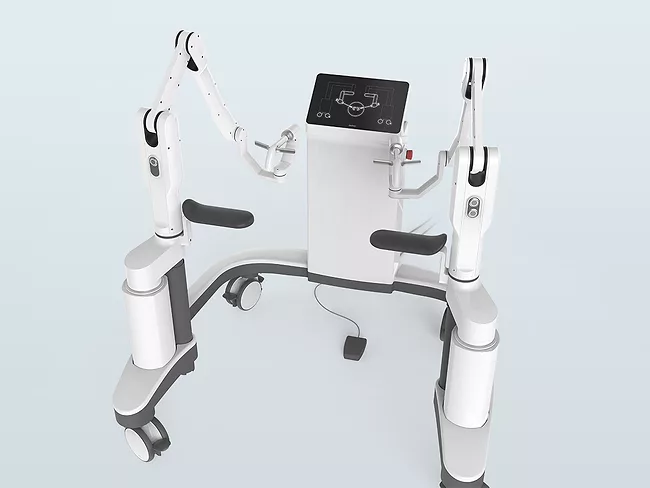
The medical device company Distalmotion SA has hit a regulatory milestone in the commercialization of its surgical robot, Dexter, earning a CE mark in Europe. The Dexter surgical robot is built with the aim of allowing surgeons to take a hybrid approach to minimally invasive surgery, using the robot for tasks such as suturing and complex dissections while switching to a laparoscopic approach for stapling and basic dissections.
PARIS – Solvay SA is partnering with Printerprezz Inc. to develop 3D printing technology using Selective Laser Sintering (SLS) for implants and other medical devices.
LONDON – The life sciences industry exhaled sharply and prepared to labor over the fine print in 1,246 pages of text after the EU and U.K. reported they had agreed a post-Brexit trade deal on Christmas Eve. The U.K. has said it will take a light touch, at least initially, with implementation of new border controls taking place in three stages up to July 30, 2021. The EU has not said what its approach will be.
LONDON – A huge row has broken out in the U.K. about the accuracy and utility of COVID-19 lateral flow tests (LFT) in screening asymptomatic people, as a pilot field study indicated sensitivity is less than 40%, and a nationwide roll out already is in train. At present 116 areas of the country are due to implement community testing from next month, health care workers are due to be handed personal LFT supplies to test themselves twice a week, and the government is about to mandate use of the tests in schools after Christmas.
Carmat SA said its total artificial heart received the CE mark, and the company plans to ramp up production to enable the launch of the device in the second quarter of 2021. The artificial heart offers a bridge to transplant in patients with end-stage biventricular heart failure. It provides an alternative for individuals for whom maximal medical therapy and left ventricular assist device are insufficient or contraindicated.
 RSS
RSS