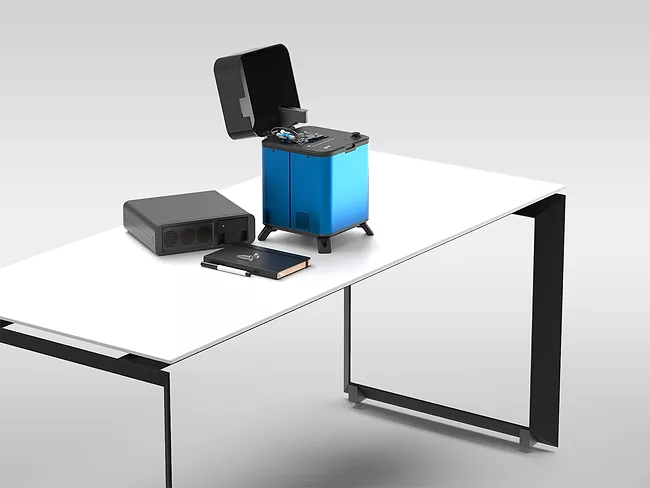
Chicago-based public benefit corporation Neopenda LLC secured the CE mark for its wireless, wearable vital signs monitor and picked up $1.4 million in new funding led by Assiduity Capital and the Sorenson Impact Foundation. The organization developed Neoguard to monitor critically ill infants in resource-poor regions, but adapted it last year to meet the monitoring needs of adult patients with COVID-19. The CE mark approval covers adult, pediatric and neonatal patients.
Lumicks BV raised $93 million in a series D financing led by new investors Farallon Capital Management and Lauxera Capital Partners. The proceeds are earmarked for expansion of the Lumicks’ product pipeline and for commercialization of its Z-Movi cell avidity analyzer.
Organoids cultured from patient-derived colorectal cancer cells have been used to demonstrate for the first time that tumors which have developed resistance to the full range of existing treatments, across chemotherapies, targeted therapies and immunotherapies, retain a requirement for Werner helicase (WRN) for survival. WRN has a key role in the maintenance of genome stability, but although loss of WRN is known to initiate synthetic lethality in DNA mismatch repair deficient colorectal cancer, studies into the effect of inhibiting that helicase have to date been limited to a handful of cell lines.
PARIS – Roche SAS, the French division of Swiss pharmaceuticals manufacturer Roche Holding AG, has signed a partnership with Unicancer that brings together all the cancer centers in France. They have created Oncodatahub (ODH), the first real-world cancer data platform in France. This makes a set of quality, longitudinal data representative of cancer patient care in France available to all those involved in the health care ecosystem.
LONDON – A large scale prospective study has shown that increased blood plasma viscosity is correlated with disease severity and the likelihood of progression to organ failure, in patients who are hospitalized with COVID-19 infections. Researchers at Addenbrooke’s Hospital in Cambridge, U.K. suggest this could be an easy but sensitive way to quickly triage patients admitted to hospital with symptoms of COVID-19.
A threat is currently hanging over the Swiss medical device industry, which is heavily reliant on trade with the EU. Upcoming changes to the CE marking regime will have the effect of making the mutual recognition agreement (MRA) obsolete. This currently allows Switzerland to enjoy unrestricted access to the medical device market in the 27 member states. Up until now, this bilateral agreement has regulated trade between Switzerland and the EU.
The European Commission opened a public consultation to help it develop the Health Emergency Preparedness and Response Authority, a new initiative to better prepare Europe for cross-border health threats.
PARIS – Holistick Medical SAS reported a $5 million round for development of the first generation of a light-activated implant for a patent foramen ovale (PFO). Truffle Capital provided the startup with $4.6 million, while Bpifrance provided $470,000 in non-dilutive funding. “This robust financing provides us with the resources needed to catapult our strategy forward and reinvent the treatment of heart defects such as PFO, which can be associated with occurrence of stroke in young people,” Boris Warnack, CEO of Paris-based Holistick Medical, told BioWorld.
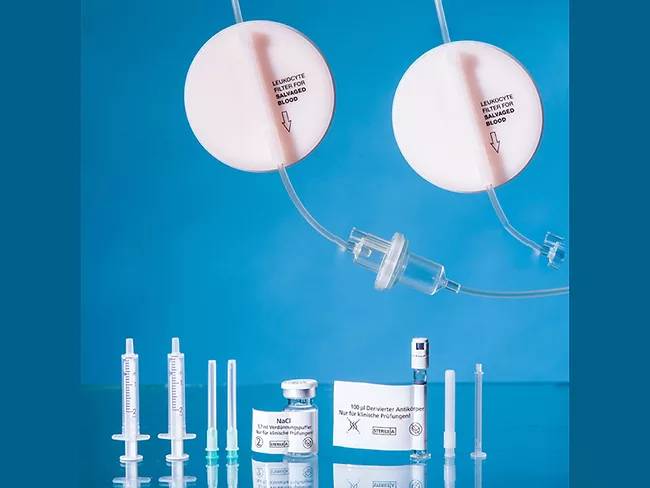
BERLIN – Lindis Blood Care GmbH launched a multicenter clinical EU certification study for Catuvab, which is used to eliminate tumor cells from surgical blood. The experiment, dubbed Remove, aims to confirm that Catuvab can reliably remove epithelial cell adhesion molecules (EPCAM)-positive tumor cells from patient blood during cancer surgery.
PARIS – Barely one year after its formation, startup company Quantiq SAS has just closed an $825,000 seed round, to develop its contactless medical diagnostics technology. French business angels from the medical, artificial intelligence and fintech worlds participated in this initial fundraising.
 RSS
RSS